
Elections – Tarique Rahman Chosen as Bangladesh Prime Minister
Elections – Bangladesh is set for a major political transition as Bangladesh Nationalist Party Chairman Tarique Rahman prepares to assume office as Prime Minister after being elected leader of his party’s parliamentary group on Monday.
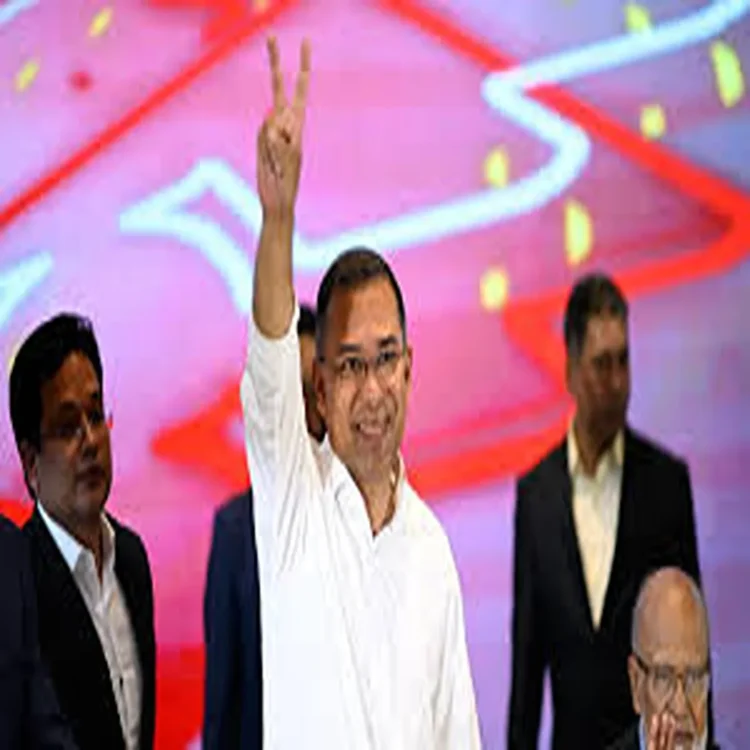
The decision came on a day marked by political tension and negotiation, as newly elected lawmakers gathered to take their oath inside the Jatiya Sangsad Bhaban. The swearing-in process, however, was briefly overshadowed by disagreement over a proposed Constitution Reform Council.
Parliamentary Leadership Clears Path for Government Formation
With the Bangladesh Nationalist Party securing a commanding majority in the 13th parliamentary elections, the selection of Tarique Rahman as leader of the parliamentary party effectively confirmed his path to the premiership. Under constitutional procedure, the President is expected to formally invite the majority leader to form the government.
Chief Election Commissioner AMM Nasirudin administered the oath to BNP lawmakers in the first phase of the ceremony. Members from Jamaat-e-Islami and the National Citizen Party were scheduled to follow. What initially appeared to be a routine swearing-in quickly evolved into a political standoff.
Dispute Over Constitution Reform Council Oath
The disagreement centered on an additional pledge linked to the proposed Constitution Reform Council. The second oath would require lawmakers to commit to implementing the widely discussed July Charter, a comprehensive 84-point proposal seeking extensive constitutional amendments.
Jamaat-e-Islami lawmakers initially refused to take their parliamentary oath unless BNP members also agreed to the additional pledge. Party leaders argued that constitutional reform was central to the country’s future and should not be separated from parliamentary responsibilities.
Abdullah Mohammad Taher, deputy chief of Jamaat-e-Islami, stated that his party believed Parliament would lack purpose without clear commitments to constitutional restructuring. The stance briefly created uncertainty during the oath-taking proceedings.
Referendum Results and Political Calculations
The proposed reforms had been presented to voters in a recent referendum. According to the Election Commission, more than 60 percent of participating voters supported the proposal. Despite this outcome, BNP leaders maintained that the Constitution Reform Council does not yet have formal constitutional standing.
Salahuddin Ahmed, a member of the BNP’s standing committee and a newly elected MP, conveyed the party’s position to colleagues assembled in Parliament. He emphasized that BNP lawmakers were elected to serve as Members of Parliament, not as members of a body that has not been incorporated into the Constitution. Acting on directives from Tarique Rahman, the BNP collectively declined to take the second oath.
In a notable shift about an hour later, lawmakers from Jamaat-e-Islami and the National Citizen Party proceeded to take both the parliamentary oath and the additional pledge tied to the reform council, allowing the swearing-in process to move forward.
Election Outcome Reshapes Political Landscape
The BNP secured 209 of the 297 parliamentary seats, establishing a clear majority. Jamaat-e-Islami captured 68 seats, positioning itself as the principal opposition force in the new Parliament. The Awami League, led by former Prime Minister Sheikh Hasina, was barred from contesting the February 12 polls and disqualified ahead of the vote.
The exclusion of the Awami League significantly altered the political balance, paving the way for a reconfigured opposition led by Jamaat-e-Islami, once an ally and now a rival of the BNP.
Swearing-In Ceremony and International Presence
President Mohammad Shahabuddin is scheduled to administer the oath to the new cabinet later in the day, formally installing the BNP government. Constitutional provisions require the President to invite the leader of the majority party to form the government and oversee the cabinet’s swearing-in.
The BNP has extended invitations to approximately 1,200 domestic and international guests for the ceremony. Among the expected attendees are India’s Lok Sabha Speaker Om Birla, Foreign Secretary Vikram Misri, and Lok Sabha Secretary General Utpal Kumar Singh.
Leaders from neighboring and regional nations are also anticipated at the event, including Maldives President Mohammed Muizzoo, Turkish Undersecretary Beris Ekinci, and Sri Lanka’s Minister of Health and Mass Media Dr Nalinda Jayatissa.
As Bangladesh prepares for the formal transfer of power, attention now turns to how the new administration will navigate constitutional reform debates alongside its broader governance agenda.