
Defense – Taiwan Reports Fresh Chinese Military Presence Near Waters
Defense – Taiwan’s defense authorities reported early Saturday that Chinese military activity was observed around the island’s surrounding waters, adding to a series of recent movements that have kept security officials on alert.
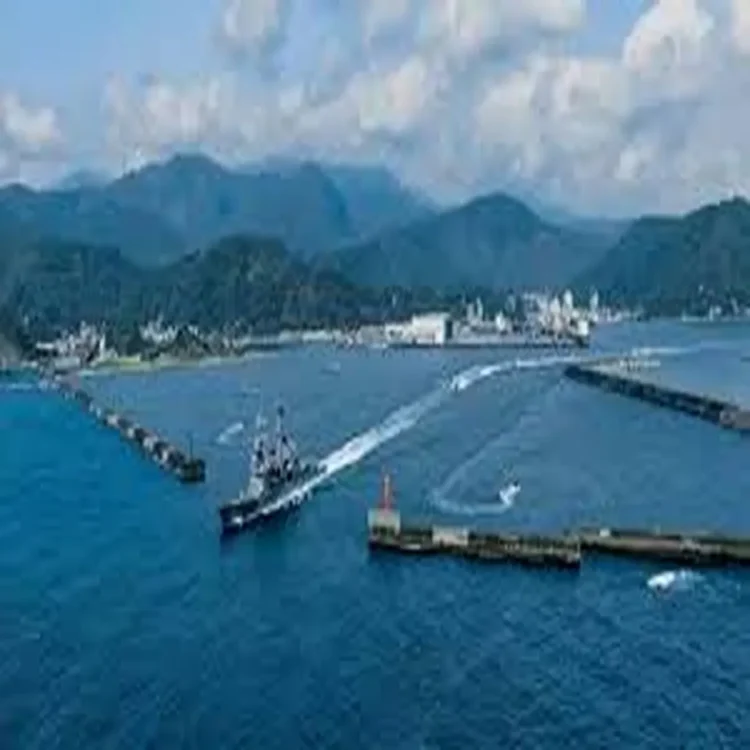
According to the Ministry of National Defense, one aircraft from China’s People’s Liberation Army and eight naval vessels were detected operating near Taiwan as of 6 a.m. local time. An additional official Chinese ship was also identified in the vicinity. The military stated that it closely tracked the situation and took appropriate monitoring measures in response.
Increased Activity in Recent Days
The latest development follows a significant surge in activity reported just a day earlier. On Friday, Taiwanese authorities said they had identified 42 sorties by Chinese military aircraft along with 11 naval vessels operating around the island.
Of those aircraft, 32 were reported to have crossed the median line of the Taiwan Strait and entered Taiwan’s northern, central, southwestern and eastern Air Defense Identification Zone (ADIZ). The median line has long served as an informal boundary between the two sides, although Beijing does not recognize it.
Taiwan’s armed forces said they kept the movements under close observation and responded in line with established protocols. Defense officials did not indicate any direct confrontation but described the maneuvers as part of ongoing pressure tactics.
Political Response to Reunification Remarks
Amid heightened military activity, political tensions have also resurfaced. Taiwan’s Mainland Affairs Council rejected renewed calls from Beijing advocating “reunification,” characterizing the proposal as a continuation of China’s longstanding position toward the island.
The comments came after Wang Huning, a senior leader within the Chinese Communist Party and chairman of the Chinese People’s Political Consultative Conference, addressed China’s annual Taiwan Work Conference earlier this week.
During his speech, Wang urged officials to advance what he described as the cause of national reunification. According to China’s state-run Xinhua News Agency, he also expressed support for groups in Taiwan that favor closer ties with Beijing and reiterated opposition to what China calls separatist forces and foreign interference.
Wang emphasized adherence to the “one China” principle and referenced the “1992 consensus,” a term frequently invoked by Beijing to frame cross-strait relations. Taiwan’s government has maintained that the future of the island must be determined by its people and has consistently rejected Beijing’s sovereignty claims.
US Legislative Support for Taiwan
In Washington, lawmakers signaled continued backing for Taiwan in the face of rising pressure. The United States House of Representatives recently advanced the PROTECT Taiwan Act, legislation designed to deter further coercive measures by China.
The bill moved forward with strong bipartisan support, reflecting rare unity in Congress on policy toward Beijing. Supporters argue that the measure would strengthen deterrence and reinforce US commitments to stability in the Indo-Pacific region.
Although the legislation still faces additional procedural steps, its progress underscores growing concern in Washington over China’s military posture around Taiwan. The move also aligns with broader US efforts to maintain a balance of power in the region.
Ongoing Regional Implications
Military activity around Taiwan has increased in frequency over recent years, with defense analysts noting that such operations often coincide with political messaging from Beijing. While direct conflict has been avoided, the pattern of aircraft crossings and naval deployments continues to draw attention from regional governments and international observers.
Taiwan’s defense ministry reiterated that its armed forces remain prepared to respond to developments while seeking to maintain stability. Officials have not reported any incidents involving damage or direct engagement.
As cross-strait relations remain strained, diplomatic statements and military maneuvers are likely to continue shaping the security environment in East Asia.