
China: In Venezuela, loses a buddy
China: When US soldiers intervened on January 3, 2026, to capture Venezuelan President Nicholas Maduro, China was caught off guard. Just hours before his arrest, Maduro had even been hosting a formal Chinese delegation meeting at his palace. As the only Latin American nation having a high-level strategic alliance with China, Venezuela’s loss of Maduro’s friendship is a blow to Beijing.
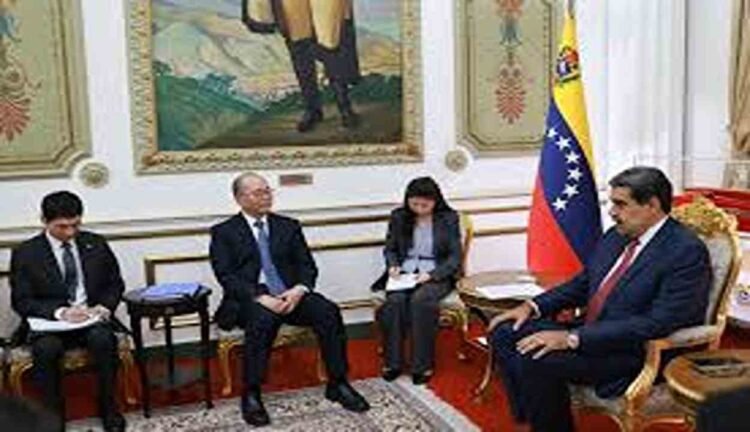
China’s response has been subdued generally, however. “Cooperation between China and Venezuela is between two sovereign states and under the protection of international law and the laws of the two countries,” said Lin Jian, a spokeswoman for China’s Foreign Ministry, in an instant condemnation.” Lin said, “China’s lawful interests in Venezuela will be protected in accordance with the law.”
According to Xinhua, China said that it will “defend the bottom line of international morality, and safeguard international fairness and justice” as part of its commitment to the UN Charter and to international justice.
“Beyond the immediate condemnation, Beijing’s response is revealing in how it handles such situations more broadly,” said Adam Ni, co-editor of the China Neican newsletter. China’s response to the use of US force against a partner in whom it has real but limited economic interests is shown by Venezuela. Beijing prioritizes risk containment over confrontation in these situations, relying on diplomatic and normative resistance while purposefully minimizing material engagement.
Although China uttered phrases like non-interference and opposition to hegemonic conduct, there was no military or security response, no quick sanctions against the United States, and no effort by China to change the situation in Venezuela. Ni said, “Beijing’s response has therefore been emphatic in rhetoric, but tightly circumscribed in material terms.”
In essence, Beijing does not consider Venezuela to be strategically important. China has had to constantly renegotiate debt repayment conditions and oil-for-loan agreements as a result of the South American republic’s years-long decline. Ni said, “For Beijing, the priority today is less the preservation of a particular leader or government than the management of downside risk: maintaining access where possible, limiting further losses, and resisting the normalization of externally imposed regime change as a tool of great-power competition.”
It is true that China has no interest in engaging in direct conflict with the United States in the Western Hemisphere. Such a stance would be expensive and provide little strategic benefits. “China has little incentive to test US red lines in a region that Washington continues to treat as a core sphere of influence, and it lacks the ability to change outcomes on the ground,” Ni said. Therefore, rather of using tangible countermeasures, Beijing has directed its reaction via institutional channels, such as the UN Security Council, and diplomatic criticism.
China does, however, have a signaling opportunity to remind audiences across the world of how unpredictable American conduct has become as a result of President Donald Trump’s surprise military intervention in Venezuela. “By emphasizing sovereignty and international law, Beijing builds a narrative in which the United States looks to be
repressive and disruptive, while China portrays itself as disciplined and focused on maintaining order. In this way, Beijing uses Venezuela as a platform to reiterate its opposition to unilateral coercion and political results imposed from the outside.
Naturally, China’s commitment to the UN and international law is entirely dependent on how well or poorly it advances China’s own strategic goals. Beijing reiterates worries that the United States is normalizing the use of “might is right” and cautions that removing foreign presidents by force may undermine sovereign safeguards in the international system. In addition to harshly criticizing the Permanent Court of Arbitration’s 2016 ruling over its actions in the South China Sea, China ironically does just this with weaker neighbors like Taiwan and the Philippines.
With the South American country atop the world’s greatest oil reserves, China is the biggest buyer of Venezuelan oil. Caracas is more dependent on China than the other way around, as shown by the fact that just 4% of China’s oil comes from Venezuela.
China, which also buys a significant quantity of oil from Iran, will be concerned about the unstable situation there. Oil cuts from Iran and Venezuela might occur in the future.
Chinese companies have also made investments in ports, railroads, and telecommunications. Additionally, Caracas owes China at least $10 billion; others estimate the debt to be far higher. When Muammar Gaddafi was overthrown in Libya, for instance, China had to deal with the terrible fact that deals made by Maduro may not be upheld. This sum of money is not negligible, but it only makes up a minor fraction of China’s total foreign debt.
Ni said that Beijing would face economic challenges. “China has tangible interests in Venezuela, particularly via infrastructure projects, unpaid debts, and energy linkages. These agreements, such as oil-for-loans schemes, have historically been dangerous both financially and politically. Chinese assets, repayment prospects, and the sustainability of ongoing initiatives are all directly threatened by renewed volatility.
Trump has enhanced his image as a capricious autocrat. However, does it imply that extrajudicial abductions of foreign leaders will become commonplace in the United States? What does this imply, for instance, for Chinese designs on Taiwan? Some have questioned if the United States’ actions now permit China to follow suit without a UN authorization. Could it follow Trump’s lead and attack Taiwan on its own or kidnap the president of Taiwan?
The subject of whether US action would empower China was answered by Bonnie Glaser, Managing Director, Indo-Pacific at the German Marshall Fund of the United States. “Washington’s military strikes against Venezuela and the capture of its leader, Nicolas Maduro, provide China an opportunity to portray the US as a global hegemon that bullies smaller countries,” she said. Beijing’s objective of eroding US credibility internationally is furthered by this. However, the American measure is unlikely to result in a significant change in China’s approach to Taiwan. The US’s disrespect for international law will not be seen by Beijing as a valid excuse for China’s use of force against Taiwan.
According to Glaser, “China has always viewed Taiwan as an internal affair, and will not draw many parallels with the relationship between Washington and Caracas.”
Others, on the other hand, think the international order is being progressively undermined by Trump’s government. “The most obvious risk lies in the Indo-Pacific: the same logic could be invoked to justify China detaining a Taiwanese president under the guise of Chinese national security or domestic law enforcement,” said Samuel White, Senior Research Fellow in Peace and Security at the National University of Singapore’s Centre for International Law.
White went on, “Express support is seldom used to establish precedent in this setting. It comes via analogy, forbearance, and repetition. A cross-border seizure becomes a benchmark for future behavior when it is presented as legitimate or legally limited and is accepted without persistent institutional or diplomatic opposition.
China is already using this same tactic against Taiwan and in the South China Sea. “Taiwan occupies a uniquely ambiguous position in international law and politics, existing in a space where sovereignty claims, jurisdictional assertions, and security narratives routinely overlap,” White said. In such a setting, actions that conflate coercion and law enforcement are very effective.
China employs “gray zone” strategies against Taiwan and other countries for this reason. For instance, during the two-day Exercise Justice Mission at the end of 2025, Taiwan’s National Security Bureau said that China carried out over 4.17 million hacking events and posted more than 19,000 comments on social media that promoted anti-military, anti-Lai, and anti-US attitudes.
China is keeping a close eye on things because some believe Beijing may hope to get away with what it says is breaking a merely “provincial” boundary between China and Taiwan if the world accepts American actions in Venezuela. “Obviously, large states, like China, will always try to do what they can get away with,” White said. The idea is that China would incur less diplomatic expenses if the practice of detaining heads of state or other high-ranking officials were to become more commonplace.
According to White, “the stabilizing function of existing legal categories is weakened if a head-of-state seizure can be plausibly defended as an exercise of domestic law enforcement, under the constitutional authority of executive authority, rather than an act of aggression.” It becomes more difficult to maintain the line between law enforcement and political pressure, especially when status, recognition, or jurisdiction are disputed.
Allegations have been made that Maduro was being used by China, Russia, and Iran in order to destabilize the United States by bringing narcotics into the nation. To put it another way, they were using “gray zone” strategies right in the United States. Not surprisingly, the UN
A US proposal to overthrow Maduro under the UN Charter would never be approved by the Security Council because China and Russia would oppose it.
But Glaser is certain that the move against Maduro won’t serve as a model for the PLA to take on Taiwan’s government. “It is unlikely that Beijing would succeed in reunifying Taiwan if Taiwan President Lai Ching-te were captured.
The plan and reasoning behind Chinese President Xi Jinping’s approach to Taiwan are his own. Events like the recent US action or Russia’s invasion of Ukraine are unlikely to have an impact on him.
The PLA’s military prowess to carry out such a precision operation against Taiwan in the first place is still another concern. Glaser clarified: “Corruption and purges within the PLA are impeding, at least temporarily, China’s military capabilities, particularly the PLA’s capacity to acquire and rule Taiwan at a reasonable cost, as the recently published Department of Defense study on China’s military might stated. Instead, Beijing is using a wide range of gray-zone strategies to depress Taiwanese people in order to force their ultimate surrender. The Chinese think that reunification can be achieved without sacrificing wealth and blood.
Glaser went on to say: “China will make every effort to safeguard its commercial and economic interests in Venezuela, but it will want to avoid becoming a target for US President Donald Trump in an area that is geographically remote and not central to Beijing’s interests. This is particularly true in the lead-up to the US-China summit that is scheduled to take place in Beijing in April. China will use it to pressure the US to make concessions on its own list of priorities, which probably includes Taiwan.
Trump’s actions in Venezuela, according to some other analysts, have destroyed Chinese aspirations in Latin America or beyond. However, this perception is equally unjustified.
“Many US analysts want to view Venezuela as a blow to China’s global ambitions,” said Ryan Hass, Director of the John L. Thornton China Center at the Brookings Institution. Maduro’s overthrow revealed the limitations of the Venezuela-PRC “all-weather partnership” and humiliated the country. However, it may be argued that the PRC has not been deterred or diverted from its course by the events in Venezuela.
“Beijing is unhappy and will try to increase reputational costs for the US, but it’s far from being hampered by events,” Hass said. China has been working to make progress abroad while the US has been concentrating on Latin America. It recently housed leaders from South Korea, France, and Ireland. Russian, British, and Canadian presidents are expected to visit Beijing in the near future. Additionally, the PRC is attempting to reduce hostilities with India.
As Hass noted, “Beijing’s diplomatic priorities appear to be stabilizing its periphery, keeping markets open for PRC exports, making progress toward self-reliance, deterring further involvement by Japan or others in cross-strait relations, and laying the groundwork for Trump’s planned visit.”
We are reminded by this instance of American involvement that the applicability of international law is limited to its enforcement. Like China in the South China Sea, nations will continue to do as they like.
China will seek compensation because it feels somewhat humiliated. Hass came to the conclusion: “To put it briefly, Beijing seems to have been taken aback and irritated by the events in Venezuela. However, Venezuela is not a major player in Beijing’s alternative global strategy. Venezuela isn’t keeping PRC leaders up at night.”