
Bangladesh: Sheikh Hasina and sixteen other people are charged with forced disappearances at the ICT
Bangladesh: In a case involving accusations of enforced disappearances under the Awami League’s tenure, the International Crimes Tribunal filed charges against 17 defendants on Tuesday, including former Prime Minister Sheikh Hasina, for crimes against humanity, according to the Daily Star.
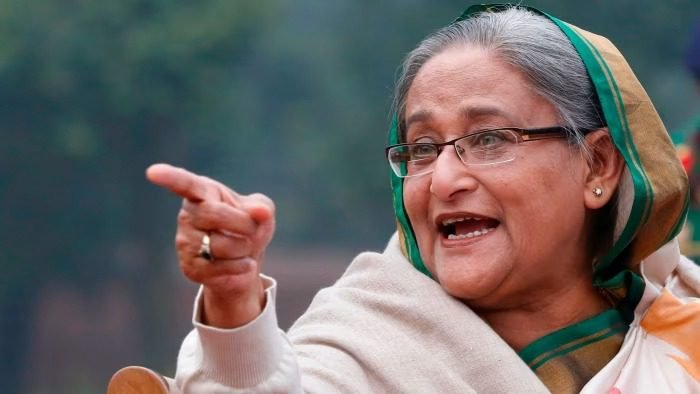
It further said that the four allegations against the defendants, which include 11 army officers and Maj Gen Tarique Ahmed Siddique (retd), Hasina’s former defense and security advisor, were read aloud before the three-member panel issued the ruling.
Ten of the 17 accused were former army officers from the Rapid Action Battalion (Rab), according to the Daily Star, who appeared before the tribunal throughout the hearings.
The accused in the dock were asked whether they had entered a guilty plea by the tribunal prior to the accusations being framed. Ten of them entered not guilty pleas. One of them informed the court that they anticipated receiving justice from the tribunal.
The officers are Brig. Gen. Md. Qamrul Hasan, Brig. Gen. Tofayel Mostafa Sarwar, Brig. Gen. Mahbub Alam, Brig. Gen. Jahangir Alam, Col. AKM Azad, Col. Abdullah Al Momen, Col. Sarwar Bin Kashem, Col. Anowar Latif Khan, Lt. Col. Moshiur Rahman Jewel, and Lt. Col. Saiful Islam Sumon, according to Daily Star.
According to the article, the Tribunal has scheduled the opening remarks for January 21.
14 inmates were unlawfully detained and subjected to torture at the TFI cell between 2016 and 2024, according to the prosecution.
Sheikh Hasina was found guilty of “crimes against humanity” this month by the International Crimes Tribunal (ICT) of Bangladesh for her attempts to quell the anti-government demonstrations in July 2024. She was given the death penalty.
According to Sheikh Hasina, the International Crimes Tribunal’s (ICT) decision was a political rather than a legal one, calling it a “political assassination in judicial robes.”
She said in an interview with ANI that she was not allowed to choose her own attorneys or defend herself, and that the tribunal had been used to carry out a “witch hunt of the Awami League.”
Hasina said that she still has faith in Bangladesh’s constitutional system in spite of the accusations. “Our constitutional tradition is strong, and when legitimate governance is restored and our judiciary regains its independence, justice will prevail,” she said.
Hasina accused the interim government led by Chief Adviser Muhammad Yunus of lacking democratic legitimacy and pushing the nation into instability by undermining institutions and encouraging extremist forces in the context of recent violence and legal action.
Citing the ongoing prohibition on the Awami League, she also questioned the legitimacy of the February elections. She said that Yunus is ruling “without a single vote from the Bangladeshi people” while trying to exclude a party that has won nine national mandates. “An election without the Awami League is not an election, but a coronation,” she declared.
Hasina cautioned that denying people the opportunity to vote for their favored party has historically resulted in widespread disenfranchisement and a fall in voting turnout. She said that any government established in such a way would be morally incompetent and would waste a chance for true national healing.
She stated that calls for her extradition had also been sparked by the ICT ruling, which she rejected as the result of “an increasingly desperate and adrift Yunus administration,” but others saw the hearings as a politically motivated “kangaroo tribunal.” She thanked political parties all around India for their support and for India’s ongoing hospitality.
Hasina gave an explanation for her departure from Bangladesh, stating that she did not leave because she was afraid of being held accountable but rather to stop further violence.
Hasina discussed the deterioration of India-Bangladesh ties, including Dhaka’s decision to call the Indian ambassador, while placing events within a regional framework. She accused the interim government of failing to safeguard religious minorities, letting radicals dictate foreign policy, and making nasty remarks against India.
She emphasized that India has been Bangladesh’s most reliable ally for many years and said that bilateral relations are strong and long-lasting. She expressed confidence that if genuine government is restored, relations would stabilize.
Speaking about growing anti-Indian sentiment and worries over the security of Indian diplomats, Hasina said that radicals encouraged by the Yunus government are to blame for the animosity. She said that Yunus had given these elements higher positions of responsibility while freeing convicted terrorists, and that these organizations had targeted the Indian embassy, media outlets, and minorities.
She said that India’s worries about the security of its employees were legitimate and that, instead of protecting what she called “hooligans,” a responsible government must protect diplomatic posts and jail those who make threats.