
AirportDisruption – Chemical Odor Halts Flights Across Major Washington Area Airports
AirportDisruption – Air travel across the Washington metropolitan region experienced significant disruption after a strong chemical odor was detected at a major air traffic control facility in Virginia, prompting aviation authorities to temporarily halt flights at several key airports.
Chemical Odor Detected at Critical Air Traffic Facility
The disruption began after personnel at the Potomac Consolidated Terminal Radar Approach Control facility, commonly known as Potomac TRACON, reported a noticeable chemical smell within the building. The facility plays a crucial role in managing aircraft movements for multiple airports serving the Washington and surrounding regions.
Potomac TRACON oversees the radar-based approach and departure control for airports throughout the Washington-Baltimore area and parts of Virginia. Any operational issue at this facility can quickly impact flight traffic across several major airports due to its central role in coordinating aircraft movements.
Ground Stops Implemented at Several Major Airports
Following the reports of the unusual odor, the Federal Aviation Administration issued temporary ground stops affecting several airports in the region. These included Ronald Reagan Washington National Airport, Washington Dulles International Airport, Baltimore-Washington International Airport, and Richmond International Airport.
A ground stop prevents incoming aircraft from landing at the affected airports until conditions are deemed safe. The decision was taken as a precaution after the smell was reported inside the facility where air traffic controllers manage approaching flights.
Officials confirmed that no injuries were reported among staff working at the facility. However, the situation prompted immediate action to ensure the safety of personnel and maintain secure flight operations.
Federal Aviation Administration Investigating Source
US Transportation Secretary Sean Duffy said the Federal Aviation Administration was actively investigating the origin of the odor that triggered the disruption.
In a statement shared on the social media platform X, Duffy noted that aviation officials were working to identify and address the source of the smell affecting operations at several airports in the region.
Authorities did not immediately confirm what caused the odor or whether it resulted from a chemical leak, mechanical issue, or another environmental factor. Investigators began examining the facility to determine the exact cause while ensuring that the air traffic control environment remained safe for staff.
Flight Delays Spread Across Regional Airports
The ground stop quickly led to widespread delays as airline schedules began to back up across the region. Aviation tracking data indicated that roughly 25 to 30 percent of departing flights from the affected airports experienced delays after the restrictions were imposed.
Airlines worked to reorganize flight schedules while waiting for clearance from air traffic authorities to resume normal operations. The ripple effect extended beyond the Washington region as aircraft scheduled to depart from other cities were also delayed due to the congestion.
Passengers Face Long Waits as Airlines Adjust
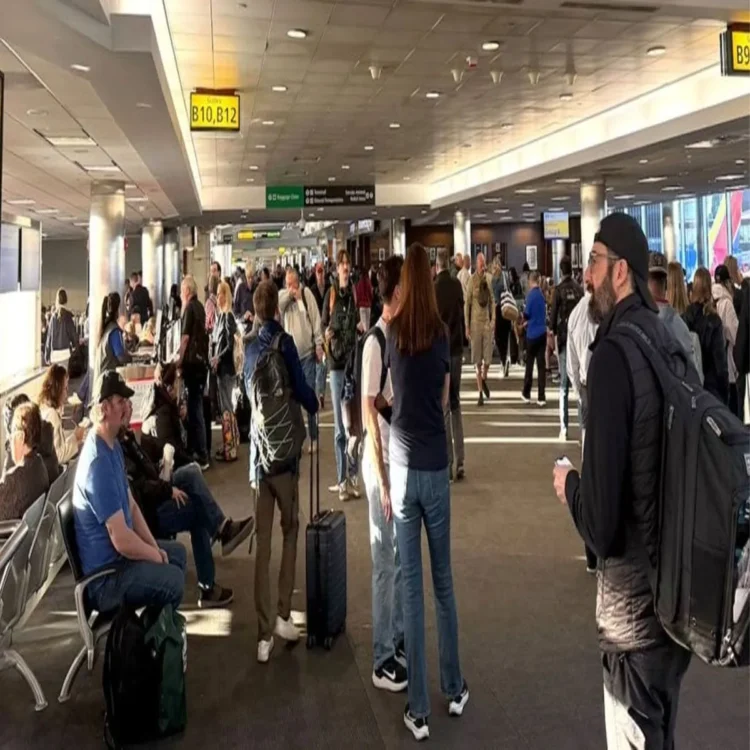
Travelers reported extended waiting times as airlines responded to the disruption. Some passengers remained onboard aircraft on airport taxiways while crews waited for permission to proceed with departures or arrivals.
In other cases, passengers were asked to leave the aircraft temporarily as airlines delayed boarding or repositioned planes until air traffic operations could safely continue.
Airports in the Washington region are among the busiest in the United States, meaning even a short interruption can quickly affect hundreds of flights and thousands of travelers.
Flights Gradually Resume After Temporary Halt
Later in the evening, aviation authorities lifted the ground stops after conditions improved and controllers were able to resume operations. Flights slowly began returning to normal schedules, although delays continued for several hours as airlines cleared the accumulated backlog of aircraft.
Officials said they would continue monitoring operations to ensure stability across the regional airspace while the investigation into the odor’s source remains ongoing.
Despite the disruption, aviation authorities confirmed that safety procedures functioned as intended, allowing controllers and airport operators to respond quickly to the situation while protecting both staff and passengers.