
Afghanistan – Lawmakers Question State Department on Afghan Relocation Plans
Afghanistan – The fate of hundreds of Afghan nationals awaiting relocation by the United States came under renewed scrutiny this week, as lawmakers pressed the State Department over plans to shut down a temporary processing facility and the possibility of financial incentives for voluntary return.
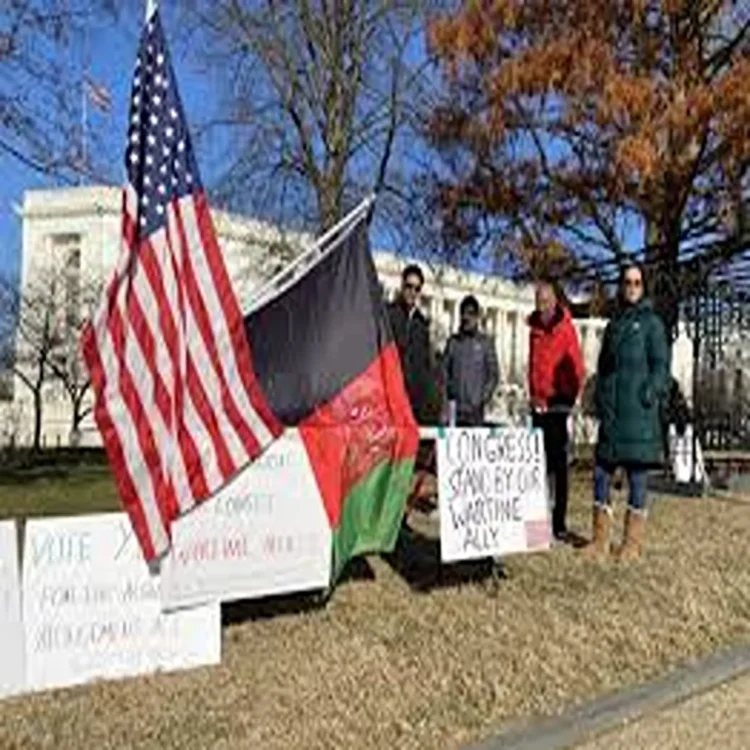
During a hearing of the House Foreign Affairs Subcommittee on South and Central Asia, Assistant Secretary of State for South and Central Asian Affairs Paul Kapur faced detailed questions about how the administration is handling Afghans who remain in transit after fleeing their home country.
Plans to Close Processing Facility
Democratic Representative Sydney Kamlager-Dove, the panel’s ranking member, said the State Department intends to close the relocation center at CAS by the end of March. According to her remarks, more than 1,000 Afghans are currently housed there while awaiting placement in third countries.
Kapur confirmed that between 1,100 and 1,200 individuals are staying at the facility. He said the department is working with partner nations to secure relocation options and described extended stays at the center as unsustainable.
Officials are engaged in discussions with several countries to facilitate transfers, Kapur noted, adding that keeping families in long-term temporary arrangements is not a viable humanitarian solution.
Questions Over Voluntary Return Payments
Lawmakers also raised concerns about reports that some Afghans had been offered financial assistance to leave the facility voluntarily, including the possibility of returning to Afghanistan.
Kamlager-Dove cited figures suggesting that payments were being provided to encourage departures and asked how many individuals had accepted such offers. Kapur responded that approximately 150 people may have chosen to return voluntarily, though he said he would verify the exact number.
He emphasized that the US government is not compelling anyone to go back to Afghanistan. “We are not forcibly repatriating Afghans,” Kapur told the panel, stressing that decisions to depart were made by individuals themselves.
Oversight and Coordination Responsibilities
The hearing also focused on congressional oversight of the broader Afghan relocation process. In 2024, Congress approved legislation requiring the appointment of a dedicated coordinator to manage resettlement efforts.
When asked whether he now serves in that capacity, Kapur said his office oversees Afghan affairs within the Bureau of South and Central Asian Affairs. He indicated that responsibility for coordination currently falls under his portfolio, though he did not specify whether a separate appointment had been made.
Kamlager-Dove called for more frequent briefings to lawmakers and staff, arguing that transparency is critical as relocation efforts continue. She warned that how the government treats Afghan partners who supported US operations will be closely examined in the years ahead.
Broader Afghanistan Policy Under Review
Subcommittee Chair Bill Huizenga sought updates on a wider policy review concerning Afghanistan. Kapur described the review as an ongoing interagency process, involving multiple departments across the federal government.
He said officials are working to align regional security priorities with humanitarian commitments, including obligations to Afghans who assisted US forces prior to the 2021 withdrawal.
The discussion highlighted continuing debate in Washington over the long-term consequences of the US exit from Afghanistan and the return of the Taliban to power. Since 2021, thousands of Afghans who worked alongside American military and diplomatic personnel have sought protection through special visa pathways and relocation programs.
Concerns About Women and Education
Lawmakers also raised questions about the situation of women and girls in Afghanistan, particularly restrictions on education imposed since the Taliban regained control. Kapur reiterated that the United States supports equal access to education for women and girls.
The administration now faces the complex task of balancing diplomatic engagement in South and Central Asia with ongoing humanitarian concerns. As negotiations with third countries continue and the March deadline approaches, the status of more than a thousand Afghan allies remains uncertain.