
Giriraj Singh: Supreme Court Halts UGC Equity Rules Flags Political Misuse
Giriraj Singh: Patna, January 30 — Union Minister Giriraj Singh has welcomed the Supreme Court’s decision to pause the implementation of the University Grants Commission’s Promotion of Equity in Higher Education Institutions Regulations, 2026, calling the move timely and necessary. He said the issue had been turned into a political flashpoint by certain groups, diverting attention from the broader objective of inclusive development in higher education.
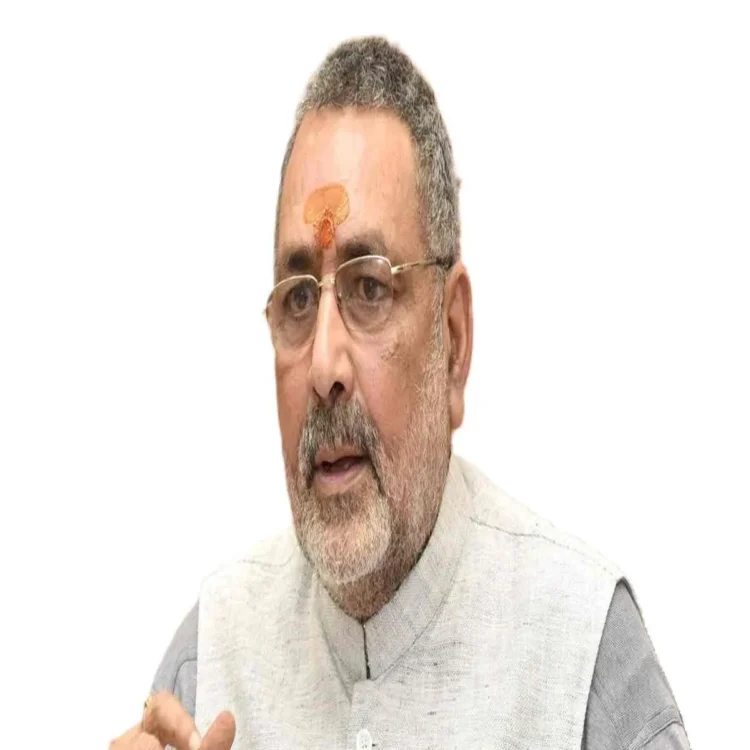
Speaking to reporters in Patna, Singh said the government respects the judiciary’s intervention and believes the stay will allow for a more balanced discussion on the regulations. He added that the controversy had taken on a political colour that, in his view, was unnecessary and unhelpful.
Minister Welcomes Judicial Intervention
Singh expressed appreciation for the apex court’s order to keep the 2026 regulations in abeyance. He said the government views the decision as an opportunity to address concerns without allowing misinformation or political rhetoric to dominate the conversation.
According to the minister, the debate around the regulations had moved away from constructive dialogue. He argued that the government’s guiding principle of inclusive growth is rooted in action rather than slogans, and that policy decisions are taken with a long-term perspective.
Allegations of Political Exploitation
The Union minister accused some political leaders of attempting to extract electoral advantage from sensitive social issues. He said such approaches risk creating unnecessary divisions and undermine efforts to build consensus on education reforms.
Singh maintained that the current administration has consistently prioritised social justice. He pointed to earlier policy measures aimed at ensuring fair representation and opportunities for historically marginalised communities, noting that these steps were implemented on the ground rather than remaining symbolic.
Reference to Past Policy Decisions
Highlighting previous initiatives, Singh said the government had taken concrete actions to support Scheduled Castes and Scheduled Tribes when issues related to promotions and representation were raised. He also referred to measures that granted constitutional recognition to Other Backward Classes and introduced a 10 per cent reservation for economically weaker sections within the general category.
He said these decisions reflected a broader commitment to balance equity with merit, and to ensure that development policies reach diverse sections of society. Singh added that dissatisfaction among certain groups has led to attempts to politicise reforms that are still under legal and administrative review.
Call for Social Harmony
The minister urged citizens and political stakeholders to avoid spreading divisive narratives. He also acknowledged the role of senior members of the Union government, including the education and home ministries, in engaging with the issue responsibly.
Singh said future decisions would continue to be guided by national interest and the welfare of all communities, emphasising that dialogue and patience are essential while the matter remains before the court.
Supreme Court’s Order Explained
On Thursday, the Supreme Court issued notices to the Centre and the University Grants Commission, directing that the 2026 equity regulations should not be enforced for now. The court ordered that the 2012 UGC Regulations would remain in effect until further instructions are issued.
The bench, led by the Chief Justice of India and a companion judge, was hearing multiple petitions that raised concerns about potential discrimination against candidates from the general category. Petitioners also questioned whether the new framework provided adequate grievance redressal mechanisms.
Use of Constitutional Powers
While granting the interim relief, the court invoked its powers under Article 142 of the Constitution, stating that the step was necessary to ensure complete justice. The judges noted that without intervention, the regulations could have far-reaching social consequences.
The bench observed during the hearing that unchecked implementation might deepen social divisions and lead to serious repercussions. The matter has been scheduled for further consideration on March 19, when the court is expected to examine the arguments in greater detail.