
Bihar : Positions Itself for Industrial Expansion With Policy Reforms and Infrastructure Push
Bihar: Senior officials in Bihar say the state has reached a stage where industrial investment can grow on a stable and supportive foundation. In a recent interaction in Patna, Chief Secretary Pratyaya Amrit outlined how years of infrastructure development, governance reforms, and targeted policy measures have reshaped the business environment, creating conditions conducive to long-term industrial growth.
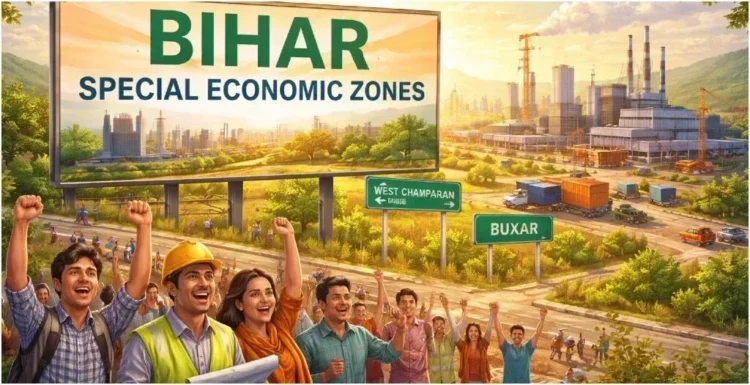
Infrastructure Readiness and Improved Business Climate
According to the Chief Secretary, Bihar has steadily built the physical and administrative infrastructure needed to support industry over the past two decades. Road connectivity has expanded across rural and urban areas, supported by national highways and newly developed expressways. Power availability, once a major concern, has improved significantly and no longer acts as a bottleneck for industrial operations.
Law and order, described as a critical requirement for investor confidence, has also seen marked improvement. These factors together, he said, have helped establish an environment where businesses can plan and operate with greater certainty.
Investment Policies Drawing Early Interest
The state government has introduced a series of investment-friendly policies aimed at simplifying procedures and attracting domestic and global investors. Among them are the Bihar State Industrial Investment Promotion Policy 2022 and the updated Industrial Investment Promotion Policy 2025. Officials report that these frameworks have begun to generate interest, with investment proposals now gradually coming in.
A key focus has been reducing procedural complexity and improving the overall Ease of Doing Business. Administrative processes have been streamlined, and feedback from industry stakeholders is being actively incorporated into policy execution.
Udyog Varta as a Direct Engagement Platform
To strengthen communication between the government and the business community, Bihar has launched Udyog Varta, a structured dialogue platform. Through this initiative, entrepreneurs and industry representatives can interact directly with ministers, senior officials, and district administrations, either in person or through virtual meetings.
District magistrates have been instructed to hold similar interactions locally and visit industrial areas to identify on-ground challenges. The aim is to resolve issues faster and align infrastructure development with actual industrial needs.
Technology-Led Industrial Strategy
The state is also expanding its industrial vision beyond traditional sectors. A Global Capability Centre policy has been introduced, alongside an Electronic Manufacturing Policy and other sector-specific initiatives. Officials see technology adoption, particularly Artificial Intelligence, as a central driver of future growth.
Expert committees comprising specialists from within and outside Bihar have been formed to guide this transition. The administration believes these steps position Bihar as an emerging destination for technology-driven investment in eastern India.
Plans for New Urban and Economic Hubs
Beyond manufacturing and technology, the government is working on proposals to develop fintech hubs, education-focused cities, sports cities, and satellite townships. Detailed roadmaps for these projects are expected to be finalised within the next few months.
The broader objective is to promote an inclusive model of industrialisation that links employment generation with education, innovation, start-ups, and entrepreneurship. Officials describe this approach as a pathway toward a more developed and self-sustaining Bihar.
Reviving Sugar Mills and Strengthening Agriculture
Bihar is also revisiting its industrial legacy in sugar production. Plans are underway to revive nine closed sugar mills and establish 25 new ones, largely through cooperative participation. The emphasis is on modern technology to improve efficiency and support farmers.
Technology-driven governance is being extended to agriculture as well, with digital platforms helping streamline farmer registrations and service delivery.
Addressing Migration and Employment Goals
Migration has long been a concern for the state, and officials say new industrial and technology policies are designed to create local opportunities that match the skills of Bihar’s workforce. Initiatives supporting start-ups, entrepreneurship, and industrial employment aim to encourage people to return and invest their expertise locally.
The government has set a target of generating one crore jobs over five years. According to officials, early signs suggest that outward migration is beginning to slow as opportunities expand within the state.
Governance Reforms and Anti-Corruption Measures
Reducing corruption remains a priority, with officials linking the issue to outdated systems rather than individual conduct. The current investment framework emphasises minimal direct interaction between investors and government offices, supported by digital systems and transparent processes.
The administration has reiterated a zero-tolerance stance on corruption, crime, and communal disturbances, with technology-led governance seen as central to building investor confidence.
Key Priorities Ahead
Looking forward, the Chief Secretary identified industry, urban development, tourism, and modern agriculture as core focus areas. The integration of Artificial Intelligence across sectors, particularly in farming, is expected to play a growing role in boosting productivity and employment.