
Bihar: How Nitish Kumar and Lalu Prasad Agreed and Then Differed Regarding Socialist Concept
Bihar: Caste justice, identity, and coalition politics are all back in the spotlight as Bihar enters a new election season. However, there is a deeper continuity behind the changing relationships. A half-century-old dilemma still dominates state politics: would Sanghwaad (Hindutva) or Samamajwaad (socialist) define Bihar’s conception of justice?
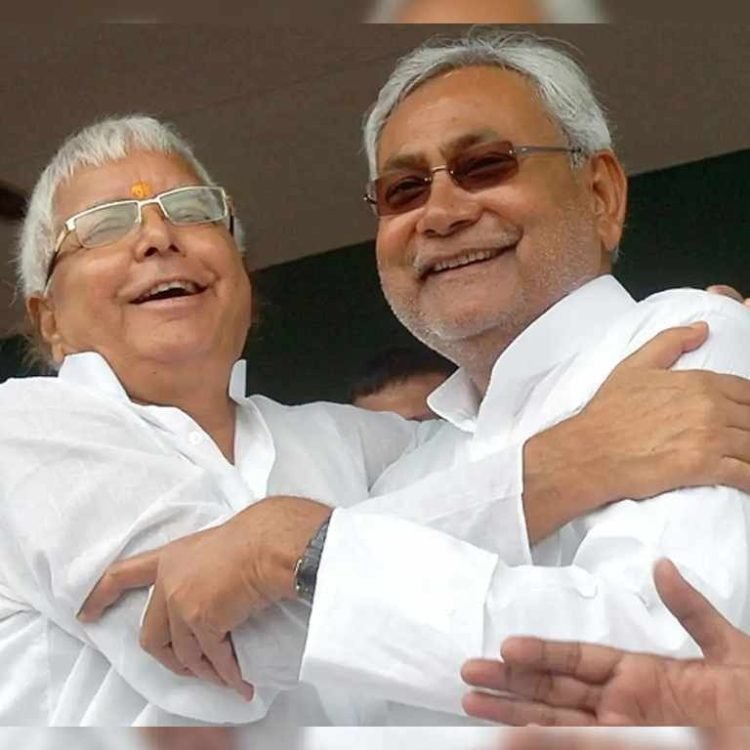
Socialism continues to be the political lifeblood of Bihar fifty years after the JP movement transformed India’s democratic idealism. And at its core are Lalu Prasad Yadav and Nitish Kumar, two individuals whose lives reflect the emergence, development, and longevity of the idea.
November 6 (121 seats) and November 11 (122 seats) are the two voting days in Bihar. The results are counted on November 14.
The Establishment of Socialism in Bihar
Inequality gave rise to the socialist tradition in Bihar. Caste and class were linked by the Permanent Settlement of 1793, which solidified landlord control and converted peasants into tenants. From small peasant uprisings to Swami Sahajan and Saraswati’s Kisan Sabha, a number of agricultural movements emerged in the early 20th century that linked social hierarchy and economic exploitation.
By the 1950s, socialism in Bihar had been reinterpreted in light of Ram Manohar Lohia’s demand for samajik nyay, or social justice. The focus shifted from Marxist class strife to equality, representation, and dignity. These threads united in a moral and political movement that aimed to reshape Indian democracy via fairness and participation when Jayaprakash Narayan started his “Total Revolution” in the 1970s.
Lalu Prasad Yadav, Nitish Kumar, Ram Vilas Paswan, and Sharad Yadav were among the new leaders who emerged from that uprising and took socialist politics from the streets to the state.
The JP Movement and a Generation’s Ascent
Bihar became the epicenter of opposition after Indira Gandhi proclaimed a state of emergency in 1975. Lalu became one of the most well-known figures in the movement. Behind the scenes, Nitish Kumar organized meetings, wrote statements, and briefed the media on the movement’s objectives.
Both adopted JP’s decentralization and equality philosophies. Lalu was elected to Parliament from Chhapra in the 1977 election that followed the Emergency, while Nitish eventually made it into the Bihar Assembly in 1985 after a string of setbacks.
Together, they represented two sides of the same political awakening: Nitish, the organizer who aimed to turn philosophy into government, and Lalu, the charismatic mobilizer who made socialism appealing to a large audience.
Lalu’s Socialism: Representation Leads to Empowerment
When Lalu was elected Leader of the Opposition in the Bihar Assembly in 1989, Nitish not only supported him over more experienced opponents but also wrote his news releases. The Janata Dal and the Mandal Commission’s ideology of OBC empowerment served as the foundation for the post-Congress generation that the two belonged to.
A significant change occurred in 1990 when Lalu was appointed Chief Minister. Years of animosity among the lower classes were summed up in his catchphrase, “Bhurabal hatao” (remove the Bhumihars, Rajputs, Brahmins, and Lalas). Bihar’s government for the first time represented the priorities, looks, and accents of people who had long been marginalized.
He was as appealing for his symbolism as for his content. Lalu represented the time when marginalized populations rose tall to his followers. His extended reign, which his opponents dubbed “jungle raj” in the national discourse, witnessed the breakdown of institutions and an increase in lawlessness. However, his detractors’ use of that same word also emphasized the magnitude of the societal transformation he had sparked: the overturning of the status quo.
The Break And Nitish’s Anger
A conference at Delhi’s Bihar Bhawan in the winter of 1992 descended into a brawl. Nitish added, “Ab saath chal paana mushkil hai,” as he left after Lalu yelled, “Pakadke phenk do bahar,” at his assistants. Then, Sharad Yadav attempted to mediate a settlement. The dispute persisted when Nitish refused to accept Lalu’s apology.
Soon after, Nitish sent a letter accusing Lalu of associating with followers and claiming responsibility for group decisions, such as the arrest of L.K. Advani during the Ram Rath Yatra. They were no longer able to compromise on their disagreements between administration and populism, representation and change.
When Nitish said, “Bheekh nahin hissedari chahiye,” during a Kurmi Chetna rally in Patna in February 1994, the division was formally announced. He established the Samata Party within a year, completing the biggest political split in Bihar since the Emergency.
Two Ways Following the Split
As Lalu’s conviction for fodder fraud turned into a political turning point, the gap only widened. Despite growing accusations of corruption and misrule, he continued to be the dominating figure in Bihar during the 1990s. Nitish concentrated on creating a substitute that was based on administrative prowess and governance.
In 1996, he formed an alliance with the BJP based on math rather than philosophy. His position was reinforced by the collaboration, and after 15 years of RJD dominance, the JD(U)-BJP combination took power in 2005. Nitish’s ambition to modernize socialism via reform and delivery rather than rhetoric was encapsulated in his motto, “Nyay ke saath vikas” (development with justice).
His persona as “Susashan Babu” represented stability and leadership in a state that had long been linked to deterioration for ten years. Improvements were made to roads, healthcare, and education, and women’s involvement in municipal government increased.
The RJD, JD(U), and Congress Mahagathbandhan won 178 of 243 seats in 2015. The RJD was the biggest party, however Lalu gave Nitish the position of chief minister.
However, an ideological conundrum was also introduced by Nitish’s coalition with the BJP. The caste-based social justice that served as the foundation for Nitish’s personal politics clashed with Hindutva’s focus on religious unity. This paradox was evident in every subsequent alliance and breakup, including those in 2013, 2015, 2017, 2022, and 2024.
Mandal and Mandir: The Persistent Ideological Disparity in Bihar
Two opposing ideologies have dominated Bihar politics since the 1990s: Mandal and Mandir. Leaders like Lalu Prasad Yadav helped to construct the Mandal period, which made caste justice the organizing principle of politics. Through the OBC reservation structure, it moved minorities, Dalits, and the backward classes into the center of power.
The popularity of the Mandir movement, spearheaded by the BJP and Sangh Parivar, was based on a distinct kind of unity: religious identity. Hindutva emerged as the counter-narrative for many Hindus of the higher caste who were uneasy with claims made during the Mandal period, promising unity by religion rather than caste.
But as time went on, the BJP realized that a solely religious approach would not win Bihar. Voting patterns are still influenced by caste math, and social justice is still a moral term that neither party can ignore. In many respects, the 2005 JD(U)-BJP partnership was an attempt to bring two ideas together: Nitish Kumar’s backward-caste inclusivity and the BJP’s cultural nationalism.
That balancing act is still going on twenty years later. The BJP has attempted to demonstrate that Hindutva and Mandal can coexist during the current 2025 Bihar Assembly campaign. Following the Union cabinet’s approval and notification of the inclusion of caste data in the next national census, it has openly supported caste enumeration, a measure previously supported solely by communist parties. This enables the party to claim that it is in favor of policies based on caste without giving its opponents any moral footing.
This repositioning is reflected in its roster of candidates. Twelve Dalit, forty backward caste, and forty higher caste candidates have been put forth by the BJP. Four Muslims have been handed tickets by its partner JD(U), one by Chirag Paswan’s party, and 28 by the opposition grand alliance, which is headed by RJD and Congress (18 from RJD and 10 from Congress).
This is a component of a larger plan that has been developed over the previous 12 months. Bihar has seen a concerted organizational drive by the BJP and the RSS. In an effort to reassure OBC and Dalit supporters who previously saw the party as being controlled by the upper caste, RSS president Mohan Bhagwat has reaffirmed that the Sangh is in favor of caste-based reservations.
Meanwhile, the Bihar leadership of the BJP has changed. New OBC faces have emerged while several upper-caste giants have been pushed to the sidelines. Union minister Dharmendra Pradhan, who is in charge of the Bihar campaign, state BJP president Dilip Jaiswal, and deputy chief minister Samrat Choudhary are all from underprivileged backgrounds. In an effort to win over younger voters and quell dissension among elder Rajput officials, the party also welcomed Bhojpuri actor-politician Pawan Singh.
The paradox, however, has never entirely vanished. The caste balance established by Mandal politics is essential to Nitish’s survival, but the BJP’s ideology aims to go beyond these boundaries. This conflict, not just opportunism, is what causes Bihar’s turmoil whenever Nitish switches sides.
The Evolution of Socialism
Both Nitish and Lalu have come to symbolize distinct forms of socialism by the 2010s. Although Lalu’s caste-based politics had lost their administrative legitimacy, they were nevertheless emotionally appealing. Although Nitish’s governance-based politics expanded his influence, they also compromised the integrity of his ideology.
JD(U) lost two Lok Sabha seats in 2014 after severing its connections with the BJP in 2013 over Narendra Modi’s portrayal as the face of the NDA. He formed the Mahagathbandhan with Lalu and the Congress two years later, and the party easily won the 2015 Assembly elections.
The reunion didn’t last long. Following accusations of corruption involving Lalu’s family, Nitish left the coalition and re-joined the NDA in 2017. He rejoined the BJP in early 2024 after departing once again in 2022. In January 2025, Nitish openly rebuffed Lalu’s invitation to rejoin the opposition INDIA group, referring to their previous collaboration as “a mistake.”
Once entwined, their careers had become rival representations of Bihar’s shattered socialism, with one being technical and the other emotive.
Generational Shifts And Bihar’s Socialism’s Future
The generation created by the JP movement is nearing the end of their life as Bihar prepares for the 2025 election. Tejashwi Yadav, Lalu’s son, is now the leader of the RJD and is running a campaign for social justice and employment. Although he is still the chief minister, Nitish is questioned about his frequent changes of partnership and political weariness.
Additionally, this is the first election in Bihar when a large number of JP period veterans are either absent or fading. The BJP promotes leaders like Samrat Choudhary and Vijay Kumar Sinha, while JP-generation figures like Ravi Shankar Prasad and Ashwini Kumar Choubey have taken a backseat. Sushil Modi and Ram Vilas Paswan are no longer with us. People like Prashant Kishor and Chirag Paswan appeal to younger people outside of the two major factions by promoting development.
The electorate in Bihar has also evolved. Approximately 58% of its electorate is under 35. For them, caste is still a major aspect of daily life, but socialism is more of a memory than a movement. Today, identity and economic desire mix to create a new political discourse in which social justice and growth are in competition.
Tejashwi has attempted to present the legacy of the RJD as combining social justice and progress. While Nitish continues to portray himself as the intermediary between ideology and government, the BJP has included outreach to backward castes into its larger Hindutva campaign.
Socialism’s Current Significance in Bihar
Bihar’s political and moral language is still socialism, even with changes in alliances and terminology. Despite having diverse objectives, all major parties use the same idiom: equality, justice, and representation.
Lalu exemplifies its initial sense of strength and rebellion. Its administrative reform, which translates moral principles into government, is symbolized by Nitish. By fusing inclusivity with a broader cultural narrative, the BJP embodies its adjustment to new circumstances.
Bihar’s politics still struggle with itself fifty years after Jayaprakash Narayan’s “Total Revolution”: between justice and religion, caste and community, identity and ambition. The main argument about the state has not changed, despite the actors and slogans changing.
Bihar’s people will once again choose which ideology dominates as the next campaign picks up steam: representation or consolidation, samajwaad or sanghwaad.