
Currency – Rupee Slides to Record Low as Oil Prices Surge Globally
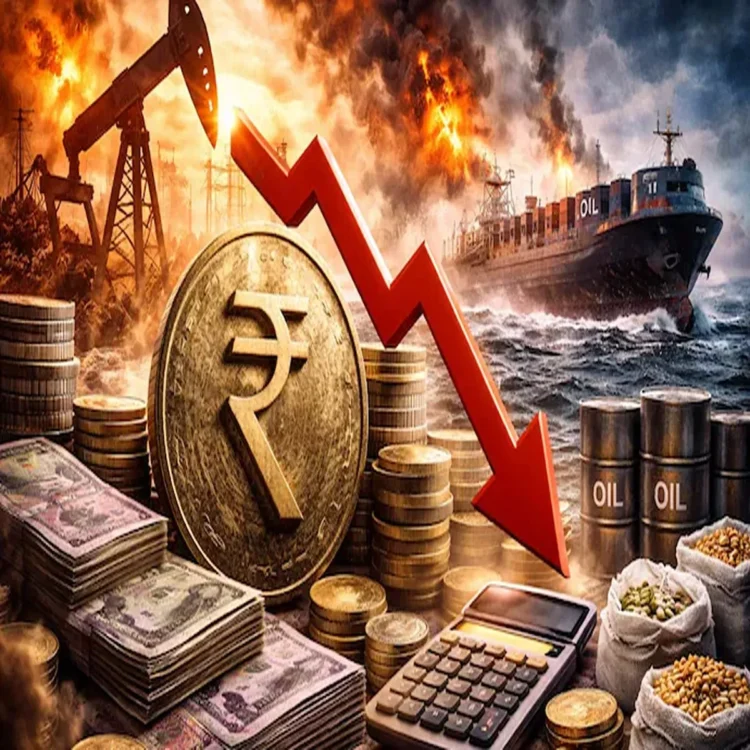
Currency – The Indian rupee weakened sharply on Thursday, falling to a historic low of 92.94 against the US dollar. The decline of 30 paise reflects mounting pressure from rising crude oil prices and persistent global uncertainty linked to tensions in West Asia.
Foreign investor outflows add to pressure
A key factor behind the rupee’s fall has been sustained selling by foreign institutional investors in Indian equities. Over the past 12 trading sessions, FIIs have withdrawn close to Rs 74,000 crore from domestic markets, reducing capital inflows and putting additional strain on the currency.
Market participants note that this continuous outflow has weakened investor confidence, making it harder for the rupee to stabilize despite intermittent support from domestic factors.
Escalating West Asia tensions impact oil markets
Geopolitical developments in West Asia have further intensified concerns. Iran has issued strong warnings, indicating that it could respond more aggressively if its energy infrastructure faces further attacks from the United States or Israel.
On Wednesday, Israeli forces reportedly targeted Iran’s South Pars offshore natural gas field, a major energy asset shared with Qatar. In response, Iran launched strikes that Qatar later said caused fires and significant damage at its liquefied natural gas facilities.
These developments have raised fears of supply disruptions, pushing global oil prices higher and increasing import costs for energy-dependent economies such as India.
Rupee decline continues amid strong dollar demand
The rupee had already shown signs of weakness earlier in the week. On Wednesday, it touched another record low of 92.63 against the US dollar. During that session, the currency opened at 92.42 in the interbank foreign exchange market and moved within a limited range before slipping further.
Despite relatively stable global risk sentiment and some easing in crude prices earlier, demand for the US dollar remained strong, particularly from importers. This demand has kept the rupee under consistent pressure.
Analysts estimate that the rupee has depreciated by more than one percent since tensions in West Asia began to escalate, highlighting the sensitivity of the currency to global developments.
Macroeconomic outlook remains challenging
Financial experts believe the broader economic environment continues to pose challenges for the rupee. Elevated crude oil prices are expected to persist in the near term, which could widen India’s trade deficit and increase inflationary pressures.
As India imports a large portion of its energy needs, any sustained increase in oil prices directly impacts the currency by raising demand for dollars.
US weighs emergency steps to manage oil supply
In response to rising global energy concerns, the United States is considering several emergency measures. These include the possibility of releasing additional crude oil from its strategic reserves and reviewing restrictions on Iranian oil exports.
US Treasury Secretary Scott Bessent indicated that contingency plans are already in place to address potential disruptions, especially in critical maritime routes that play a vital role in global oil transportation.
The White House is under increasing pressure to act as energy infrastructure attacks and shipping disruptions continue to affect global supply chains, contributing to higher prices.
Outlook tied closely to global developments
Going forward, the direction of the rupee will likely depend on multiple external factors, including oil price trends, geopolitical stability in West Asia, and the movement of foreign investment.
Currency markets are expected to remain volatile in the near term, with analysts closely tracking global developments and policy responses from major economies.