
Infrastructure – Delhi Deploys Amphibious Excavators to Upgrade Drainage System
Infrastructure – The Delhi government has introduced advanced amphibious excavator machines to strengthen the city’s drainage infrastructure and address long-standing issues related to silt buildup and waterlogging.
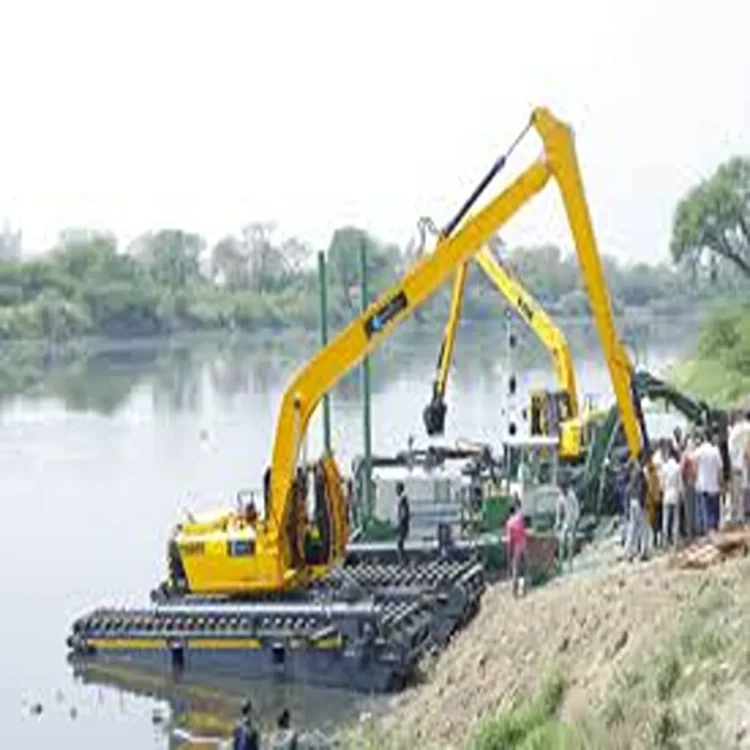
The machines were launched at key locations including Badusarai Bridge, the Najafgarh Drain and the Pankha Road Drain. Officials said the move is aimed at modernizing the process of cleaning major drains and ensuring smoother water flow, particularly during the monsoon season when flooding and waterlogging frequently disrupt daily life in the capital.
Modern Equipment Introduced to Improve Drain Cleaning
According to government officials, the newly deployed amphibious excavators are designed with both long-boom and short-boom configurations. These machines can operate efficiently in waterlogged and marshy areas where traditional equipment struggles to function.
Authorities explained that the machines will play a crucial role in removing accumulated silt, garbage and invasive aquatic plants such as water hyacinth from large drainage channels. By improving the efficiency and speed of desilting work, the government expects the overall capacity of the drains to increase significantly.
The introduction of these machines is also expected to make maintenance operations safer and more systematic, reducing manual intervention and enabling workers to access difficult sections of drains.
Focus on Cleaning Najafgarh Drain
Speaking at the launch event, Delhi Chief Minister Rekha Gupta highlighted the importance of the Najafgarh Drain in the capital’s drainage network. She noted that the drain is the largest in the city and carries a major share of the sediment that flows through Delhi’s drainage system.
Officials estimate that the Najafgarh Drain alone accounts for nearly three quarters of the total silt present in the capital’s drains. Over the years, the buildup of sediment has made cleaning operations complex and time consuming.
Gupta stated that the use of amphibious excavators will significantly improve the ability to remove sediment from the central sections of the drain. Previously, reaching the middle portion of large drains was extremely difficult with conventional equipment.
With the new machines, operators can access deeper sections and directly extract silt that has accumulated over many years, helping to speed up the clearing process.
Large-Scale Silt Removal Planned
Government estimates indicate that more than 10 million metric tonnes of silt have built up in the Najafgarh Drain. The newly introduced machines are expected to play a central role in tackling this massive accumulation.
Officials confirmed that the government plans to expand the fleet of amphibious equipment to further strengthen the desilting programme. One such machine had already been procured earlier, and four additional machines were formally introduced on Friday as part of the latest initiative.
Authorities said more units are expected to be delivered to the department in the coming weeks to support large-scale cleaning operations across the city’s drainage network.
Year-Round Desilting Strategy
The Chief Minister also announced a shift in the government’s approach to drain maintenance. Instead of restricting desilting work to the weeks leading up to the monsoon, the administration has decided to carry out cleaning operations throughout the year.
Officials believe this continuous maintenance strategy will help prevent excessive buildup of sediment and waste, allowing drains to function more efficiently during heavy rainfall.
Cabinet Minister Parvesh Sahib Singh said the adoption of modern amphibious technology marks an important step toward improving the city’s drainage management.
He added that these machines will enable authorities to remove years of accumulated silt, garbage and aquatic vegetation more effectively, which in turn will increase the water carrying capacity of the drains.
By strengthening the drainage network, the government hopes to reduce the risk of waterlogging during the monsoon and improve urban infrastructure across Delhi.