
WomenReservation – Congress Urges All-Party Talks on Women’s Quota Amendment
WomenReservation – The Congress party has called on the central government to convene an all-party meeting to deliberate on the proposed amendment to the Women’s Reservation law, arguing that such a significant policy change should be discussed collectively rather than handled through what it described as divisive political tactics.
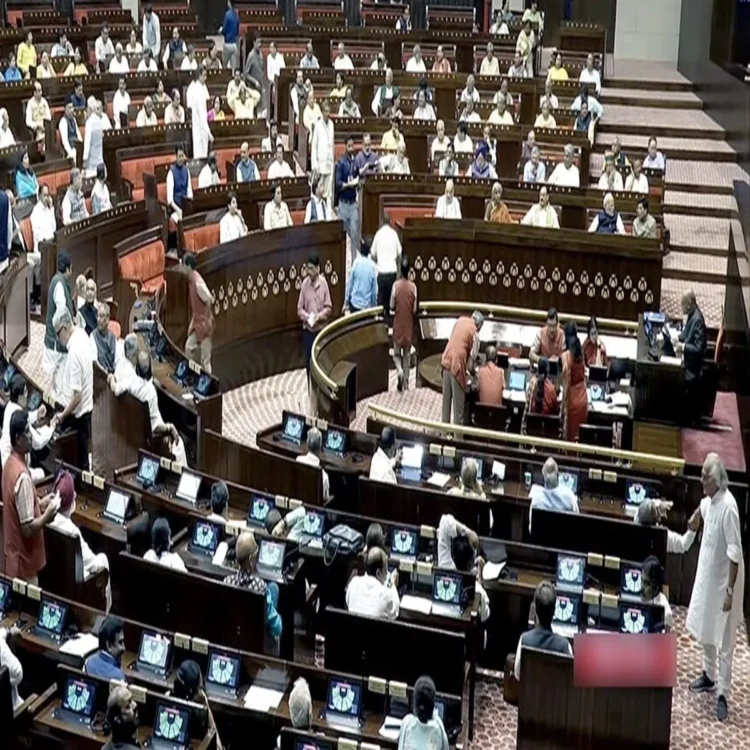
The demand was raised by senior Congress leader and Member of Parliament Jairam Ramesh, who said the government should openly share its proposal with all political parties and seek consensus before moving forward in Parliament.
Congress Calls for Wider Consultation
Speaking to reporters, Jairam Ramesh said the government must invite all political parties to discuss the amendment before it is formally introduced. According to him, matters related to political representation and constitutional reform require broad agreement and transparency.
He stressed that the government should present its proposal clearly so that different parties can review and debate it in a constructive environment. Ramesh also accused the ruling administration of attempting to pursue what he called a strategy that creates divisions among political groups rather than building consensus on a national issue.
Congress leaders believe that involving all parties would ensure the amendment receives balanced scrutiny and reflects the concerns of multiple stakeholders within India’s democratic framework.
Background of the Women’s Reservation Law
The proposed amendment comes in the context of the Constitution (One Hundred and Sixth Amendment) Act, 2023, widely known as the Nari Shakti Vandan Adhiniyam. The law was passed by Parliament in September 2023 and marked a major step toward increasing women’s participation in India’s political system.
The legislation provides for a 33 percent reservation for women in the Lok Sabha, the lower house of Parliament. It also extends the same level of reservation to all state legislative assemblies across the country.
Under the law, one-third of the total seats in these legislative bodies will be reserved for women. The reserved seats will rotate among constituencies over time, ensuring that different regions experience representation by women leaders in successive electoral cycles.
Supporters of the law view it as a transformative measure aimed at correcting the long-standing underrepresentation of women in political institutions.
Inclusion of SC and ST Women in the Quota
Another important feature of the legislation is that it includes provisions ensuring representation for women belonging to Scheduled Castes and Scheduled Tribes within the reserved quota.
This means that the one-third reservation for women will also contain dedicated seats for SC and ST women, aligning with the existing reservation structure that applies to these communities in legislative bodies.
Policymakers have argued that such provisions are necessary to ensure that the benefits of increased representation reach women from diverse social and economic backgrounds.
Advocates say the law has the potential to reshape the country’s political landscape by encouraging greater participation of women in governance and decision-making processes at both national and state levels.
Political Debate Ahead of Parliamentary Discussion
The discussion around a possible amendment has intensified ahead of its expected introduction in Parliament. Opposition parties have indicated that they want clarity from the government on the nature of the proposed changes and how they might affect the implementation timeline or structure of the existing law.
Congress leaders say that a collective dialogue among parties could help prevent political disagreements from overshadowing the broader objective of strengthening women’s representation in public life.
They also argue that consensus-driven policymaking is essential when dealing with constitutional amendments that could influence India’s democratic institutions for decades.
Lok Sabha Proceedings Disrupted Over LPG Concerns
Meanwhile, proceedings in the Lok Sabha faced disruption during the same period as opposition lawmakers raised concerns about a reported shortage of LPG cylinders in several parts of the country.
Opposition members questioned the government’s claim that there was no supply crisis and alleged that households in multiple regions were experiencing difficulty in obtaining cylinders.
As protests continued inside the House, parliamentary proceedings were eventually adjourned until Monday. The disruptions reflected growing tensions between the government and opposition parties over both economic concerns and ongoing legislative debates.
The coming days in Parliament are expected to witness further discussions on these issues, including the proposed amendment related to women’s political representation.