
IranAirstrike – Toxic Cloud Concerns Rise After Tehran Fuel Depot Bombing
IranAirstrike – Meteorologists in India are carefully tracking atmospheric conditions after reports emerged of a large dark cloud spreading from Tehran following a major attack on fuel facilities in Iran. Despite growing concerns that the polluted air mass could drift toward the Indian subcontinent, current wind patterns appear to be steering the cloud away from Indian territory, according to experts familiar with the situation.
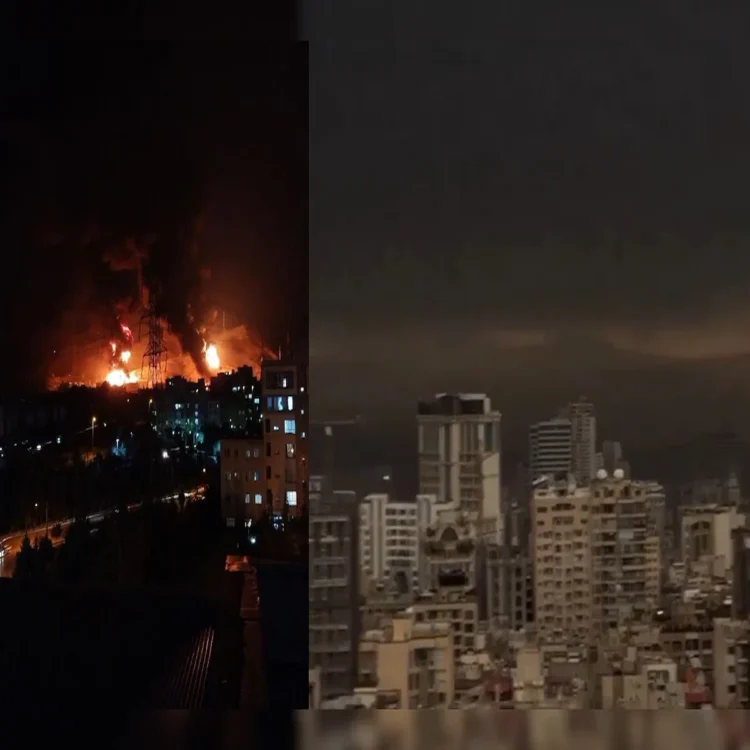
Explosion in Tehran Sends Dark Plume Across Region
Late on the night of March 8, fuel storage depots in Tehran were reportedly targeted in a bombing operation involving the United States and Israel. The strikes triggered extensive fires that released thick black smoke across large parts of the Iranian capital.
By the following morning, residents in several districts of Tehran reported unusual conditions. Some witnesses described oily droplets falling from the sky, while small flames were seen emerging from roadside drainage systems. The burning fuel and smoke created a widespread pollution cloud that quickly spread across the city and surrounding areas, raising alarms about possible environmental and health risks.
Toxic Cloud Raises Fears of Cross-Border Air Pollution
Environmental specialists warn that such large-scale industrial fires can release hazardous particles and chemicals into the atmosphere. When carried by strong winds, these pollutants may travel long distances and could potentially lead to acid rain or contaminated precipitation in affected regions.
Because of these risks, attention quickly turned to whether the polluted air mass could move toward South Asia. Several experts suggested that shifting wind patterns could carry the cloud toward Northeast Asia, potentially affecting multiple countries in the region.
IMD Monitoring Wind Movements Closely
Officials from the Indian Meteorological Department have been quietly examining wind trajectory data and atmospheric models to determine whether India could face any impact. While the department has not released an official statement, scientists involved in the monitoring effort say preliminary analysis indicates that the cloud is unlikely to reach Indian territory.
According to specialists studying atmospheric circulation, both lower and mid-level wind models suggest that the air mass generated by the Tehran fires is moving northeast rather than toward the Indian subcontinent.
Forecast Models Show Pollution Drifting Away From India
Researchers analyzing global atmospheric simulations have relied on the HYSPLIT trajectory model developed by the National Oceanic and Atmospheric Administration. The system tracks the path of airborne particles based on wind direction, altitude, and atmospheric pressure patterns.
The model currently outlines three major paths for the polluted cloud. All projected routes move away from India. Two trajectories pass across China and parts of Russia before eventually drifting toward the South China Sea. A third pathway carries the cloud northward through Russian territory toward the Arctic region.
Another NOAA simulation indicates that a portion of the smoke plume may continue circulating around central Iran for some time before gradually dispersing.
Western Disturbance Plays Key Role in Wind Direction
Meteorologists also note that a western disturbance system had already moved across Iran before the bombing occurred. This weather system influences high-altitude winds over the Middle East and the Himalayas.
The disturbance is now expected to bring cloud cover and weather changes to northern India, including the higher Himalayan regions of Jammu and Kashmir and Himachal Pradesh. Parts of Punjab, Haryana, and Uttarakhand may also experience cloudy conditions as the system progresses eastward.
However, scientists explain that the associated wind circulation is currently helping push the polluted air mass away from the western Himalayas rather than toward them.
Regional Tensions Extend to Energy Infrastructure
The air pollution incident comes amid a broader escalation of attacks on critical infrastructure in the Gulf region. Energy facilities, including oil storage and desalination plants, have recently become targets during the ongoing conflict.
After a desalination facility in Iran was reportedly struck, Iranian forces launched retaliatory attacks on a similar installation in Bahrain. Desalination plants play a vital role in supplying drinking water across many Gulf countries, making such attacks particularly concerning for regional stability.
For now, meteorological monitoring continues as scientists track the movement of the smoke plume across Asia to assess any possible environmental impact.