
Reservoirs – Gujarat’s Major Dams Reach 72 Percent Capacity Ahead of Summer
Reservoirs – Gujarat’s key reservoirs are currently holding a significant share of their total capacity, providing reassurance that drinking water supplies will remain stable as the state prepares for the approaching summer season.
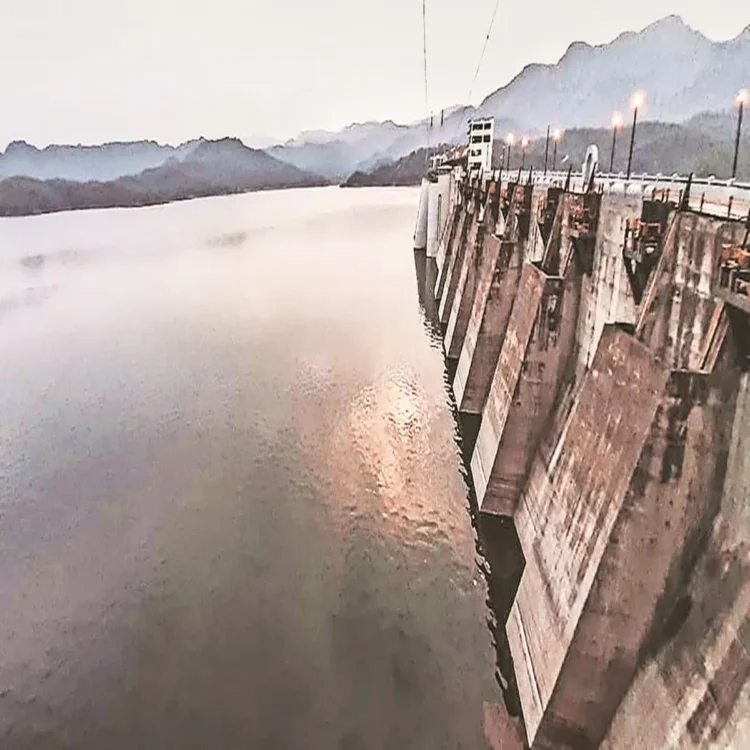
Gujarat’s Water Resources Department reported that the state’s major dams and reservoirs have reached 72.49 percent of their total storage capacity. The improvement follows an unusually strong monsoon season, during which Gujarat recorded more than 128 percent of its average rainfall. The rainfall has helped replenish water sources across several regions, easing concerns over summer water shortages.
Storage Levels Show Noticeable Improvement
According to official figures recorded on March 5, the combined water storage in the state’s primary reservoirs stands at approximately 6.46 lakh million cubic feet (MCFT). This represents an increase of about 4.15 percent compared with water levels during the same period last year.
Officials from the Water Resources Department said the steady rise in storage levels reflects coordinated planning and consistent monitoring by the state administration. Authorities noted that improved water management strategies have played a role in ensuring that adequate reserves are maintained for both drinking and irrigation needs.
State officials also highlighted the role of administrative leadership in strengthening water resource planning and distribution. Measures taken over the past year have focused on managing reservoir storage effectively and ensuring reliable supply across different regions of the state.
Sardar Sarovar Reservoir Remains Key Water Source
The Sardar Sarovar Reservoir, one of Gujarat’s most important water sources, continues to hold a substantial volume of water. Current data indicates that the reservoir is filled to more than 74 percent of its capacity, with approximately 2.47 lakh MCFT of water available.
This reservoir is widely regarded as the backbone of the state’s water supply system. It supports drinking water distribution as well as irrigation across multiple districts, making its storage level a critical factor in Gujarat’s overall water security.
Authorities said the healthy storage level in Sardar Sarovar is expected to provide strong support for water requirements during the coming months, particularly in areas that rely heavily on the reservoir’s distribution network.
Regional Reservoir Data Highlights Strong Storage
A breakdown of regional water storage figures shows that South Gujarat currently holds the highest volume of water among the state’s regions. Reservoirs in this region collectively contain more than 2.34 lakh MCFT.
Central Gujarat’s reservoirs hold around 65,179 MCFT, while North Gujarat accounts for 41,842 MCFT of stored water. In Saurashtra, the current storage stands at 53,621 MCFT, and reservoirs in Kutch contain about 4,392 MCFT.
When combined with the Sardar Sarovar Reservoir, the total water stored across the state’s reservoirs reaches 6,46,556 MCFT. This represents 72.49 percent of the overall storage capacity available in Gujarat’s major dams and reservoirs.
Comparison With Last Year’s Storage Levels
Water storage during the same period last year was slightly lower. At that time, North Gujarat reservoirs held around 27,847 MCFT, while Central Gujarat had 57,882 MCFT.
South Gujarat recorded about 2,24,182 MCFT, Saurashtra stored 52,264 MCFT, and Kutch reservoirs contained 5,332 MCFT. The Sardar Sarovar Reservoir alone held approximately 2,41,952 MCFT.
Overall, these figures represented about 68.34 percent of the state’s total reservoir capacity, indicating that current storage levels have improved compared with last year.
Large Network of Dams Supports State Water Supply
Gujarat maintains an extensive network of reservoirs and dams to manage water resources across different regions. The state has a total of 207 reservoirs and dams that support irrigation and drinking water supply.
Among these, Saurashtra has the largest number with 141 reservoirs. North Gujarat has 15, Central Gujarat has 17, South Gujarat contains 13, and the Kutch region has 20 reservoirs.
This wide distribution of water storage infrastructure allows the state to balance water availability across various districts and respond to regional needs during periods of high demand.
Monitoring Continues to Ensure Summer Water Security
Officials from the Water Resources Department stated that reservoir levels are being closely monitored on a daily basis. Continuous tracking helps authorities make timely decisions related to water distribution and conservation.
With current storage levels considered comfortable, the department expects that both urban and rural areas will have sufficient drinking water throughout the upcoming summer months.
However, officials also emphasized the importance of careful water management to maintain stability in supply and support agricultural requirements during the warmer season