
Parliament – Supreme Court Says Legislature Not Bound by Executive Assurances
Parliament – The Supreme Court on Friday underscored that Parliament retains full authority to enact laws and is not restricted by commitments made by the executive branch before the judiciary.
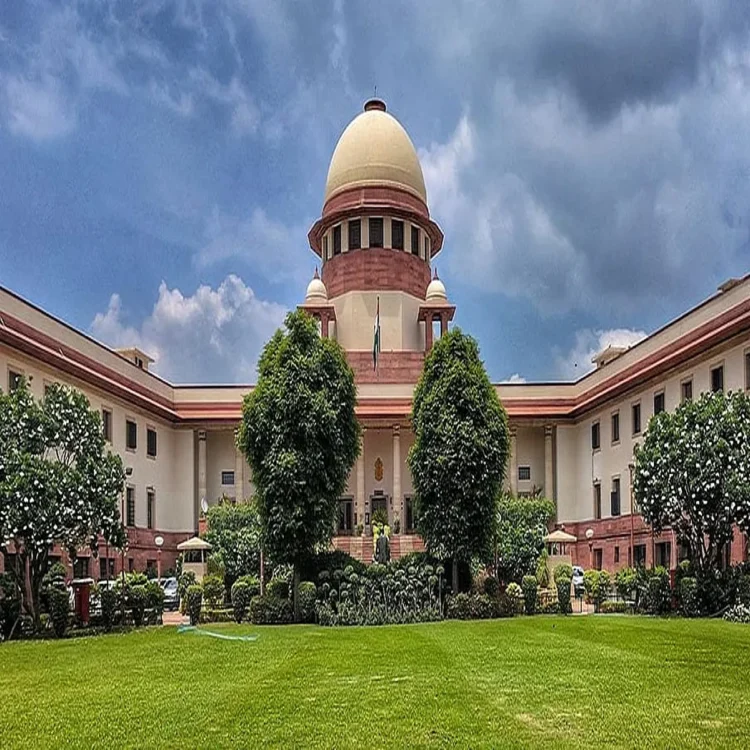
Bench Clarifies Scope of Legislative Authority
The observation came from a Bench led by Chief Justice Surya Kant and Justice Joymalya Bagchi while hearing a series of petitions challenging the constitutional validity of Section 152 of the Bharatiya Nyaya Sanhita (BNS). The provision addresses acts that threaten the sovereignty, unity and integrity of India.
Appearing for the petitioners, counsel argued that Section 152 effectively revives the old sedition provision—Section 124A of the erstwhile Indian Penal Code—which had been kept in abeyance by the apex court in May 2022. At that time, a three-judge Bench had suspended the colonial-era sedition law pending reconsideration by the government and directed authorities not to file fresh cases under the provision.
The petitioners’ lawyer told the court that the Centre had given an undertaking in 2022 to review the sedition framework and contended that reintroducing a similar clause in the new criminal code would run contrary to that assurance.
The Bench, however, made it clear that an assurance by the executive does not limit Parliament’s legislative competence. “An undertaking given by the government cannot curtail Parliament’s powers. Parliament has the absolute prerogative to enact a law,” the court observed during the hearing.
Debate Over FIR Registration Provision
The petitioners also raised concerns about Section 173 of the Bharatiya Nagarik Suraksha Sanhita (BNSS), arguing that it conflicts with the principles laid down in the Lalita Kumari judgment. That ruling mandates the registration of a First Information Report (FIR) when information reveals the commission of a cognisable offence.
The Bench responded by noting that the Lalita Kumari judgment, though significant, has at times led to misuse. The judges remarked that the mandatory registration requirement has contributed to a rise in frivolous FIRs, adding that judicial directions can sometimes be stretched beyond their intended scope.
The court’s comments signaled a broader concern over balancing procedural safeguards with the need to prevent abuse of the legal process.
Committee Report Sought on Farmers’ Protest
In a separate matter, the Supreme Court directed a high-powered committee to submit its report and recommendations concerning the farmers’ agitation that took place at the Shambhu border between Punjab and Haryana in 2024.
The committee had been formed earlier to explore solutions to the grievances raised during the protest. The Bench instructed that the report should not be placed in the public domain until further orders, emphasizing the need for confidentiality at this stage.
Bail Granted in Pune Porsche Crash Case
The court also granted bail to a doctor accused of tampering with blood samples in the Pune Porsche crash case. The incident occurred on May 19, 2024, when a luxury car allegedly driven by a 17-year-old boy struck a motorcycle, resulting in the deaths of two IT professionals.
A Bench comprising Justices B V Nagarathna and Ujjal Bhuyan allowed the bail plea, noting that the matter would continue to be examined as the investigation progresses. The case has drawn widespread attention due to allegations of evidence manipulation and the involvement of a minor.
Hearing on SHANTI Act Challenge
Additionally, the apex court agreed to examine a plea challenging provisions of the SHANTI Act, 2025. The Bench described the matter as an “extremely sensitive issue” that raises a conflict between asserted national interest and concerns about potential overreach.
Chief Justice Surya Kant and Justice Joymalya Bagchi indicated that the case would require detailed arguments before any conclusions are reached.
The day’s proceedings reflected the court’s engagement with significant questions relating to legislative power, criminal law reform, procedural safeguards, and issues of public importance.