
EducationReform – Parliament Panel Reviews VBSA Bill Amid Opposition Concerns
EducationReform – The first sitting of the parliamentary joint committee tasked with reviewing the Viksit Bharat Shiksha Adhishthan (VBSA) Bill witnessed pointed concerns from Opposition members, who questioned aspects related to centralisation, institutional independence, and the absence of a clear funding structure. The meeting, held on Thursday, marked the beginning of a detailed legislative examination of the proposed higher education framework.
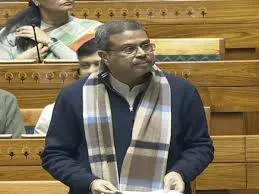
Opposition Flags Centralisation and Funding Gaps
According to sources familiar with the proceedings, several Opposition MPs argued that the proposed legislation concentrates significant authority at the central level, potentially affecting the autonomy of universities and colleges. Members from the Trinamool Congress, including Saugata Roy and Sagarika Ghose, reportedly raised objections about what they described as an erosion of federal principles within the higher education system.
Roy is understood to have told the committee that the Bill shifts considerable decision-making power to the Centre, leaving little room for institutional self-governance. He also noted that the draft legislation does not outline any dedicated funding mechanism for universities, focusing primarily on regulatory functions.
Other members echoed similar reservations, pointing out that unlike the existing University Grants Commission (UGC), the proposed body would not directly allocate funds to higher education institutions. They argued that regulation without financial backing could create operational challenges for universities across states.
Purpose and Scope of the VBSA Bill
The Viksit Bharat Shiksha Adhishthan Bill, introduced during the Winter Session of Parliament, proposes the creation of an overarching Higher Education Commission. The new structure would include three separate councils responsible for regulation, accreditation, and maintaining academic standards.
The government has stated that the Bill aims to streamline oversight by replacing the current system, which involves multiple regulators with differing approval processes. The proposed commission would function as a single authority for higher education governance, covering central universities, colleges, and institutes of national importance under the Ministry of Education.
Institutions such as the Indian Institutes of Technology, National Institutes of Technology, Indian Institute of Science, Indian Institutes of Management, Indian Institutes of Information Technology, and Indian Institutes of Science Education and Research would fall under the commission’s ambit. At present, bodies like IITs and IIMs operate outside the direct regulatory purview of the UGC.
Committee Assures Comprehensive Review
The 31-member joint committee was formed after the Bill faced strong objections in Parliament and was subsequently referred for closer scrutiny. The panel is chaired by BJP MP D Purandeswari.
Speaking to reporters after the meeting, Purandeswari said the committee would carefully examine all suggestions and concerns presented by members. She emphasised that representatives from various political parties participated in the discussion and offered their perspectives on the proposed law.
Sources indicated that the chair assured members that every input would be considered before the panel arrives at its recommendations.
Concerns Over Federal Structure
Several Opposition MPs are said to have argued that the Bill, in its present form, could impact the federal balance by granting expanded authority to the central government in matters traditionally involving state participation. They maintained that higher education governance must reflect cooperative federalism, given that many universities operate under state legislation.
Supporters of the Bill, however, have maintained that a unified regulator would address longstanding issues arising from overlapping jurisdictions and inconsistent approval norms.
Next Steps in the Legislative Process
The joint committee is expected to seek feedback from a wide range of stakeholders in the coming weeks. State governments, academic institutions, regulatory bodies, and education experts are likely to be invited to share their views.
After consultations and internal deliberations, the panel will prepare a report with recommendations. The revised Bill, along with the committee’s suggestions, will then be placed before Parliament for further consideration.
The outcome of the review process is likely to shape the future structure of higher education governance in India, particularly in relation to regulatory oversight and institutional autonomy.