
Housing – Mamdani and Trump Hold Private White House Talks
Housing – New York City Mayor Zohran Mamdani made an unannounced visit to the White House this week, meeting privately with President Donald Trump in a move that surprised political observers and City Hall insiders alike.
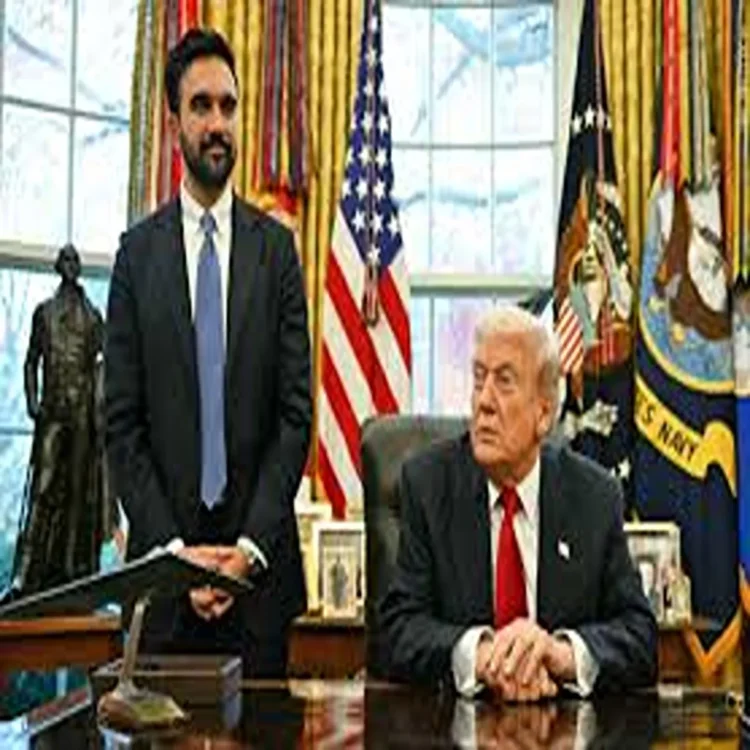
The session, which did not appear on the public schedule, took place behind closed doors without media access. Later in the day, Mamdani characterized the discussion as constructive, saying it centered largely on expanding housing development across New York City.
Focus on Expanding Housing Supply
According to the mayor, the primary aim of the meeting was to explore federal cooperation on large-scale housing initiatives. Mamdani said he is optimistic about advancing projects that could significantly increase the city’s residential capacity.
A photograph released by the mayor’s office showed Trump seated at the Resolute Desk holding two mock newspaper front pages. One replicated the well-known 1975 New York Daily News headline that read “Ford to City: Drop Dead,” referencing the historic fiscal crisis. The second was a fabricated front page declaring “Trump to City: Let’s Build,” suggesting a new chapter of federal support for housing construction.
In smaller type, the mock edition claimed more than 12,000 homes would be delivered — described as the largest output since 1973.
Anna Bahr, a spokesperson for City Hall, said Mamdani presented proposals that, if approved, would result in the construction of more housing units than the city has seen in decades. She did not provide specifics regarding financing, project locations, or timelines, and federal officials have yet to release details confirming any commitments.
The White House has not issued a formal statement regarding the meeting.
Immigration Case Emerges During Talks
The visit also intersected with a developing immigration matter involving a Columbia University student.
After leaving the White House, Mamdani posted on X that he had raised concerns about Elaina Aghayeva, a student who had been detained earlier in the day by Immigration and Customs Enforcement officers. He later wrote that the president informed him she would be released soon. Aghayeva was subsequently freed.
Federal agents had entered a residential building on Columbia University’s Manhattan campus early Thursday morning. University officials later said agents gained access to the building under what they described as misleading pretenses.
Claire Shipman, Columbia’s acting president, stated that federal officers reportedly indicated they were searching for a missing person. She said the university is reviewing the circumstances surrounding the entry and is seeking additional information.
Shipman also reiterated campus protocols, advising staff not to grant entry to non-public university spaces without coordinating with Public Safety and legal counsel.
In a separate statement provided to the Columbia Daily Spectator, the Department of Homeland Security said Aghayeva’s visa had been terminated in 2016 due to non-attendance. The agency added that the building manager and a roommate allowed officers into the apartment and noted that there were no pending appeals or applications tied to her immigration status.
Political Rivals Find Common Ground
The meeting highlights an evolving relationship between Mamdani, who identifies as a democratic socialist, and Trump, a Republican president who has frequently criticized Democratic-led cities over immigration enforcement and fiscal management.
During the recent election campaign, the two exchanged sharp criticisms. Yet this marks at least the second Oval Office meeting between them, reflecting a pragmatic layer to their political rivalry.
New York City remains heavily reliant on federal funding for infrastructure, housing, and social programs. At the same time, it has been central to national debates over immigration policy and urban governance. Columbia University, one of the country’s most prominent private institutions, has similarly found itself at the center of disputes involving federal authority and campus access in recent years.
For now, concrete outcomes from the mayor’s visit remain unclear. What is evident, however, is that both sides appear willing to engage directly, even amid deep ideological differences, as discussions over housing development and immigration enforcement continue to shape the city’s future.