
Geopolitics – Global Order Faces Strain as US-China Tensions Rise
Geopolitics – As shifting alliances and rising tensions redefine international relations, governments across the world are reassessing their diplomatic priorities. Recent developments involving the United States and China have intensified debate over the durability of the post-Cold War system and the future of global stability.
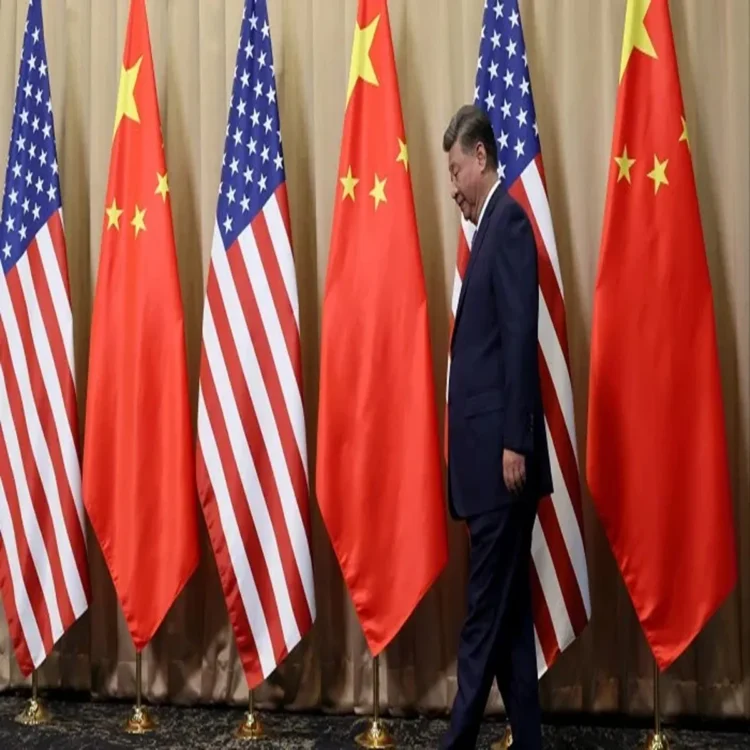
Allies Reconsider Positions Amid Policy Uncertainty
In recent months, policy signals from US President Donald Trump have prompted concern among several long-standing partners. At the World Economic Forum in Davos earlier this year, Canadian Prime Minister Mark Carney reflected on what he described as a period of rupture rather than gradual transition in global affairs.
Carney observed that countries long accustomed to a predictable, rules-based environment are now preparing for greater uncertainty. He suggested that middle powers are seeking to broaden their partnerships to safeguard sovereignty and reduce exposure to geopolitical risk. Canada’s decision to pursue deeper engagement with China in January was framed as pragmatic diversification, though analysts see it as part of a wider trend of hedging among US allies.
Beijing Expands Its Diplomatic and Maritime Reach
As Washington recalibrates its approach, Beijing has positioned itself as a consistent economic and diplomatic partner. However, critics argue that China’s conduct in regional waters and toward Taiwan complicates that narrative.
The China Coast Guard recently disclosed extensive operational activity over the past five years, including hundreds of thousands of maritime patrols and thousands of air sorties. Many of these missions occurred in contested areas such as the South China Sea and waters near the Diaoyu Islands, known in Japan as the Senkaku Islands. Chinese officials have described the patrols as necessary to safeguard territorial sovereignty.
Regional governments, including Japan and the Philippines, have repeatedly expressed concern over what they describe as assertive tactics at sea. Incidents involving close encounters between vessels have heightened tensions and drawn international scrutiny.
Taiwan Policy Sparks Debate in Washington
Taiwan remains at the center of strategic competition between Beijing and Washington. The self-governed island faces sustained pressure from mainland China, which views it as part of its territory. US policy has long combined support for Taiwan’s self-defense with a framework designed to deter unilateral changes to the status quo.
Recent remarks by President Trump regarding potential consultations with Chinese President Xi Jinping on arms sales to Taiwan have generated debate in Washington. Analysts at the Brookings Institution warned that even rhetorical shifts could unsettle decades of carefully balanced policy.
Members of Congress from both parties voiced concern that longstanding commitments underpinning regional stability must remain clear. The United States has previously approved substantial defense packages for Taiwan, and observers note that continuity in messaging is viewed as central to deterrence.
Nuclear Modernization Raises Fresh Concerns
Beyond regional disputes, attention has also turned to China’s rapid nuclear expansion. Following the expiration of the New START treaty between the United States and Russia, arms control discussions have entered a period of uncertainty. Washington has encouraged broader multilateral engagement, but Beijing has resisted joining trilateral negotiations.
The US Department of Defense has assessed that China’s nuclear stockpile has grown significantly in recent years and could exceed 1,000 warheads by the end of the decade. American officials have also raised allegations regarding possible low-yield nuclear testing in 2020 at Lop Nur, China’s historical test site. Beijing has denied the claims, dismissing them as unfounded and politically motivated.
Independent security experts caution that limited transparency around nuclear modernization programs increases the risk of miscalculation. Expanding missile silos, advancements in hypersonic delivery systems, and potential development of multiple-warhead capabilities are seen as indicators of a broader strategic shift.
Middle Powers Seek Stability in a Fragmented Era
For countries such as Canada and Australia, the challenge lies in balancing economic ties with China against security partnerships with the United States. Policymakers argue that renewed dialogue and arms control frameworks are essential to prevent escalation.
Carney’s remarks in Davos underscored a broader sentiment among middle powers: nostalgia for the past will not resolve present uncertainties. Instead, governments are preparing for a more competitive environment in which resilience and diversified relationships are paramount.
As diplomatic engagements continue and high-level meetings loom, the trajectory of US-China relations will play a defining role in shaping global geopolitics. Whether competition can be managed without tipping into confrontation remains one of the most pressing questions facing the international community.