
ElectionRoll – Chhattisgarh Publishes Final Voter List After Revision Drive
ElectionRoll – The Election Commission of India has released the updated electoral roll for Chhattisgarh following the completion of a months-long verification exercise.
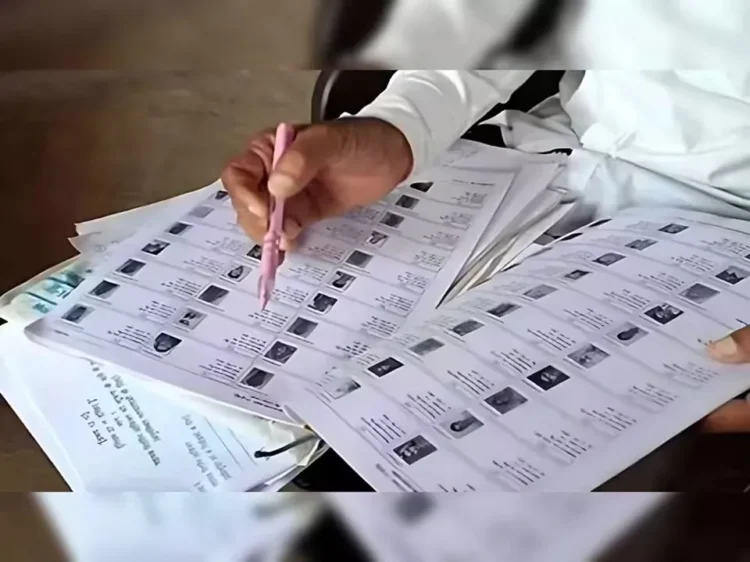
The final voter list for Chhattisgarh was officially published on Saturday after authorities concluded the Special Intensive Revision (SIR) of electoral rolls across the state. The revision process, carried out under the supervision of the Election Commission of India, aimed to ensure that the voter database remains accurate and up to date.
Final Voter Count Shows Notable Increase
According to an official statement, the updated electoral roll includes 1,87,30,914 registered voters. Officials confirmed that January 1 was treated as the qualifying date for this revision cycle.
When compared with the earlier draft roll, the final list reflects a net addition of 2,34,994 voters. This increase accounts for new eligible voters as well as approved corrections and inclusions processed during the revision period.
Election authorities stated that the objective of the drive was to strengthen the integrity of the electoral process by removing inaccuracies and incorporating eligible citizens who were previously left out.
Extensive Field Verification Conducted
A key feature of the exercise was the large-scale door-to-door verification carried out across the state. As many as 27,196 Booth Level Officers were deployed to verify voter details at the grassroots level.
These officials distributed enumeration forms, conducted physical verification of households, and completed voter mapping tasks. The effort was designed to ensure that entries in the electoral roll accurately reflect the current residential and eligibility status of voters.
The Special Intensive Revision campaign in Chhattisgarh began on October 27, 2025, following directives from the Election Commission headquarters in New Delhi. The four-month initiative progressed through multiple phases before culminating in the publication of the final roll on February 21.
Claims and Objections Addressed Before Publication
During the revision window, citizens were given an opportunity to submit applications for inclusion of names, deletion of ineligible entries, and correction of errors in personal details. The period for filing claims and objections was open from December 23, 2025, to January 22.
Officials reported that all received applications were examined and resolved by February 14. Only after the completion of this scrutiny process was the final electoral roll released to the public.
The Commission has emphasized that transparent handling of claims and objections remains a critical component of maintaining public confidence in the electoral system.
Preparations Underway for Next Phase in Other Regions
In a related development earlier this week, the Election Commission of India instructed Chief Electoral Officers in 22 states and union territories to begin groundwork for the next phase of the Special Intensive Revision, which is scheduled to commence in April 2026.
The directive was sent to electoral authorities in Andhra Pradesh, Arunachal Pradesh, Chandigarh, Dadra and Nagar Haveli and Daman and Diu, Haryana, Himachal Pradesh, Jammu and Kashmir, Jharkhand, Karnataka, Ladakh, Maharashtra, Manipur, Meghalaya, Mizoram, Nagaland, the National Capital Territory of Delhi, Odisha, Punjab, Sikkim, Tripura, Telangana and Uttarakhand.
Officials have been asked to complete all preparatory measures in advance to ensure that the revision process begins smoothly once the new phase is launched.
Nationwide Revision Exercise Continues
At present, a nationwide Special Intensive Revision is underway in 12 states and union territories. These include Andaman and Nicobar Islands, Chhattisgarh, Goa, Gujarat, Kerala, Lakshadweep, Madhya Pradesh, Puducherry, Rajasthan, Tamil Nadu, Uttar Pradesh and West Bengal.
The ongoing revision efforts across various regions reflect the Commission’s broader plan to maintain updated and reliable electoral rolls ahead of future elections. By conducting systematic verification and allowing structured public participation through claims and objections, authorities aim to uphold the credibility and transparency of India’s electoral framework.