
Tariffs – US Supreme Court Limits Emergency Trade Powers
Tariffs – The United States Supreme Court has restricted the federal government’s use of emergency powers to impose sweeping import tariffs, prompting the administration to shift its legal strategy while insisting that overall tariff revenue will remain stable.
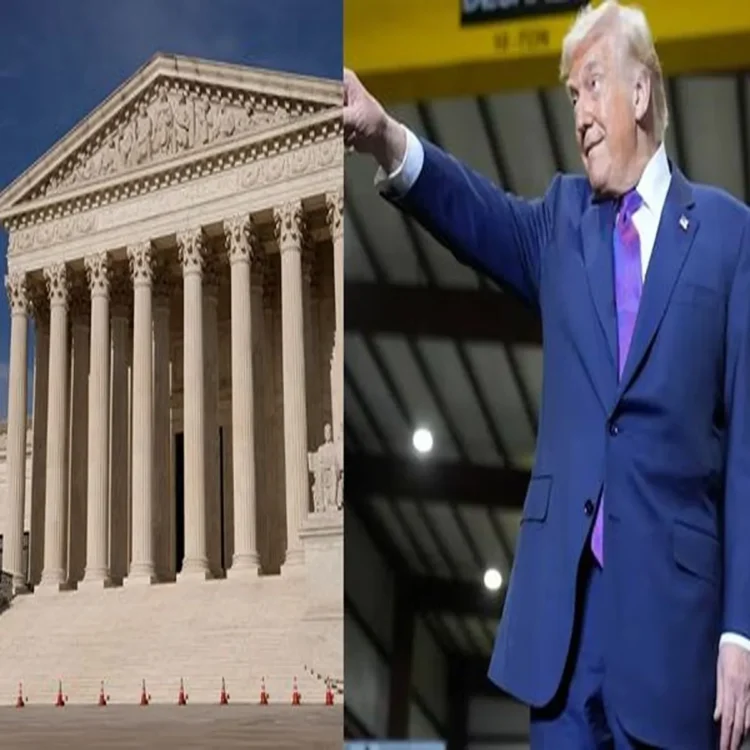
Treasury Secretary Responds to Court Decision
Speaking at the Dallas Economic Club, US Treasury Secretary Scott Bessent addressed the court’s 6-3 ruling, clarifying that the judgment did not invalidate the administration’s broader tariff framework. He said the decision only prevents the use of the International Emergency Economic Powers Act (IEEPA) as a tool to generate tariff revenue.
Bessent emphasized that the court did not strike down existing tariffs outright. Instead, he noted, the justices concluded that IEEPA does not authorize the executive branch to impose duties for revenue-raising purposes. He described criticism from political opponents and sections of the media as misplaced, maintaining that the administration retains alternative legal pathways to pursue its trade agenda.
Shift to Alternative Legal Authorities
According to Bessent, the administration plans to rely on other statutory provisions to maintain its tariff program. He specifically cited Section 232 of the Trade Expansion Act and Section 301 of the Trade Act, both of which have previously been used to justify duties tied to national security and unfair trade practices.
He also pointed to Section 122 of the Trade Act of 1974 as a temporary mechanism that allows the president to impose an import surcharge of up to 15 percent for 150 days in response to balance-of-payments concerns. Treasury projections suggest that a combination of these authorities would keep tariff collections for 2026 “virtually unchanged,” even after the court’s ruling.
Supreme Court’s Majority and Dissent
The case centered on whether the president could use IEEPA, a 1977 law intended to address national emergencies, to introduce broad-based tariffs affecting nearly all major trading partners.
In its majority opinion, Chief Justice John Roberts, joined by Justices Neil Gorsuch, Amy Coney Barrett, and the court’s three liberal members, concluded that IEEPA does not explicitly grant the president the authority to levy import duties. The Constitution assigns the power to impose tariffs to Congress, the majority noted, and such authority must be clearly stated in statute.
Justices Samuel Alito, Clarence Thomas, and Brett Kavanaugh dissented, supporting a broader interpretation of presidential emergency powers.
Financial and Policy Implications
The ruling effectively invalidates billions of dollars in reciprocal and emergency-based tariffs introduced under IEEPA. Analysts estimate that between $130 billion and $175 billion collected under those measures could potentially be subject to refund, depending on how lower courts and administrative agencies implement the decision.
Despite the setback, President Donald Trump moved quickly to signal continuity in trade enforcement. He announced that a 10 percent global tariff would take effect immediately under Section 122 authority, describing the court’s ruling as deeply flawed. He also confirmed that existing national security tariffs under Section 232 and trade remedy duties under Section 301 would remain in force.
Broader Trade Policy Outlook
The Supreme Court’s decision marks a significant clarification of executive authority in trade matters, reinforcing congressional control over tariff policy while leaving intact other established mechanisms.
For businesses and global trading partners, the immediate impact may be limited if the administration successfully replaces the invalidated measures with alternative legal tools. However, the ruling underscores the legal boundaries surrounding emergency economic powers and could influence future administrations seeking to use similar statutes to address trade imbalances or national security concerns.
As the administration recalibrates its strategy, attention will now turn to how courts, lawmakers, and international partners respond to the revised tariff framework in the months ahead.