
Tariffs – Trump Signs 10% Global Duty After Court Rebuke
Tariffs – US President Donald Trump has approved a sweeping 10 percent tariff on imports from every country, including India, shortly after the Supreme Court ruled that his administration’s earlier global tariff framework was unlawful. The decision marks a new chapter in an ongoing legal and economic debate over presidential authority in trade matters.
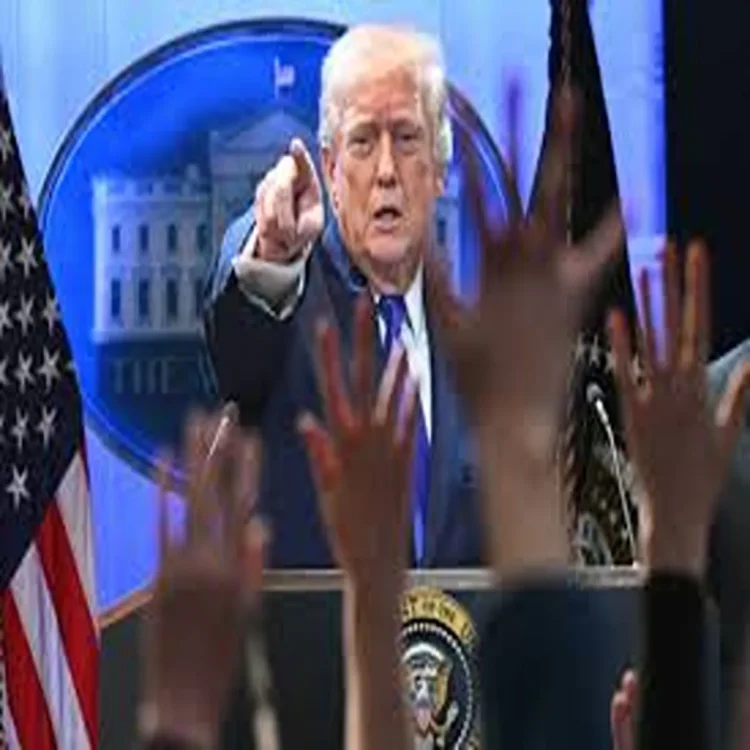
Supreme Court Limits Use of Emergency Law
On February 21, the Supreme Court determined that the administration had overstepped its authority by relying on the International Emergency Economic Powers Act (IEEPA) of 1977 to justify broad tariff measures. The court clarified that the statute allows the government to restrict certain international financial transactions during a declared national emergency, but it does not grant the president the power to impose sweeping import duties.
The ruling effectively invalidated the administration’s earlier tariff structure, prompting immediate reactions from the White House. Legal experts note that the judgment narrows the scope of executive authority under IEEPA and underscores the distinction between economic sanctions and trade tariffs.
President Announces Immediate Tariff Order
In response to the court’s decision, Trump signed a fresh executive order introducing a uniform 10 percent tariff on goods entering the United States from all countries. He confirmed the move in a post on his social media platform, Truth Social, stating that the measure would take effect almost immediately.
Describing the decision as an adjustment rather than a retreat, Trump expressed strong disagreement with the court’s interpretation. He criticized the justices who opposed his administration’s approach, calling their ruling misguided, and indicated that further policy changes could follow to maintain revenue levels.
The administration has not yet provided detailed guidance on the legal basis for the new tariff order, but officials suggested that alternative statutory authority could be invoked to sustain the measure.
Impact on US-India Trade Relations
Despite the broader global tariff announcement, Trump indicated that existing arrangements with India would remain intact. Speaking about bilateral trade, he said that “nothing changes” for India under the new order.
Earlier, the United States and India had reached a revised trade understanding that significantly altered tariff rates between the two countries. Under that agreement, Washington reduced a previously proposed reciprocal tariff on Indian goods from 50 percent to 18 percent after New Delhi signaled it would halt purchases of Russian oil. In return, India agreed to eliminate tariffs on American products.
When asked about the current status of the US-India trade deal, Trump reiterated that the United States would not pay tariffs on goods sent to India, while Indian exports to the US would continue to face duties. He described Indian Prime Minister Narendra Modi as a capable negotiator and emphasized that the agreement represented a shift in trade dynamics.
What the 10 Percent Tariff Means for India
A senior official confirmed that Indian goods would be subject to the newly announced 10 percent tariff, at least until a different legal mechanism is applied. This suggests that while the broader trade agreement remains operational, the universal tariff rate could temporarily supersede earlier frameworks established under IEEPA.
Trade analysts say the move could introduce short-term uncertainty for exporters, particularly in sectors such as textiles, pharmaceuticals, and technology components, which form a significant portion of India’s exports to the United States. However, the long-term impact will depend on whether the administration pursues a more permanent legislative route or negotiates exemptions.
Broader Economic and Legal Implications
The court’s ruling and the administration’s swift response highlight the tension between executive authority and judicial oversight in trade policy. While tariffs have long been used as a tool in international negotiations, their legal foundation remains subject to statutory limits.
Economists warn that a blanket tariff could affect supply chains and consumer prices if maintained over an extended period. At the same time, supporters argue that the measure could strengthen the administration’s leverage in trade discussions and increase federal revenue.
As the situation develops, businesses and trading partners are closely monitoring Washington for further clarification. The next steps will likely determine whether the 10 percent tariff becomes a temporary adjustment or a lasting feature of US trade policy.