
NuclearDeal – Trump Considers Limited Strike to Pressure Iran
NuclearDeal – The United States is reviewing possible military options against Iran as part of a broader effort to push Tehran toward a new nuclear agreement, according to reports from senior officials familiar with internal discussions.
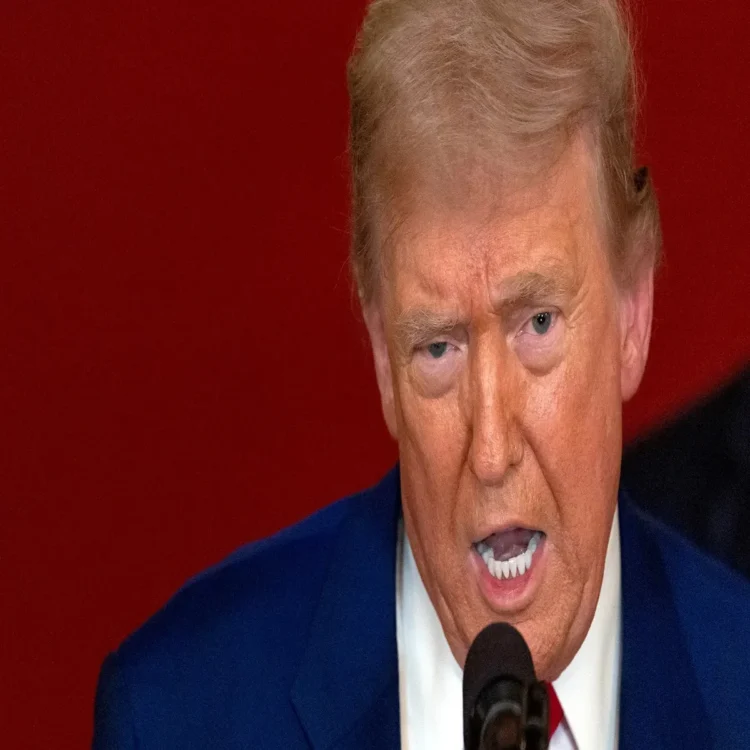
Limited Military Action Under Consideration
A report published by The Wall Street Journal indicates that President Donald Trump is examining the possibility of a narrowly focused military operation targeting selected Iranian facilities. The proposal, still under discussion, is described as an initial and limited strike designed to increase pressure without immediately escalating into a full-scale conflict.
Sources cited in the report said potential targets could include specific military installations or government-linked sites. The objective would be to signal resolve while leaving room for diplomatic engagement. If Iran declines to halt uranium enrichment activities, further military steps could follow, potentially expanding the scope of operations.
One individual familiar with the administration’s thinking suggested that any strategy would likely begin with restrained measures, escalating only if necessary. The broader goal, according to that account, would be to compel Iran to dismantle elements of its nuclear program or face mounting consequences.
Trump Signals Decision Timeline
Donald Trump has indicated that a decision may come soon. Speaking to reporters in Washington, he suggested that either a deal would be reached or alternative measures would be pursued.
“We’re going to make a deal or get a deal one way or the other,” Trump said during remarks on Thursday. At another appearance, he acknowledged uncertainty about the outcome but emphasized that clarity would likely emerge within the next 10 to 15 days.
The White House has declined to provide specific details about the options under review. Spokeswoman Anna Kelly told reporters that only the president is aware of the full scope of potential actions.
Military Presence Expands in the Region
Separately, The Washington Post reported that the administration appears prepared for a sustained military campaign if negotiations collapse. The Pentagon has reportedly accelerated deployments to the Middle East in recent weeks.
The aircraft carrier USS Gerald R. Ford, accompanied by supporting warships, is moving closer to the region. According to defense officials cited in the report, American forces assigned to the area are expected to reach full operational readiness by mid-March.
The build-up has drawn attention from regional observers and analysts, who view it as a sign that Washington is seeking leverage in ongoing negotiations.
Strategic Risks and Regional Impact
Daniel B. Shapiro, a former US ambassador to Israel, told The Washington Post that the United States, particularly with Israeli backing, would hold a significant military advantage over Iran in any direct confrontation. However, he cautioned that the consequences could extend beyond an initial strike.
While acknowledging the potential damage Iran could face from combined operations, Shapiro warned that retaliation remains a possibility. Even if Iran’s military infrastructure were weakened, he noted, the conflict might not conclude swiftly or without broader regional disruption.
Iranian leadership has responded with strong rhetoric. Supreme Leader Ali Khamenei warned that Iran possesses the capability to retaliate forcefully, including against major US naval assets. In public statements, he suggested that American forces could suffer severe consequences if attacked.
Diplomatic Talks Continue
Despite the heightened military posture, diplomatic discussions remain underway. White House press secretary Karoline Leavitt said that recent exchanges have produced limited progress, though significant gaps remain between the two sides.
According to Leavitt, Iranian officials are expected to provide further details in the coming weeks as negotiations continue. She characterized the dialogue as ongoing but acknowledged that both sides remain far apart on key issues.
Tehran maintains that its nuclear program is intended solely for civilian energy purposes and insists it does not seek to develop nuclear weapons. Iranian officials have repeatedly defended their right to enrich uranium under international agreements.
Tensions between Washington and Tehran have persisted since the United States withdrew from the 2015 nuclear agreement during Trump’s first term in office. The decision was followed by renewed economic sanctions and intermittent regional confrontations, raising concerns about stability in the Middle East.
As military preparations intensify and diplomatic channels remain open, the coming days are expected to play a critical role in determining whether negotiations advance or the situation shifts toward confrontation.