
TradeDeficit – Trump Claims Sharp Drop After Tariff Push
TradeDeficit – President Donald Trump said this week that the United States has recorded a steep reduction in its trade deficit, crediting his administration’s tariff measures for what he described as a historic shift in the country’s trade balance.
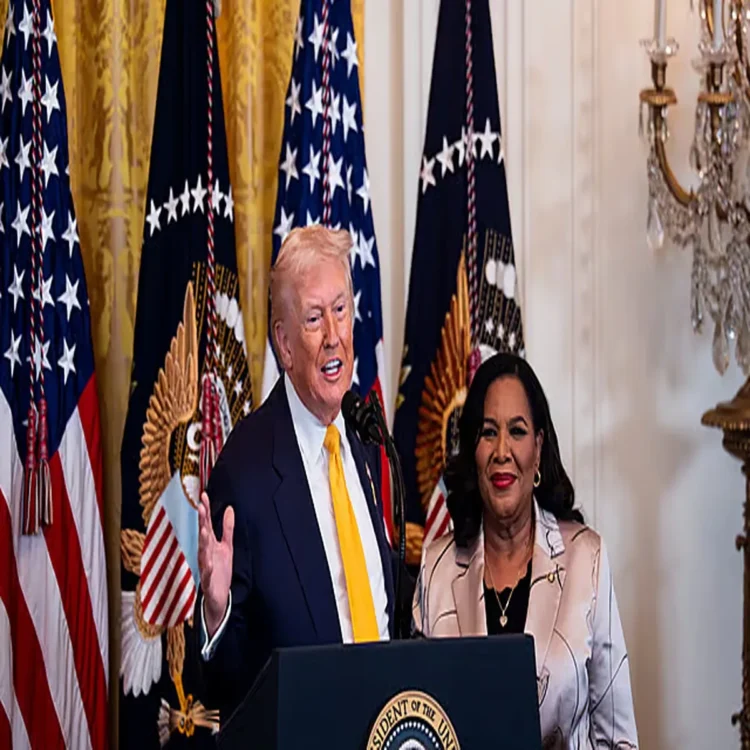
President Links Tariffs to Deficit Reduction
In a post shared Wednesday on his social media platform, Trump stated that the nation’s trade deficit had fallen by 78 percent. He argued that the decline was the result of duties imposed on foreign goods and companies, suggesting that the United States could see a trade surplus later this year — something he said has not happened in decades.
The president framed the development as evidence that his tariff strategy is delivering results, presenting it as a turning point in the country’s economic direction.
Background on “Liberation Day” Tariffs
The latest comments come nearly a year after the administration introduced sweeping tariffs on imports from more than 100 countries. Announced on April 2, 2025, and branded by Trump as “Liberation Day,” the policy imposed what the White House called reciprocal tariffs. Rates ranged from 10 percent to as high as 50 percent, depending on the country and product category.
At the time, Trump characterized the move as a step toward economic independence, arguing that the measures would rebalance trade relationships and strengthen domestic manufacturing.
Trade Gap Data Shows Volatility
Despite the president’s claims of a sharp improvement, official figures released in recent months have pointed to significant swings in trade activity.
According to data from the US Commerce Department, the trade deficit in goods and services widened considerably in November last year, reaching 56.8 billion dollars. That marked a nearly 95 percent increase compared with the previous month, underscoring how quickly trade balances have shifted under the current tariff framework.
Exports fell by 3.6 percent in November to 292.1 billion dollars, while imports rose 5 percent to 348.9 billion dollars. The gap between incoming and outgoing goods and services expanded after a narrower deficit had been recorded in October.
Economists Urge Caution
While the administration has highlighted earlier months in which the deficit narrowed, several economists have warned against drawing broad conclusions from short-term changes. Analysts have pointed out that fluctuations in specific commodities, including gold, temporarily affected trade figures during parts of the year.
For the first 11 months of 2025, the overall trade deficit remained 4.1 percent higher than during the same period the previous year. Economists say this suggests that underlying trade patterns may not yet reflect a sustained structural shift.
Trade experts have also noted that tariff-driven changes can cause businesses to adjust supply chains, shift sourcing strategies, or accelerate shipments ahead of new duties, all of which can distort monthly data.
Shifting Global Trade Relationships
The administration’s tariff approach has altered trade dynamics with major partners. Between January and November, the US trade deficit with China stood at 189 billion dollars. During the same period, the deficit with the European Union exceeded that figure, reflecting evolving trade flows and sourcing patterns.
Recent reporting has indicated that the effective US tariff rate has climbed to nearly 17 percent, its highest level in decades. Higher tariff levels have contributed to changes in import volumes and pricing, with potential implications for businesses and consumers.
Legal Questions Ahead
The future of the tariff policy may depend in part on legal proceedings now underway. The Supreme Court is expected to issue a ruling soon on whether the administration properly invoked emergency powers from a 1970s law to impose the duties.
White House officials have indicated that if the court limits the current authority, the administration will explore alternative legal mechanisms to keep tariffs in place.
As the debate continues, investors, manufacturers and trade partners are closely watching both the data and the court’s decision to assess how US trade policy may evolve in the months ahead.