
Airmail – India’s 1911 Flight That Changed Global Communication
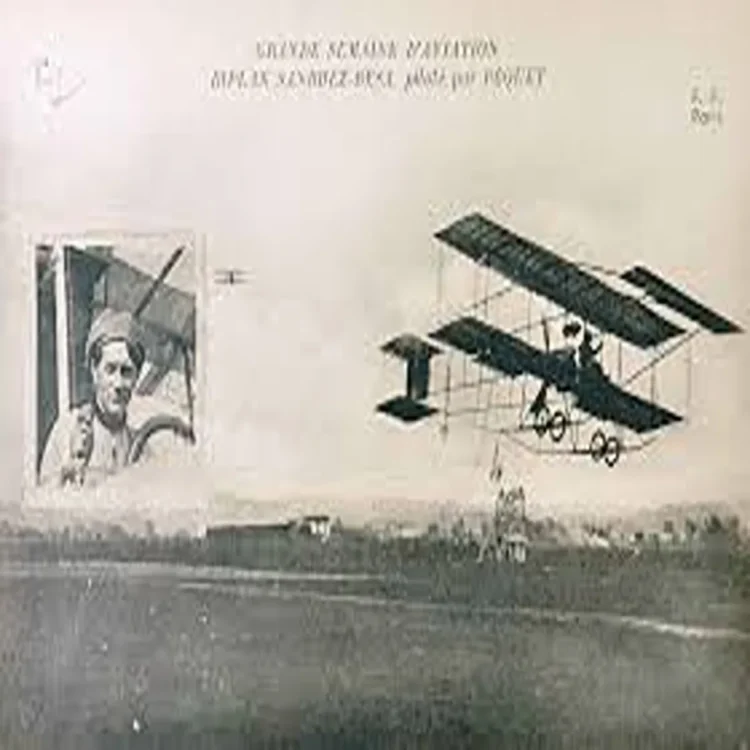
Airmail – Exactly 115 years ago, on a cool February morning, a young French pilot set in motion a development that would alter global communication. On February 18, 1911, 23-year-old Henri Pequet lifted a fragile Humber biplane off the grounds of an exhibition in Allahabad and flew across the Yamuna River to Naini. The journey lasted just 13 minutes, but it marked the world’s first official airmail service, placing India at the center of a transformative chapter in postal history.
A Brief Flight With Lasting Impact
Though modest in distance, the flight carried about 6,500 letters and postcards, each bearing a special cancellation mark. That short hop is now widely regarded as the starting point of organized airmail services worldwide. February 18 is observed as World Airmail Day to commemorate the achievement, which demonstrated that mail could be transported faster by air than by land or water.
At a time when aviation itself was still experimental, the successful carriage of mail signaled new possibilities. The 1911 flight showed governments and businesses that aircraft could serve practical civic purposes, not merely exhibitions or military trials.
A Collector’s Two-Decade Investigation
For Bengaluru-based collector Piyush Khaitan, the story of that flight is more than a historical anecdote. A Fellow of the Royal Philatelic Society London and chairman of the Air Mail Society India Foundation, Khaitan has spent nearly 20 years examining material linked to the 1911 service.
Among the most elusive items from that day are envelopes marked with what collectors refer to as the Black Cachet. While most covers from the flight bear a magenta cancellation, Khaitan’s research confirms that only 22 examples with the rarer black marking are known today. Earlier studies had identified just nine, but records were scattered across auction catalogs and private holdings without detailed verification.
According to Khaitan, the limited number suggests that the black marking may have been reserved for select recipients, possibly prominent individuals. Such distinctions offer insight into how the postal authorities managed the landmark experiment.
When a Postal Error Became History
Not all significant pieces from the flight are rare because of perfection. One envelope in Khaitan’s collection stands out due to a payment error. The sender addressed the letter to France but affixed postage sufficient only for delivery to Britain.
At the time, the correct rate to Britain was one anna, while mail to France required two-and-a-half annas. The shortfall was later assessed at double the missing amount, and the cover was marked with a “T” for postage due in Bombay before continuing to Paris, where French postage-due labels were added.
What makes the piece particularly notable is that the letter was accepted and flown on the historic February 18 route before the deficiency was processed. For historians, it provides a glimpse into how postal systems handled international mail during aviation’s early days.
Why Allahabad Became the Launch Site
The choice of Allahabad was driven more by opportunity than grand strategy. The United Provinces Exhibition provided a ready audience for demonstrating powered flight. Captain W. Windham of the Humber Motor Car Company saw the event as a chance to showcase the aircraft, and a mail flight offered both attention and prestige.
The initiative also had a charitable aspect. Funds raised through a special airmail surcharge supported the construction of the Oxford & Cambridge Hostel in Allahabad, linking the pioneering service to a local civic cause.
Recognition and Growing Interest
Pequet’s achievement did not fade into obscurity. In 2011, France issued a commemorative stamp to mark the centenary of the flight. Interest among collectors has also grown. So-called “Pequet Cards,” signed by the pilot, were once thought to number around 63. Khaitan’s updated census places the figure at 118 known examples.
Preserving these fragile documents has not been easy. India’s climate poses challenges for paper conservation, and surviving covers often show signs of age. Their rarity has also attracted forgeries, prompting serious collectors to rely on forensic tools and detailed documentation to confirm authenticity.
Commemorating a Turning Point
To mark the anniversary, the Air Mail Society India Foundation is hosting AMSIPEX-26, a virtual exhibition running from February 14 to 22. The event features entries from 12 countries, along with a webinar and the release of a souvenir publication. A parallel display is being held at the Royal Philatelic Society London, showcasing award-winning airmail collections.
More than a century later, the brief 1911 flight continues to resonate. What began as a 13-minute demonstration proved that mail could move through the skies, paving the way for faster communication networks and, eventually, modern civil aviation. The experiment in Allahabad helped shape a system that today connects continents in hours rather than weeks.