
Politics – Supreme Court Urges Leaders to Uphold Fraternity in Public Life
Politics – The Supreme Court on Tuesday underlined the need for political leaders to promote unity and mutual respect, even as it declined to entertain a petition seeking stricter norms on public speeches by constitutional authorities.
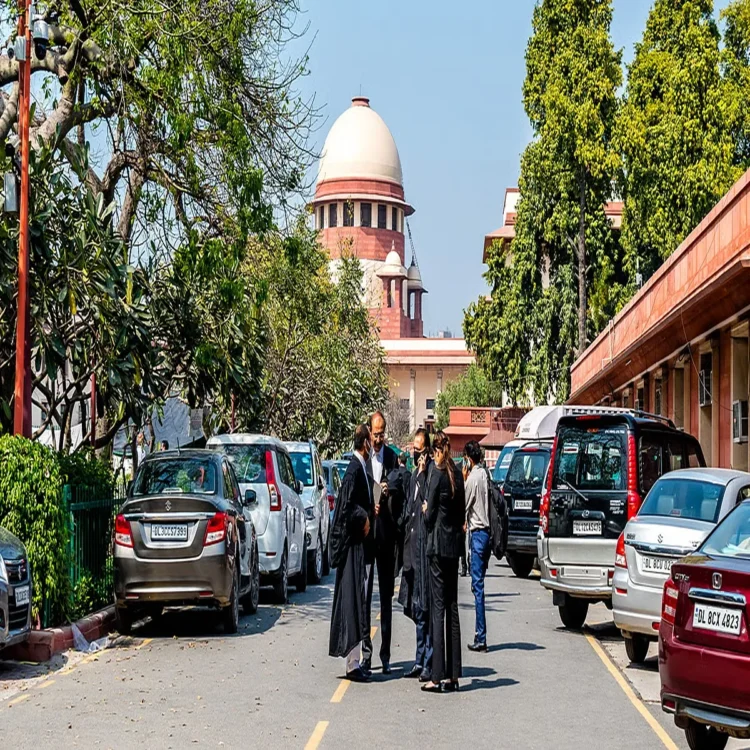
Court Emphasizes Constitutional Morality
A three-judge Bench led by Chief Justice Surya Kant, and comprising Justices B V Nagarathna and Joymalya Bagchi, was hearing a writ petition filed by 12 individuals from diverse professional backgrounds. The plea sought directions to curb what the petitioners described as constitutionally inappropriate speeches made by persons holding public office. It also requested the framing of broader guidelines to regulate political discourse and the manner in which such speeches are reported.
During the proceedings, the Bench observed that political parties and their leaders carry a responsibility to nurture fraternity across the country. The judges noted that public debate during elections should reflect constitutional morality and be conducted in a spirit of mutual respect.
Petition Withdrawn With Liberty to Refile
The court, however, declined to proceed with the petition in its current form. It suggested that the petitioners withdraw the plea and submit a revised version that focuses squarely on constitutional principles without creating the impression of targeting any specific individual or political party.
“Let the petitioners not create an impression that they are against a particular party or individual,” the Bench remarked during the hearing.
Senior advocate Kapil Sibal, representing the petitioners, argued that the tone of political discourse in the country had become increasingly toxic and warranted judicial intervention. He clarified that the petition was not aimed at any one person, but was concerned with preserving the spirit of the Constitution.
The Chief Justice responded that the court would be open to examining the matter if it was presented in a properly structured and objective manner. He indicated that the judiciary was awaiting a petition framed with neutrality and precision.
Reference to Earlier Judgment
The Bench also pointed out that similar concerns had already been addressed in a previous ruling. Justice Nagarathna had delivered a judgment in the Kaushal Kishore case that examined the extent of accountability for public statements made by individuals in authority.
While acknowledging the seriousness of the issues raised, the court observed that the current petition appeared to have been drafted without sufficient clarity. At the request of the petitioners’ counsel, the matter was adjourned for two weeks to allow time for filing a revised petition.
Call for Restraint on All Sides
Justice Nagarathna stressed that restraint was necessary from all stakeholders in public life. Senior advocate Sibal concurred, noting that a balanced approach would be essential in addressing concerns around political speech.
The petitioners, who include former civil servants, diplomats, academicians and members of civil society, have sought a declaration that speeches delivered in official or quasi-official capacities must adhere to constitutional morality. They argue that public statements by those in constitutional positions should align with core principles such as equality, fraternity and secularism, as enshrined in Articles 14 and 21 of the Constitution of India.
Broader Debate on Political Discourse
The hearing reflects an ongoing national conversation about the tone and substance of political communication. While courts have traditionally exercised caution in regulating speech, especially in the political arena, they have also underscored the importance of safeguarding constitutional values.
By advising the petitioners to refine their plea, the Supreme Court signaled that it is willing to examine the issue, provided it is presented within a clearly defined constitutional framework. The coming weeks are likely to determine whether a revised petition will bring the matter back before the Bench for detailed consideration.