
Internal Security – Shah Sets 2029 Deadline to End Terror and Insurgency
Internal Security – Union Home Minister Amit Shah on Monday outlined an ambitious security roadmap, declaring that terrorism in Jammu and Kashmir and insurgency in the North-East will be completely eliminated by 2029, while Maoist violence is targeted to end by March 31, 2026.
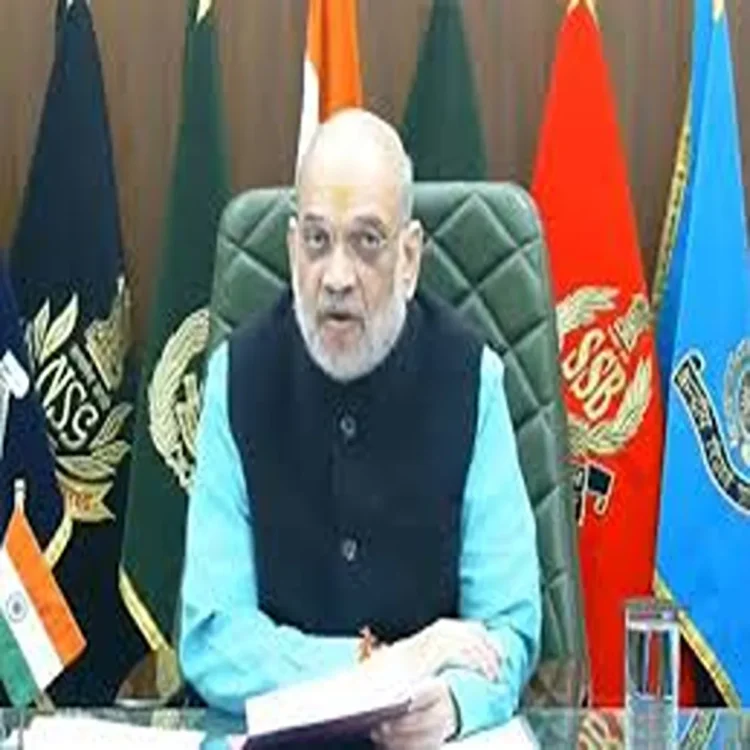
Speaking at the 79th foundation day celebration of the Delhi Police in the national capital, Shah said the government has made significant progress in strengthening internal security over the past decade. He also unveiled a series of new measures aimed at enhancing policing standards and public safety in Delhi.
Safe City Project to Expand Surveillance Network
A major highlight of his address was the expansion of the Safe City initiative in Delhi. According to the Home Minister, nearly 2,100 artificial intelligence-enabled cameras will soon be activated across the city. These will form part of a broader network of 10,000 cameras under the project. In addition, around 15,000 cameras already installed in different areas of the capital are being integrated into the system to improve monitoring and response capabilities.
Shah said the integrated headquarters of the Delhi Police Special Cell will play a central role in counter-terror operations. The upgraded infrastructure is expected to strengthen intelligence coordination and enable quicker action against security threats.
Progress in Tackling Maoist Violence
Reviewing the security landscape before 2014, Shah noted that several regions of the country, including Jammu and Kashmir, the North-East, and Maoist-affected districts, were facing serious challenges. He stated that nearly 80 percent of these issues have now been brought under control.
The government, he added, is close to fully dismantling Maoist networks. With ongoing security operations and development initiatives in affected areas, authorities aim to declare the country free from Maoist violence by the end of March 2026.
Peace Agreements in the North-East
Turning to developments in the North-East, the Home Minister said that nearly 20 peace accords have been signed with various insurgent groups in recent years. As a result, more than 10,000 young individuals have laid down arms and chosen to join mainstream society.
Shah described these agreements as a turning point for the region, contributing to a steady decline in violence and creating conditions for economic growth. He expressed confidence that, by 2029, both Jammu and Kashmir and the North-East will see a complete end to long-standing militancy.
Referring to the removal of Article 370, which earlier granted special status to Jammu and Kashmir, Shah said the security environment in the Union Territory has been steadily improving since the constitutional change.
Delhi Police Praised for Counter-Terror Role
The Home Minister commended the Delhi Police for its role in handling high-risk cases and safeguarding the capital. He cited major investigations, including the Parliament attack and a recent blast incident near the Red Fort, as examples of the force’s preparedness and professionalism.
He added that continued modernization of policing systems would further enhance their ability to prevent and respond to emerging threats.
Criminal Law Reforms and Higher Conviction Rates
Shah also spoke about the introduction of three new criminal laws designed to modernize India’s criminal justice system. The objective, he said, is to raise the conviction rate to between 75 and 80 percent by improving investigation standards and speeding up judicial processes.
According to him, states such as Assam, Haryana and Gujarat have already recorded conviction rate improvements exceeding 20 percent after adopting reforms aligned with the new legal framework.
Focus on Drug-Free India and Cybersecurity
Outlining future priorities, Shah said the government remains committed to building a drug-free India, combating cyberterrorism, and dismantling organized crime networks. He revealed that nine gangsters were killed in encounters during 2025 and that authorities are closely tracking 32 wanted criminals who are currently operating from abroad.
The Delhi Police Special Cell, in coordination with central agencies, continues to monitor these individuals to prevent cross-border criminal activities.
With clear timelines set for tackling terrorism, Maoist violence, and insurgency, the government’s security strategy now enters a phase focused on consolidation, modernization, and long-term stability.