
SupremeCourt – Top Court Stays Orissa HC Proceedings in Election Dispute
SupremeCourt – In a significant development for Odisha’s political landscape, the Supreme Court has put on hold the proceedings before the Orissa High Court in a case challenging the 2024 Assembly election victory of Deputy Chief Minister Kanak Vardhan Singh Deo from the Patnagarh constituency. The interim relief offers temporary respite to the senior leader as the legal battle over his election continues.
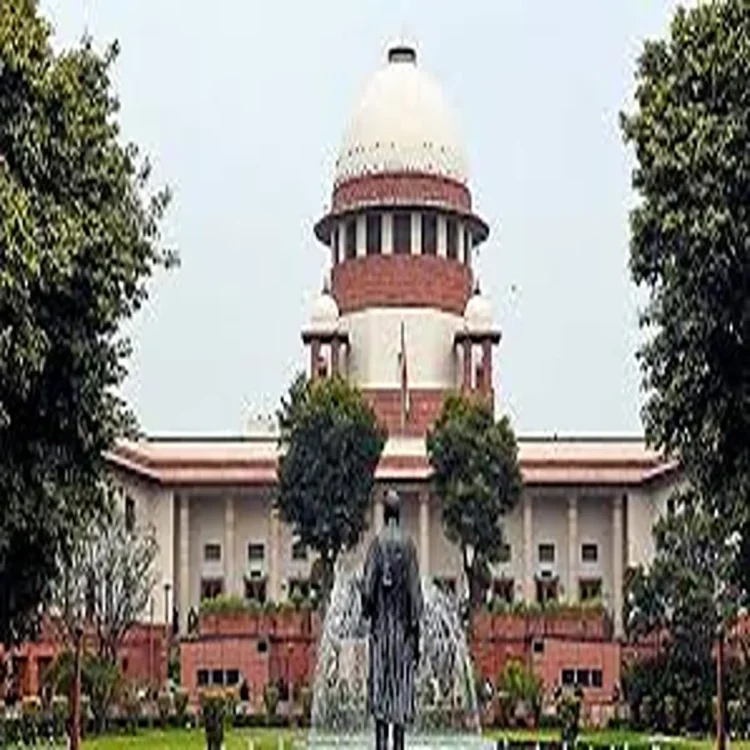
Interim Relief from the Apex Court
A two-judge bench comprising Justices Vikram Nath and Sandeep Mehta issued notice to the respondent, Saroj Kumar Meher, and directed that further hearings in Election Petition No. 20 of 2024 remain suspended for the time being. The bench granted four weeks for Meher to respond and clarified that the High Court should not proceed with the matter until further orders.
The order came after Singh Deo approached the apex court, contesting a previous decision of the Orissa High Court that had allowed the election petition against him to move forward.
Background of the Election Dispute
The case stems from the 2024 Odisha Assembly elections, in which Singh Deo was declared elected from Patnagarh. His rival candidate, Saroj Kumar Meher, subsequently filed an election petition before the High Court questioning the legitimacy of the result.
Meher’s plea alleged that Singh Deo’s nomination papers had been improperly accepted, raising concerns about compliance with statutory requirements under election law. The petition sought to invalidate the Deputy Chief Minister’s election on these grounds.
Election petitions are governed by strict procedural standards, and any deviation from mandated requirements often becomes a key point of legal scrutiny. In this instance, the dispute centered on whether essential legal formalities were met at the time of filing the petition.
Singh Deo’s Arguments Before the Court
In challenging the High Court’s decision, Singh Deo argued that the election petition suffered from serious procedural deficiencies. He contended that the petition did not include mandatory affidavits and lacked essential material facts as required under the Representation of the People Act and related legal provisions.
According to his submission, the absence of a statutory affidavit was not a minor technical lapse but a fundamental defect that rendered the petition legally untenable. He maintained that such a deficiency could not be corrected at a later stage and should have led to outright dismissal.
High Court’s Earlier Stand
On November 28, 2025, the Orissa High Court had dismissed Singh Deo’s application seeking rejection of the petition. The High Court observed that the defects cited by Singh Deo were curable in nature and permitted the election petition to proceed to trial.
This ruling prompted Singh Deo to move the Supreme Court, asserting that the High Court had erred in law by treating what he described as a complete absence of a required affidavit as a rectifiable irregularity.
What Lies Ahead
With the Supreme Court’s interim order now in place, the High Court proceedings will remain paused until further directions. The apex court has sought responses from the parties and will examine whether the alleged defects in the election petition justify its dismissal at the threshold.
Legal experts note that the case could have broader implications for how courts interpret procedural compliance in election disputes. The outcome may clarify the distinction between curable defects and fundamental lapses in election petitions.
For now, the Deputy Chief Minister retains his position without the immediate pressure of ongoing High Court hearings. The matter is expected to be taken up again by the Supreme Court after the completion of pleadings.