
Parliament – Rajya Sabha Chairman Declines Bid to Restore Expunged Speech
Parliament – A fresh procedural dispute unfolded in the Rajya Sabha on Friday after Chairman C P Radhakrishnan declined a request from Leader of the Opposition Mallikarjun Kharge to reinstate parts of his speech that had been removed from the official records. The issue sparked a brief but pointed exchange in the Upper House, drawing in the Finance Minister and raising questions about the scope of the Chair’s authority.
Dispute Over Expunged Remarks
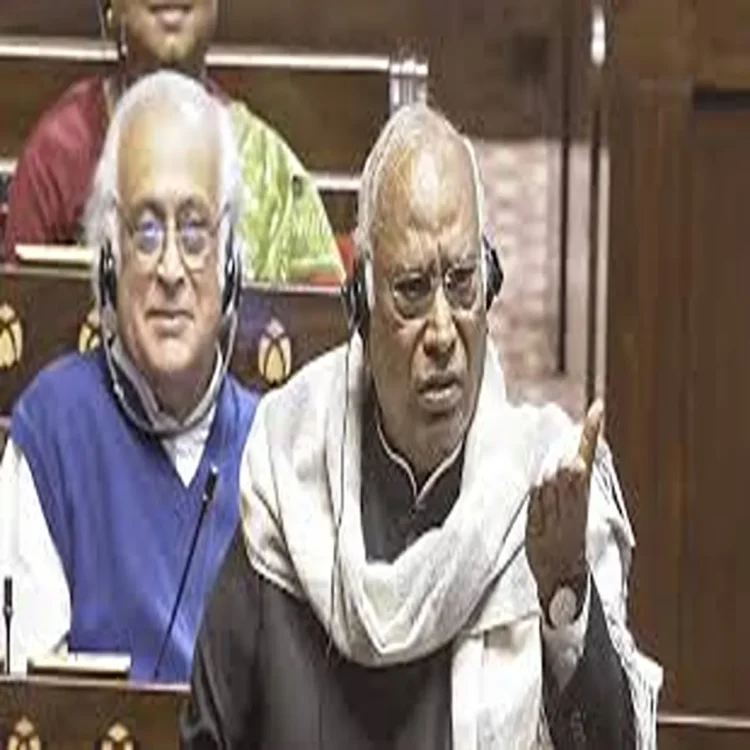
The matter was raised by Kharge following Zero Hour. He referred to his address delivered on February 4 during the Motion of Thanks on the President’s Address. According to the Congress president, several significant portions of his speech had been deleted from the parliamentary transcript.
Kharge said that the removed sections included observations on social justice and comments related to parliamentary functioning under the current government. He argued that the omissions were unwarranted and maintained that the points he raised were factual and relevant to the debate.
“I noticed that a substantial part of my remarks was removed without any clear justification,” Kharge told the House. As Leader of the Opposition, he said, it was his responsibility to bring forward such issues during discussions of national importance.
Chairman Cites Authority of the Chair
Responding to the objection, Chairman Radhakrishnan made it clear that decisions taken by the presiding officer cannot be questioned on the floor of the House. He emphasized that any portion of a speech that has been expunged cannot be repeated or circulated outside official proceedings.
“Whatever has been expunged cannot be stated outside,” he said firmly, reiterating that the authority of the Chair must be respected and that its rulings are final within the House.
The Chairman’s response underscored established parliamentary practice, where the presiding officer has the power to remove words considered inappropriate from official records.
Government Backs Procedural Rule
Finance Minister Nirmala Sitharaman intervened during the exchange, drawing attention to Rule 261 of the Rajya Sabha’s procedural framework. The rule grants the Chairman the authority to expunge words or expressions deemed defamatory, indecent, or unparliamentary.
She stated that the Chair acts within the boundaries of the rules and that such decisions are part of maintaining decorum in the House. “The Chair deserves respect,” Sitharaman said, stressing that the rule exists to preserve the dignity of parliamentary debate.
Her intervention signaled the government’s support for the Chairman’s ruling and reinforced the procedural basis for the deletion of remarks from the record.
Opposition Stands by Its Position
Kharge, however, countered that Rule 261 applies only in specific circumstances. He maintained that his comments did not fall within the categories outlined in the rule and were directly connected to the subject under discussion.
He warned that if the matter was not addressed, he might consider sharing the unrecorded portions with the public. The statement added a sharper tone to the debate, though no further procedural action was taken immediately.
The episode highlights the continuing tension between the government and the opposition in the Rajya Sabha over procedural decisions and the boundaries of debate. While expunging remarks is not uncommon in parliamentary practice, disputes occasionally arise when members believe their statements have been removed without sufficient grounds.
As of now, the Chairman’s decision stands, and the official records will reflect only the approved version of the February 4 speech. The exchange serves as a reminder of the delicate balance between robust debate and procedural discipline in India’s parliamentary system.