
Parliament – Government Steps Back From Motion Against Rahul Gandhi
Parliament – The government has decided not to move a separate motion against the Leader of the Opposition following a notice submitted by a ruling party member in the Lok Sabha.
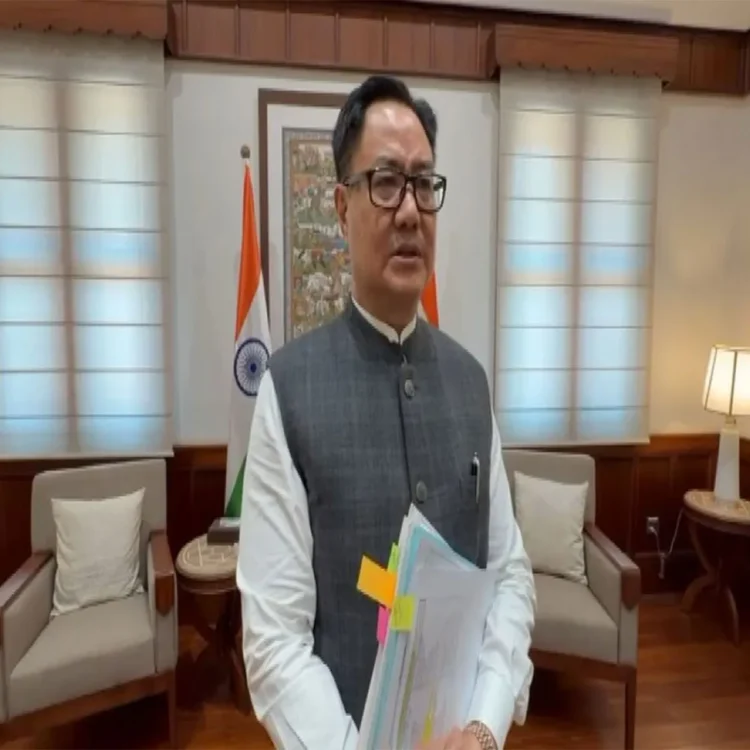
As the first phase of the Budget session concluded on Friday, Union Parliamentary Affairs Minister Kiren Rijiju announced that the government would not proceed with its earlier plan to initiate a privilege motion against Leader of the Opposition Rahul Gandhi. The decision comes after a Bharatiya Janata Party lawmaker independently submitted a notice seeking action on similar grounds.
Government Reconsiders Its Initial Plan
Earlier in the week, Rijiju had indicated that the government intended to bring a privilege motion against Gandhi, alleging that he misled the House and made unsubstantiated claims during his remarks. However, addressing reporters at the close of proceedings, the minister clarified that since a private member had already submitted a substantive motion on the issue, the government would not introduce another motion of its own.
He explained that the matter’s next course would depend on consultations with the Speaker. According to Rijiju, it remains undecided whether the issue will be referred to the privilege committee, the ethics committee, or taken up directly in the Lok Sabha. “A final decision is yet to be made,” he said, underscoring that established parliamentary procedures would be followed.
Notice by BJP Member Intensifies Dispute
The development follows a notice submitted by Nishikant Dubey, a Member of Parliament from the Bharatiya Janata Party. Dubey has sought to initiate a substantive motion against Gandhi, urging strong action that includes cancellation of his Lok Sabha membership and a lifetime bar from contesting elections.
In his notice, Dubey alleged that Gandhi’s statements and conduct were damaging to national interests. He further claimed that the Congress leader’s interactions abroad involved associations with organizations such as the Soros Foundation, USAID, and the Ford Foundation. According to Dubey, these engagements amounted to collusion with elements he described as anti-India.
The allegations have added to the already tense exchanges witnessed during the Budget session, where debates frequently turned confrontational.
Rahul Gandhi’s Response
Responding to the proposed action, Gandhi asserted that he would not be intimidated by any privilege motion, criminal case, or police complaint. He maintained that his political work would continue uninterrupted, particularly his advocacy on issues concerning farmers’ rights.
Gandhi stated that attempts to silence him through procedural measures would not deter him from raising concerns inside and outside Parliament. His remarks suggest that the dispute may continue to reverberate in upcoming sessions.
Role of the Speaker Under Consideration
With the government stepping back from filing its own motion, attention now shifts to the Speaker’s office. The decision on whether the substantive motion moves forward, and in what form, will depend on parliamentary rules and procedural scrutiny.
The privilege committee typically examines cases involving alleged breaches of parliamentary privilege, while the ethics committee handles matters related to members’ conduct. Alternatively, the issue could be debated directly in the House if deemed appropriate.
As the first half of the Budget session wraps up, the controversy underscores the increasingly sharp exchanges between the ruling party and the opposition led by the Indian National Congress. While no immediate resolution is in sight, the matter is likely to resurface when Parliament reconvenes.
For now, the government’s decision to refrain from filing a parallel motion signals a procedural pause rather than a political truce. The coming weeks will determine how the House addresses the substantive motion and whether further disciplinary steps are pursued.