
AI-Cybersecurity – India, Israel Expand Tech Ties in Silicon Valley
AI-Cybersecurity – Senior officials from India and Israel gathered in Silicon Valley this week alongside technology founders, venture capital leaders, and cybersecurity specialists to advance cooperation in artificial intelligence and digital security. The meeting underscored both the promise of emerging technologies and the complex risks that accompany rapid AI adoption.
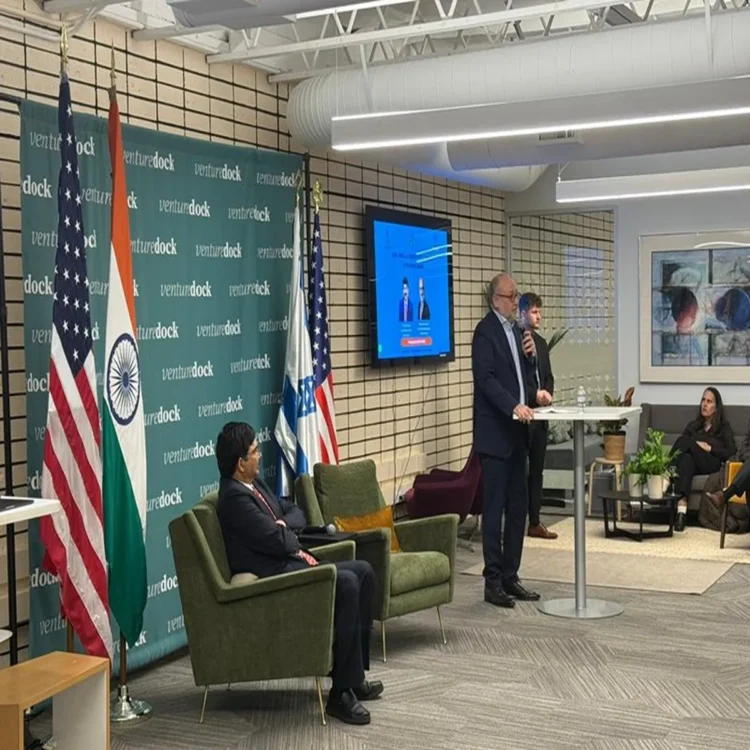
Event Brings Together Global Innovation Leaders
The India–Israel AI-Cybersecurity Connect took place on February 11 in Palo Alto, drawing more than 130 participants from across the technology ecosystem. The forum was jointly organized by the Consulate General of India in San Francisco, the Consulate General of Israel, and Venture Dock.
Discussions centered on expanding collaboration among India, Israel, and the United States in critical technology sectors, particularly artificial intelligence and cybersecurity. Organizers framed the event around a dual focus: protecting AI systems from cyber threats while also leveraging AI tools to strengthen cybersecurity defenses.
Strengthening Strategic Technology Partnerships
Dr. K. Srikar Reddy, India’s Consul General in San Francisco, emphasized the deepening relationship between the three innovation hubs. He noted that India, Israel, and the United States share strategic ties and a common interest in shaping responsible AI development.
Reddy highlighted India’s upcoming AI Impact Summit in New Delhi, expected to attract delegates from more than 100 countries. The summit will center on themes such as inclusive growth, improved access to healthcare, and expanded educational opportunities through responsible AI deployment.
Israel’s Consul General to the Pacific Northwest, Marco Sermoneta, reflected on the steady progress in bilateral relations since diplomatic ties were formally established in the early 1990s. He described the evolution of cooperation in fields such as entrepreneurship, education, and technology as significant and enduring.
According to Sermoneta, joint initiatives including technology boot camps and hackathons have strengthened connections between innovators from both countries. He added that Silicon Valley offers a natural meeting ground for partnerships that extend beyond borders.
Industry Leaders Warn of AI-Driven Security Risks
The keynote address was delivered by Jay Chaudhry, chief executive of Zscaler, who described artificial intelligence as a transformative force reshaping the digital landscape. While acknowledging its potential to increase productivity and automate complex tasks, he cautioned that AI also creates new vulnerabilities.
Chaudhry compared cybersecurity specialists to highly trained surgeons, stressing that deep expertise is essential in addressing increasingly sophisticated threats. He argued that AI represents a technological shift potentially larger than previous waves such as the internet or cloud computing.
One emerging concern, he noted, involves the rapid rise of AI agents within organizations. As businesses deploy dozens of AI-driven tools per employee, these systems may gain broad access to enterprise networks. If compromised, such agents could expose sensitive data or critical infrastructure.
Talent Shortage Challenges Cybersecurity Sector
A panel discussion later examined how artificial intelligence is reshaping digital transformation while simultaneously intensifying cyber risks. Participants agreed that the shortage of skilled cybersecurity professionals remains one of the industry’s most pressing challenges.
Guru Chahal, a partner at Lightspeed Ventures, pointed to the growing demand for experts capable of navigating complex security environments. He suggested that startups developing AI-driven solutions to address workforce gaps could play a significant role in the sector’s future growth.
Speakers throughout the event returned to a common theme: innovation must be matched by responsibility. As artificial intelligence systems become more integrated into daily operations across industries, safeguarding digital infrastructure will require coordinated efforts between governments, private companies, and investors.
The gathering in Silicon Valley reflected a broader shift toward international collaboration in technology policy and development. With AI and cybersecurity now central to economic and national security discussions worldwide, partnerships between innovation-driven nations are likely to deepen in the years ahead.