
Politics – Saamana Rebukes BJP Over Parbhani Mayor Election Claims
Politics – The election of a Muslim leader as Mayor of Parbhani has triggered a fresh political exchange in Maharashtra, with Shiv Sena (UBT)’s mouthpiece Saamana sharply criticising the Bharatiya Janata Party for what it described as misplaced political posturing.
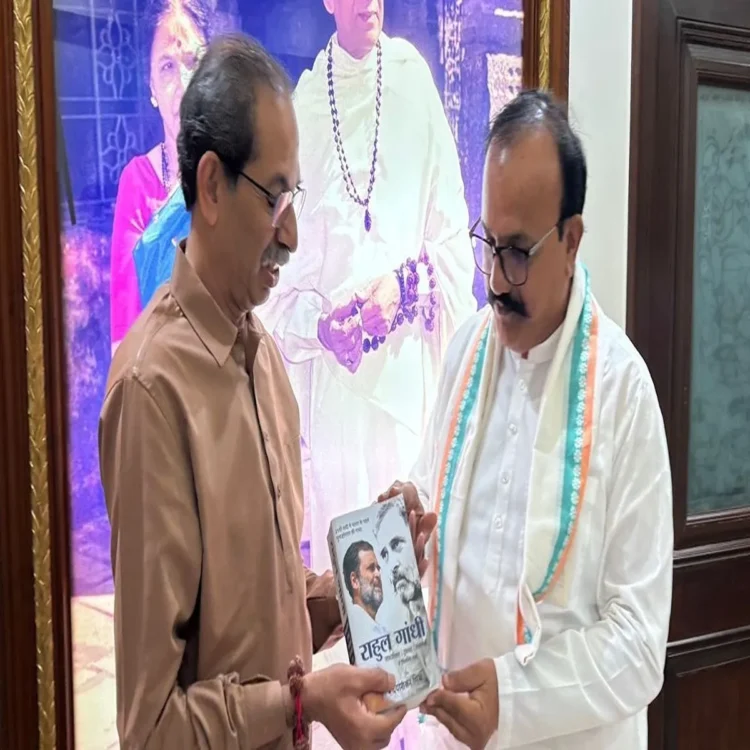
Mayor Election Sparks Political Reaction
Syed Iqbal, a corporator from Shiv Sena (UBT), secured the post of Mayor of Parbhani earlier this week with the support of the Congress party. He won 39 votes in the mayoral contest, defeating BJP candidate Tirumala Khillare by a margin of 13 votes. Congress corporator Ganesh Deshmukh was elected Deputy Mayor.
Iqbal’s victory marks the first time a Muslim representative has been chosen as mayor under any faction of the Shiv Sena in Maharashtra. The development quickly drew attention across political circles in the state.
Saamana Questions BJP’s Response
In an editorial published on Saturday, Saamana criticised the BJP for highlighting Iqbal’s religious identity following his election. The publication argued that Maharashtra is grappling with several pressing concerns and accused the BJP of attempting to divert attention by focusing on the mayor’s community background.
The editorial stated that presenting the election as a significant ideological shift reflected a misunderstanding of local politics. It suggested that the BJP’s reaction was inconsistent, particularly in light of instances where individuals from minority communities have been associated with key events linked to organisations aligned with the party.
Reference to RSS Chief’s Remarks
Saamana also referred to statements made by RSS chief Mohan Bhagwat during recent centenary celebrations of the Rashtriya Swayamsevak Sangh. The editorial cited Bhagwat’s view that communities sharing common cultural values and traditions should be regarded as part of the broader national fabric.
The publication questioned why BJP leaders were not echoing those sentiments in the context of Parbhani. It argued that if unity and shared cultural identity are emphasised at the national level, similar principles should apply to local political developments.
Allegations of Political Double Standards
The editorial further accused the BJP of applying different standards depending on political convenience. It pointed out that Muslims have held constitutional and administrative posts across the country, including positions such as President, Governor, and judges of the Supreme Court.
Saamana contended that objecting to a locally elected municipal leader while supporting minority representation in other contexts sends mixed signals. The publication framed the controversy as an example of what it described as political inconsistency.
In addition, the editorial referenced the role of Colonel Sophia Qureshi during a previous military briefing, arguing that minority representation is often showcased during moments of national importance but later becomes subject to political criticism. It claimed this pattern reflects a broader strategy rather than a principled stance.
Broader Debate on Hindutva and Governance
The article concluded by asserting that debates around religion and identity should not overshadow governance and civic priorities. It accused the BJP of turning ideological narratives into electoral tools while overlooking local administrative matters.
The mayoral election in Parbhani has thus become more than a municipal development, evolving into a broader political discussion about representation, identity, and party positioning in Maharashtra.
As political parties continue to respond, the episode underscores how local governance decisions can rapidly become part of larger state and national debates. For now, Syed Iqbal assumes office amid heightened attention, while the exchange between Shiv Sena (UBT) and the BJP adds another chapter to Maharashtra’s dynamic political landscape.