
Elections – BNP Secures Commanding Majority in Bangladesh Vote
Elections – Political leaders in India have responded to the Bangladesh parliamentary election results, where the Bangladesh Nationalist Party secured a clear majority, signaling a major shift in the country’s political landscape.
The outcome of the 13th parliamentary elections has drawn attention across South Asia, with Indian leaders expressing optimism about democratic restoration and improved bilateral ties between the two neighboring nations.
Indian Leaders Welcome Democratic Outcome
Reacting to the results, Priyanka Chaturvedi of the Shiv Sena (UBT) said the verdict of the Bangladeshi people reflects a desire for political stability and constitutional governance. She noted that the new leadership comes with a political legacy and experience that could help steer the country away from recent unrest. According to her, Bangladesh has faced internal turbulence marked by protests and political tensions, and there is now an opportunity to restore democratic norms.
She also pointed out concerns about the safety of minority communities and stressed the importance of ensuring equal protection under the law. Expressing hope for better relations between New Delhi and Dhaka, she said constructive engagement would benefit both countries.
Shaina NC, representing the Shiv Sena, described the election result as a routine feature of democratic systems where power changes hands through public mandate. She said India’s Prime Minister has already extended congratulations to the winning leadership. On behalf of Maharashtra Chief Minister Eknath Shinde, she conveyed hope that the new government would focus on inclusive growth, curb illegal cross-border activities, and strengthen regional security cooperation.
BJP spokesperson Pratul Shah Deo stated that India consistently supports democratic processes worldwide and welcomes outcomes that reflect the will of the people.
Bihar minister Dilip Jaiswal said the election results counter narratives suggesting instability in Bangladesh. He remarked that voters have delivered a clear message through the ballot, reinforcing confidence in the democratic process.
BNP Alliance Crosses Majority Mark
According to local media reports citing unofficial figures, the BNP-led alliance won 210 seats, comfortably crossing the threshold required to form a government. The scale of the victory positions the party to assume power without the need for significant coalition negotiations.
The Bangladeshi daily Jugantor, quoting party insiders, reported that BNP chairman Tarique Rahman is expected to take office as Prime Minister. If confirmed, this would mark a significant political moment, as Bangladesh would see a male prime minister after nearly three and a half decades.
Preliminary trends indicated that the Jamaat-e-Islami party was trailing far behind the BNP alliance, placing second but without numbers close to challenging the majority.
Leadership Transition and Political Legacy
Tarique Rahman took over the leadership of the BNP after the passing of his mother, former Prime Minister Khaleda Zia, in December last year. He is also the son of former President Ziaur Rahman, who founded the BNP and played a key role in Bangladesh’s political history.
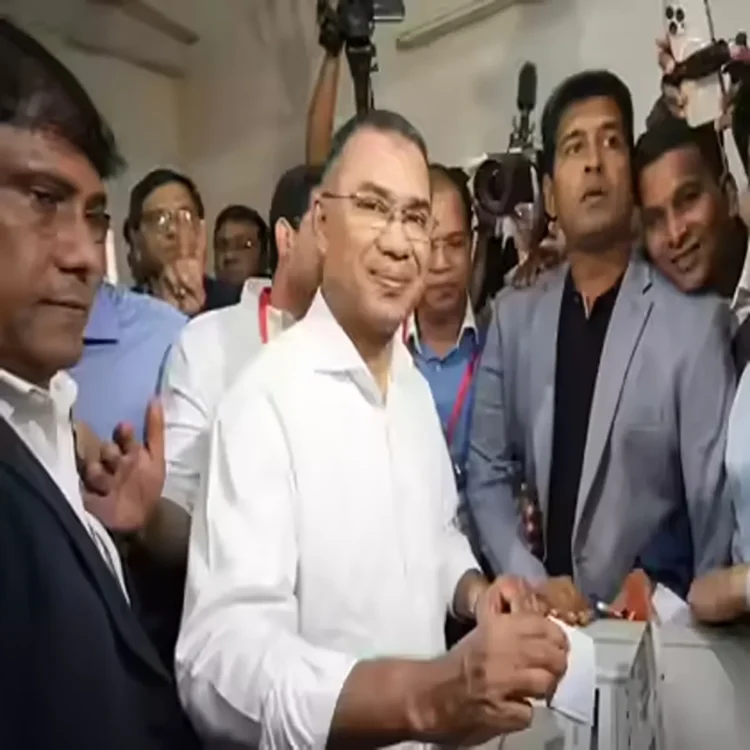
After casting his vote earlier in the day, Tarique expressed strong confidence in the outcome, stating that he was fully optimistic about the party’s prospects. Following the announcement of results, celebrations were reported in several parts of the country, with supporters gathering to mark the victory.
The new government is expected to face immediate challenges, including economic management, political reconciliation, and strengthening institutional stability. Observers note that relations with India will likely remain a priority, given the two countries’ shared border, economic ties, and security cooperation.
With a decisive mandate in hand, the BNP leadership now moves toward forming the next government, as regional stakeholders watch closely for signs of policy direction and diplomatic engagement in the months ahead.