
Judiciary – Nehru’s 1959 Apology Letter to Supreme Court Judge Resurfaces
Judiciary – In 1959, Prime Minister Jawaharlal Nehru wrote a formal letter expressing regret to Supreme Court Justice Vivian Bose after making remarks he later acknowledged were inappropriate.
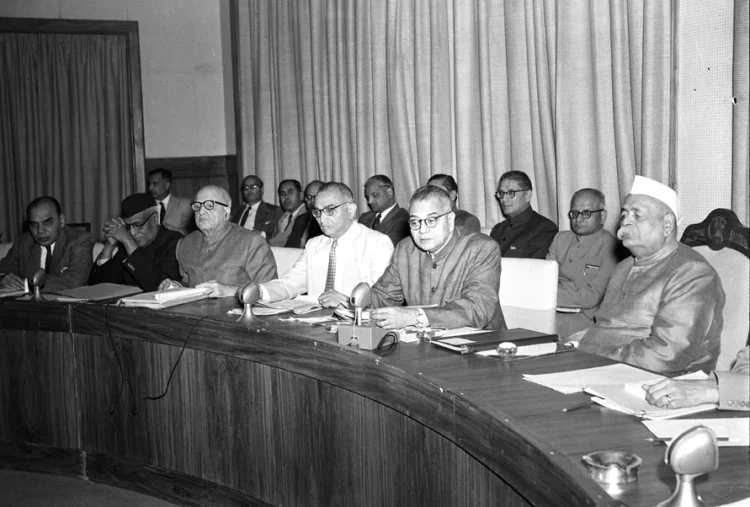
Congress leader Jairam Ramesh on Friday drew attention to a little-known episode from India’s early years as a republic, describing India’s first Prime Minister Jawaharlal Nehru as an “extraordinary institution builder.” His remarks came as he shared details of a letter Nehru sent in 1959 to Supreme Court judge Vivian Bose, offering a personal apology for comments made at a press conference.
A Letter Written in Reflection
According to the contents of the letter dated June 26, 1959, Nehru explained that he had intended to write earlier but was delayed due to continuous travel. The Prime Minister had been touring extensively at the time and said his schedule prevented him from responding sooner.
The issue stemmed from certain statements Nehru made during a press interaction in Delhi earlier that month. Those remarks drew criticism from members of the legal fraternity, particularly the Calcutta Bar. Nehru noted in his letter that he received a communication from the Honorary Secretary of the Calcutta Bar Library Club, who enclosed a resolution expressing disapproval of his comments about Justice Bose.
Response to the Legal Community
Upon receiving the resolution, Nehru responded to the Secretary of the Calcutta Bar Library Club. However, he felt it necessary to address Justice Bose directly as well. In his letter, Nehru expressed “deep regret” for what he described as improper remarks made at the press conference.
He acknowledged that the statements should not have been made and accepted responsibility for his lapse. Nehru explained that he had been caught off guard by the questions posed during the interaction and was preoccupied with other matters at the time. Nonetheless, he conceded that this did not justify his comments.
“I realise fully that those remarks were improper,” Nehru wrote, adding that he hoped Justice Bose would accept his apology for what he termed an impropriety on his part.
Significance for Executive and Judiciary Relations
The exchange has resurfaced at a time when discussions about the balance of power between the executive and the judiciary continue to feature prominently in public discourse. By highlighting the 1959 letter, Jairam Ramesh pointed to what he sees as an example of accountability and institutional respect during India’s formative years.
The relationship between the government and the judiciary has long been central to India’s constitutional framework. As Prime Minister, Nehru played a defining role in shaping many of the country’s democratic institutions. His written apology to a sitting Supreme Court judge is often cited by historians and political observers as an illustration of how disagreements between branches of government were addressed in the early years after Independence.
Historical Context of the Incident
In the late 1950s, India was still navigating the complexities of governance under a newly adopted Constitution. Public remarks by senior leaders carried significant weight, particularly when they involved members of the judiciary. The Calcutta Bar’s resolution reflected the sensitivity surrounding judicial independence and the need to preserve mutual respect between institutions.
Nehru’s decision to send a personal letter to Justice Bose underscored his recognition of that principle. Rather than allowing the matter to remain unresolved, he chose to formally convey regret and clarify his position.
While the contents of the original press remarks were not detailed in Ramesh’s post, the focus remained on Nehru’s response and his acknowledgment of error. For many, the letter serves as a historical reference point in conversations about constitutional propriety and the responsibilities of those in public office.
The episode, revived in contemporary debate, highlights how past actions continue to inform present-day discussions on governance, accountability, and the strength of democratic institutions in India.