
Diplomacy – Trump Plans April Summit With China’s Xi Jinping
Diplomacy – President Donald Trump has announced plans to travel to China in April for talks with Chinese President Xi Jinping, signaling a fresh round of high-level engagement between the world’s two largest economies. The visit, confirmed during remarks at the White House, is expected to be followed by Xi’s return trip to the United States later this year.
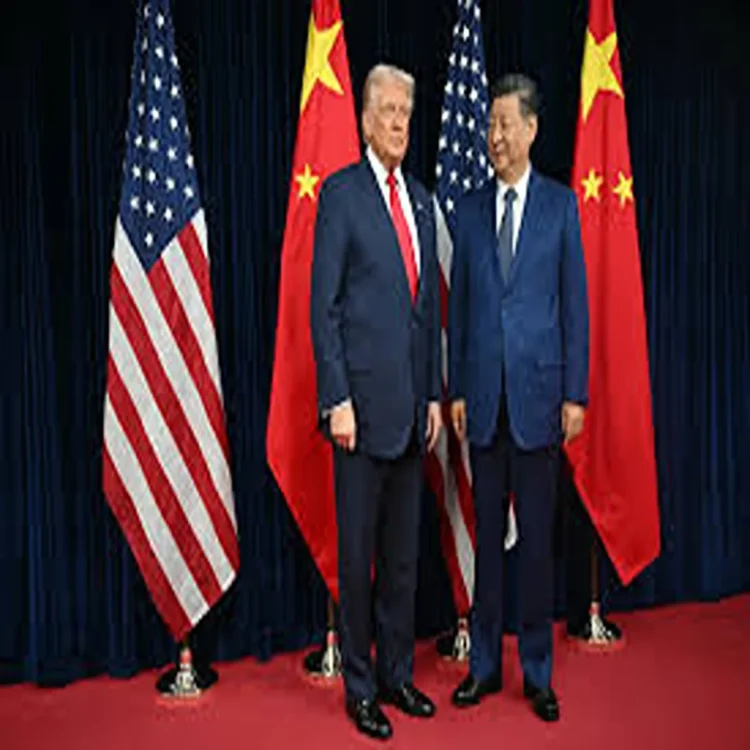
Speaking to reporters, Trump said he is looking forward to meeting Xi in April and hosting him in the US at a later date. While he offered no details about the schedule or venue of the upcoming summit, the president described the current state of ties with Beijing as positive and stable. He also emphasized that his personal rapport with Xi remains strong.
Plans for Reciprocal Visits
According to Trump, the April trip will mark the next phase of direct leader-level discussions between Washington and Beijing. Although specifics about the agenda were not disclosed, such meetings typically cover a wide range of issues, including trade policy, technology restrictions, regional security, and global economic coordination.
The White House has not clarified where in China the meeting will take place or how long the visit will last. Similarly, no timeframe has been provided for Xi’s expected visit to the United States, beyond confirmation that it is anticipated later this year.
These reciprocal visits reflect ongoing efforts to maintain open lines of communication at the highest levels, even as tensions persist in several policy areas.
Competitive Yet Connected Relationship
US-China relations continue to be shaped by strategic rivalry. Trade remains a central point of contention, particularly over tariffs and market access. Disagreements have also intensified around semiconductor export controls and advanced technology development.
Security concerns add another layer of complexity. Both countries are increasingly active in the Indo-Pacific region, where military positioning and alliance-building have drawn close scrutiny. Competition in this strategic corridor has become a defining feature of bilateral relations in recent years.
Despite these challenges, diplomatic engagement has not ceased. Senior officials from both governments have continued dialogue aimed at preventing misunderstandings and reducing the risk of escalation.
Regional Impact and Global Attention
Developments between Washington and Beijing carry implications far beyond their borders. In Asia, countries closely monitor every shift in US-China relations. The Indo-Pacific, in particular, remains a focal point for economic and security calculations.
India is among the nations watching carefully. New Delhi has expanded strategic cooperation with the United States over the past several years, while also managing its own complex relationship with China. Any recalibration between the two major powers can influence trade flows, security partnerships, and regional stability.
For global markets, renewed summit diplomacy could signal either a step toward easing tensions or merely a continuation of cautious engagement amid deep structural competition.
A History of Fluctuating Ties
Over the past decade, the US-China relationship has experienced cycles of cooperation and confrontation. During Trump’s first term, trade disputes intensified, resulting in multiple rounds of tariffs and countermeasures. The trade imbalance between the two countries has remained a political flashpoint in Washington.
At the same time, both sides have relied on direct leader-level discussions to manage crises and explore limited areas of cooperation. Climate issues, economic stability, and regional security have periodically provided common ground, even as broader rivalry continues.
Trump has faced criticism from some political opponents who argue that he has not taken a sufficiently tough stance on Chinese imports. The United States continues to run a significant trade deficit with China, a statistic often cited in domestic political debates.
As preparations begin for the April summit, attention will turn to whether the upcoming meeting produces tangible outcomes or simply reinforces the delicate balance between competition and communication that defines today’s US-China relationship.