
NuclearDeal – Trump Presses Iran for Swift Agreement
NuclearDeal – President Donald Trump has urged Iran to quickly finalize a nuclear agreement with Washington, cautioning that failure to do so could trigger serious repercussions. Speaking to reporters at the White House, Trump emphasized that time is limited and that both sides must act without delay to prevent a further deterioration in relations.
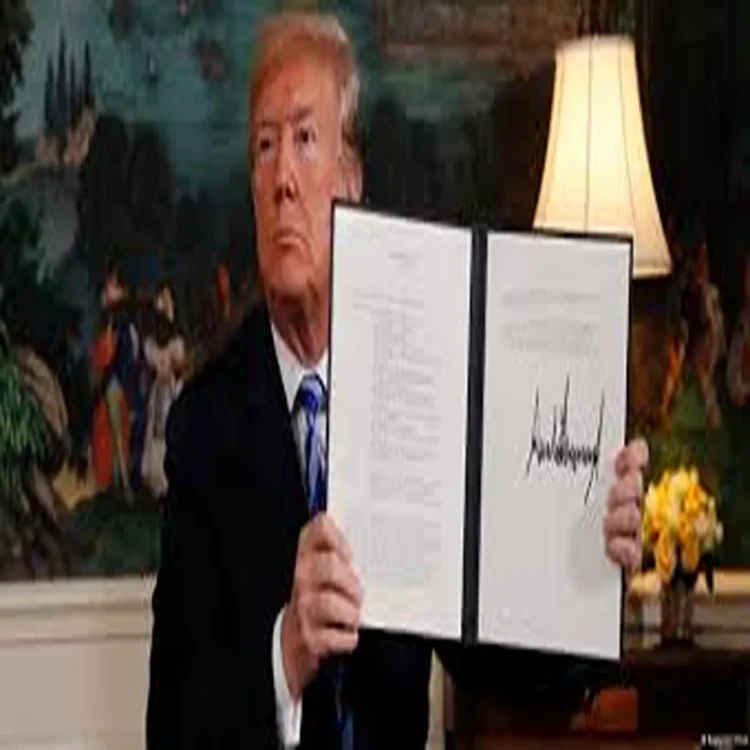
He made it clear that reaching an understanding is the preferred path, but suggested that inaction would carry heavy costs. According to Trump, the coming weeks are critical for progress. He indicated that discussions should conclude within roughly a month, stressing that prolonged negotiations would only complicate matters.
Warning of Consequences if Talks Collapse
The President signaled that if negotiations stall or fail, the United States would consider alternative measures. While he refrained from detailing what those steps might entail, he described the potential next phase as difficult for Iran. Trump underscored that any agreement must meet Washington’s expectations of fairness and strength, suggesting that a weak or one-sided arrangement would not be acceptable.
Although his remarks maintained the tone of ongoing diplomacy, they also reflected heightened pressure on Tehran to respond promptly. Observers note that such public statements often serve both as a negotiating tactic and as a message to domestic and international audiences.
Meeting With Israeli Prime Minister
The comments came a day after Trump met with Israeli Prime Minister Benjamin Netanyahu at the White House. Referring to the meeting, Trump described the discussion as productive and said Netanyahu understood his position. However, he clarified that the ultimate decision on how to proceed with Iran rests with the United States.
When asked whether Israel had urged him to halt negotiations, Trump said talks would continue for as long as he deemed appropriate. At the same time, he reiterated that if diplomacy fails to yield results, Washington would shift to what he called a second phase, without elaborating on its specifics.
Background of the Nuclear Dispute
Iran’s nuclear program has been a point of international tension for years. The United States withdrew from the 2015 nuclear agreement during Trump’s earlier term in office, a move that reshaped diplomatic dynamics in West Asia. Since then, disagreements over uranium enrichment levels, inspections, and regional security concerns have kept relations strained.
Despite periods of heightened rhetoric, diplomatic engagement between Washington and Tehran has historically followed a cycle of pressure and dialogue. Channels of communication have often remained open, even when public statements appeared confrontational.
Regional and Global Implications
Developments in the US-Iran standoff carry significant implications beyond the two countries. Stability in the Gulf region is closely tied to global energy markets, as a large share of the world’s crude oil passes through its strategic waterways. Any escalation could disrupt supply chains and influence oil prices worldwide.
For countries such as India, regional stability holds both economic and strategic importance. India sources a considerable portion of its crude oil imports from West Asia and maintains a large expatriate community across Gulf nations. Shifts in security conditions or energy flows could therefore have direct economic consequences.
Diplomats and analysts will be closely watching the coming weeks to assess whether negotiations move toward compromise or confrontation. While Trump’s remarks underscore urgency, the outcome will depend on the willingness of both sides to bridge longstanding differences.
As discussions continue, the broader international community remains attentive to whether renewed engagement can produce a workable framework, or whether tensions will enter another period of uncertainty.