
MiddleEast – Pentagon Weighs Second Carrier Deployment Amid Iran Tensions
MiddleEast- The United States is reviewing plans to reinforce its naval presence in the Middle East as diplomatic efforts with Iran continue under growing regional strain.
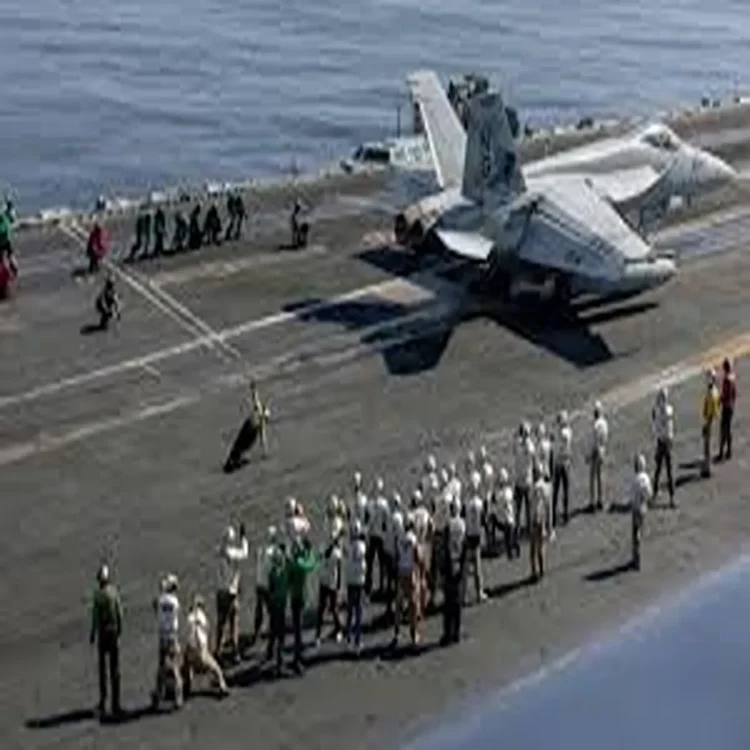
The Pentagon is preparing for the possible deployment of a second aircraft carrier to the Middle East within the coming weeks, according to a report by The Wall Street Journal. The move, still awaiting final approval from President Donald Trump, would signal a further escalation of US military readiness in the region amid fragile negotiations with Tehran.
Carrier Group Could Depart From East Coast
Officials cited in the report indicated that the aircraft carrier USS George H.W. Bush, currently engaged in routine exercises off the coast of Virginia, may be redirected sooner than scheduled. The vessel, based on the US East Coast, has been undergoing training operations and could be placed on accelerated deployment status if ordered.
However, no formal directive has been issued by the White House, and defense planners acknowledge that operational decisions remain fluid. Any change in diplomatic conditions or regional security assessments could alter the timeline.
If deployed, the USS George H.W. Bush would join the USS Abraham Lincoln, which is already stationed in the Middle East. Such a development would mark the first instance since March 2025 that two US aircraft carriers operate simultaneously in the region. At that time, the USS Harry S. Truman and the USS Carl Vinson were dispatched to counter Houthi rebel activity in Yemen.
Diplomacy Resumes After Months of Strain
The renewed military positioning coincides with indirect discussions between Iranian and American officials in Muscat, the capital of Oman. These talks represent the first formal engagement between the two countries since US airstrikes targeted key Iranian nuclear facilities in June of the previous year.
Relations between Washington and Tehran have remained tense since those strikes, with both sides signaling cautious interest in reopening dialogue while maintaining firm public positions.
President Trump confirmed earlier this week that he is evaluating the option of sending an additional carrier strike group to the region should diplomatic efforts fail. He emphasized that no definitive course of action has been decided.
White House Meeting Focuses on Iran and Gaza
The situation was also a central topic during a recent meeting between President Trump and Israeli Prime Minister Benjamin Netanyahu at the White House. The two leaders discussed ongoing negotiations with Iran as well as developments in Gaza.
Following the talks, President Trump described the discussions as constructive and reaffirmed the strength of US-Israel relations. The Oval Office meeting marked Netanyahu’s fifth visit since Trump began his second term, underscoring the strategic coordination between the two governments.
While speaking about the diplomatic track with Iran, Trump indicated that negotiations remain the preferred route. He stated that if an agreement can be achieved, it would be welcomed. At the same time, he warned that alternative measures could be considered if talks break down.
Military Readiness Paired With Diplomatic Pressure
Observers note that Washington’s dual-track approach—maintaining military preparedness while encouraging diplomatic engagement—reflects an effort to balance deterrence with dialogue. The presence of additional naval assets could serve as leverage during negotiations, while also reassuring regional allies concerned about security developments.
Despite the visible buildup, US officials continue to stress that diplomacy remains ongoing. Whether the second carrier ultimately sails to the Middle East will likely depend on how discussions in Muscat progress over the coming days.
As tensions persist, the coming weeks may prove critical in determining whether dialogue can ease the standoff or whether the region will see a further expansion of US military deployment.