
TradeAgreement – India and US Announce Interim Pact to Boost Exports
TradeAgreement – India and the United States have unveiled the framework of an interim trade agreement aimed at deepening economic cooperation and expanding market access for businesses on both sides. The announcement marks a significant step in the ongoing negotiations for a broader Bilateral Trade Agreement and signals renewed momentum in commercial ties between the two countries.
Ministers Highlight Employment and Export Gains
Union Parliamentary Affairs Minister Kiren Rijiju welcomed the development, stating that the agreement is expected to generate substantial employment opportunities, particularly for women and young people. In a message shared on social media, he said the pact would provide fresh impetus to Indian exporters, with micro, small and medium enterprises (MSMEs), farmers and fishermen likely to benefit the most.
He noted that the expansion of exports under the new framework could translate into lakhs of new jobs, strengthening income prospects in rural and semi-urban areas. According to him, India’s ongoing efforts to secure trade arrangements with major global economies reflect a broader strategy to enhance competitiveness and integrate Indian businesses into international supply chains.
Union Minister for Ports, Shipping and Waterways Sarbananda Sonowal also described the agreement as a milestone in the India-US partnership. He said the deal would unlock untapped economic potential and create new avenues for industries, farmers and entrepreneurs. Sonowal credited the progress to the leadership of Prime Minister Narendra Modi, calling the framework a foundation for stronger long-term cooperation.
Key Features of the Interim Framework
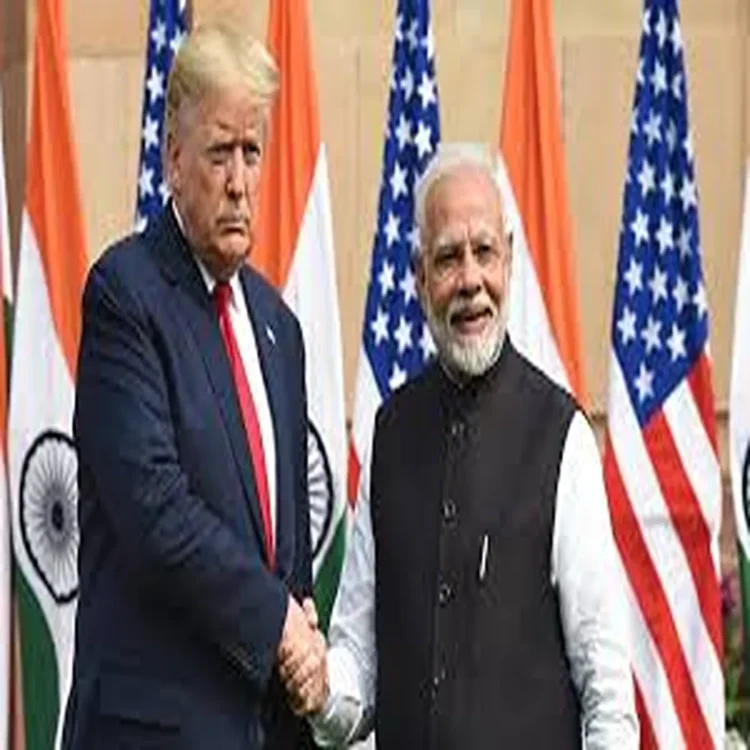
The framework was jointly announced following negotiations between officials of both nations. It builds upon trade discussions initiated earlier this year between Prime Minister Modi and US President Donald Trump.
Under the terms outlined in the joint statement, the United States will impose a reciprocal tariff rate of 18 percent on certain Indian-origin goods. These include textiles and apparel, leather and footwear products, plastic and rubber items, organic chemicals, home decor, artisanal goods and select machinery categories.
At the same time, Washington will lift tariffs previously imposed on specific aircraft and aircraft components from India that had been introduced on national security grounds. The move is expected to ease access for Indian aviation manufacturers and suppliers.
India to Reduce Tariffs on US Products
On its part, India has agreed to eliminate or reduce tariffs on a broad range of US industrial goods and several agricultural commodities. These include dried distillers’ grains used for animal feed, red sorghum, tree nuts, fresh and processed fruits, soybean oil, wine and spirits, among other products.
Officials say the tariff adjustments are designed to create a more balanced and mutually beneficial trading environment while addressing longstanding market access concerns on both sides.
In addition, India has indicated its intention to purchase goods and services worth USD 500 billion from the United States over the next five years. These purchases are expected to span energy supplies, aircraft and related components, precious metals, technology products and coking coal.
Broader Trade Goals and Market Access
Union Commerce Minister Piyush Goyal said the interim arrangement would provide Indian exporters with access to a market estimated at USD 30 trillion. He emphasized that MSMEs, farmers and fishermen stand to gain significantly from improved entry into the US market.
According to Goyal, enhanced trade flows under the agreement are projected to drive export growth and stimulate job creation, especially among women and young workers entering the labor force.
The interim framework is seen as a preparatory step toward finalizing a comprehensive Bilateral Trade Agreement. Policymakers from both countries have indicated that further negotiations will focus on deepening supply chain integration, streamlining customs procedures and expanding sector-specific cooperation.
As discussions continue, the newly announced framework signals a shared commitment by India and the United States to strengthen economic ties and support sustained trade growth in the years ahead.