
Nepal : Observes Martyrs’ Day as Interim Prime Minister Leads National Tributes
Nepal : marked Martyrs’ Day on Friday with solemn ceremonies across the country, as Interim Prime Minister Sushila Karki led official tributes in the capital. The day, dedicated to honoring those who gave their lives in the struggle for democracy and civil freedoms, brought together political leaders, senior officials, and citizens in remembrance of the nation’s historic sacrifices.
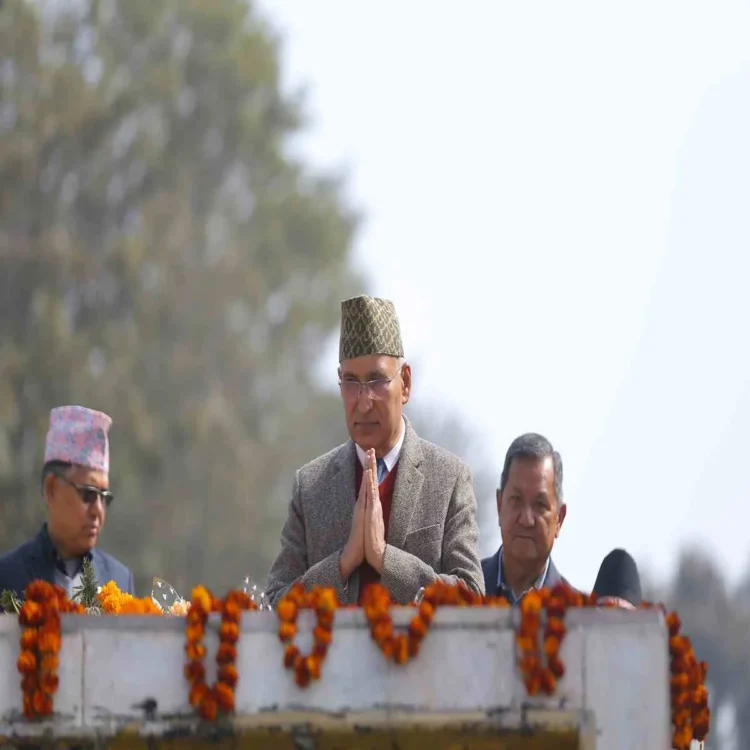
Official Tribute at Sahid Smarak
The central observance took place at Sahid Smarak in Kathmandu, where Prime Minister Karki, accompanied by members of the Council of Ministers, laid a wreath at the memorial statues. The site stands as a national symbol of resistance and remembrance, commemorating those who lost their lives in the pursuit of democratic change and republican governance.
Message Emphasizing Sacrifice and Responsibility
In a message issued on the occasion, Prime Minister Karki highlighted the role of the martyrs’ courage and determination in shaping the nation’s present path. She described their sacrifices as the force that pushed Nepal toward a decisive historical moment, urging current and future leaders to honor that legacy through responsible governance. Her remarks emphasized that the duty to build a state grounded in ethical leadership, accountability, and respect for citizens must remain central to those in power.
Remembering Victims of Recent Movements
The Prime Minister also paid tribute to individuals who lost their lives during the Gen-Z movement, acknowledging the aspirations that drove the youth-led protests. She noted that calls for justice, equality, transparent governance, and long-term national progress reflected the same spirit that inspired earlier democratic struggles. Her message included a poignant appeal that such sacrifices should not be repeated, expressing hope that no families would again have to endure similar losses.
Nationwide Observance and Participation
Martyrs’ Day was observed throughout Nepal with commemorative programs held in districts and municipalities. Deputy prime ministers, cabinet ministers, lawmakers from various political parties, the Chief Secretary of the Government of Nepal, senior security officials, and the Deputy Mayor of Kathmandu Metropolitan City joined the ceremonies. Their presence underscored the day’s national importance and the shared responsibility of preserving democratic values.
Historical Roots of Martyrs’ Day
The annual observance dates back to January 1951 and is held every year on Magh 16, which falls in late January. The day serves as a reminder of the long and often difficult journey toward political freedom in Nepal, spanning multiple periods of resistance against authoritarian rule. Over time, Martyrs’ Day has become an occasion not only to honor the fallen but also to reflect on the nation’s democratic commitments.
Honoring Key Figures of the Democratic Struggle
Special remembrance is given to prominent martyrs who played crucial roles in challenging autocratic governance. These include Shukra Raj Shastri, Dharma Bhakta Mathema, Dasharath Chand, and Ganga Lal Shrestha. Their actions and sacrifices are widely regarded as foundational to Nepal’s democratic awakening.
Legacy of Resistance Against the Rana Regime
The country also observes a week-long Martyrs’ Week in remembrance of those executed during the struggle against the Rana regime. Historical records note that within a single week, several key figures were put to death at different locations in Kathmandu while demanding independence and political rights. Their executions galvanized public resistance and became defining moments in Nepal’s movement toward democracy.
Through these observances, Martyrs’ Day continues to serve as a unifying moment for reflection, remembrance, and renewed commitment to the democratic principles for which so many gave their lives.