
Hooda : Urges Budget Relief, Warns Weak Foreign Policy Hurts Economy
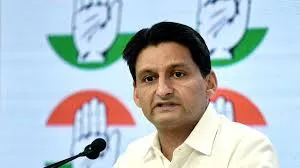
Hooda: Congress MP Deepender Singh Hooda on Thursday raised concerns about the state of India’s economy, linking current challenges to what he described as shortcomings in the country’s foreign policy approach. Speaking ahead of the Union Budget, he called for immediate measures to ease financial pressure on ordinary citizens, with particular emphasis on farmers who, he said, are struggling across several regions.
Concerns Over Economic Direction
Addressing reporters, Hooda argued that India’s economic momentum is being affected by external policy decisions. He said a strong and consistent foreign policy is essential for sustaining growth, attracting investment, and protecting national economic interests. According to him, any weakness on that front inevitably has domestic consequences, including slower economic activity and rising uncertainty.
Hooda stressed that these broader policy issues are being felt most acutely by people at the grassroots level. He noted that rising costs and uneven income growth have created distress, especially in rural areas, and urged the government to acknowledge these pressures while framing the upcoming Budget.
Call for Farmer-Centric Measures
Highlighting the condition of the agricultural sector, Hooda said farmers in many parts of the country are facing persistent difficulties. He pointed to issues such as input costs, market volatility, and income insecurity, arguing that targeted Budget provisions could offer much-needed relief. In his view, supporting farmers is not only a social responsibility but also an economic necessity, given agriculture’s role in employment and demand generation.
He added that Budget announcements should translate into practical benefits rather than broad assurances. Measures that directly reduce financial stress for farmers and low-income households, he said, would help stabilise the wider economy.
Economic Survey Sets the Context
Earlier in the day, Union Finance Minister Nirmala Sitharaman presented the Economic Survey of India for the 2025–26 financial year in Parliament. The document, tabled ahead of the Budget, provides an official assessment of economic performance and outlines expectations for the period ahead. This year’s presentation has drawn attention as it precedes a Budget scheduled for a weekend session on Sunday, February 1.
The Survey painted a largely optimistic picture, estimating India’s potential growth at around 7 per cent. It projected that gross domestic product growth in the 2026–27 financial year could remain between 6.8 per cent and 7.2 per cent, citing structural reforms and macroeconomic stability as key supporting factors.
Growth Outlook Amid Global Uncertainty
While acknowledging global economic fragility, the Survey suggested that India is comparatively well-positioned. It noted that growth in India has held up better than in many other major economies, even as geopolitical tensions, inflationary pressures, and uneven global recovery continue to pose risks.
At the same time, the report cautioned that external uncertainties remain elevated. It underscored the importance of prudent policy choices and sustained reforms to maintain momentum and manage potential shocks from abroad.
Significance of the Economic Survey
Often described as the government’s annual economic report card, the Economic Survey offers a detailed, data-driven review of developments over the past year. It serves as a reference point for policymakers, investors, and analysts by outlining trends across sectors and indicating priorities for future action. The document traditionally sets the tone for the Union Budget by framing both challenges and opportunities.
Parliament’s Budget Session Timeline
The Budget session of Parliament is scheduled to run for 65 days, spread across 30 sittings, and will conclude on April 2. Proceedings will pause for a recess on February 13, after which both Houses will reconvene on March 9. During the break, Standing Committees will examine the Demands for Grants of various ministries and departments, a process that feeds into detailed Budget discussions when Parliament resumes.