
Education Policies: Identifying Disability Levels Remains Key Challenge In Advancing Inclusive
Education Policies: The accurate identification of disability levels among individuals continues to be one of the most significant challenges in implementing inclusive education and social welfare policies in India. This issue was highlighted during the concluding session of a three-day Inclusive Education Summit, where policymakers, educators, innovators, and corporate representatives gathered to discuss practical solutions for inclusive learning and employment opportunities.
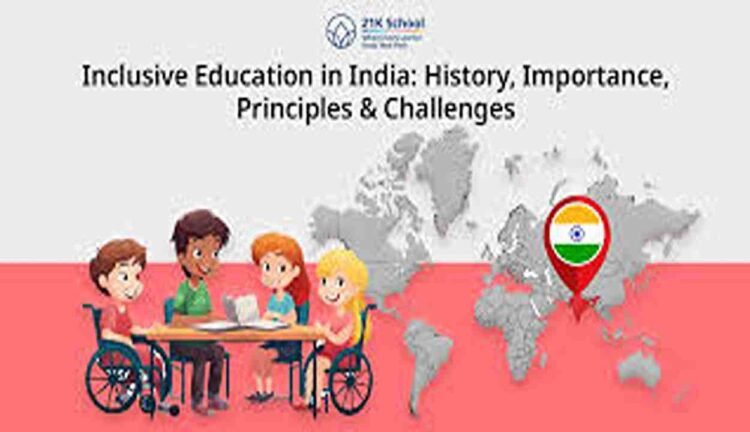
The discussion emphasized that determining the degree of disability is essential because it directly impacts access to government benefits, educational reservations, and employment schemes. A disability benchmark of forty percent or higher is generally required for individuals to qualify for various social support programs. However, inconsistencies in assessment processes and limited awareness continue to create barriers for eligible beneficiaries.
Need For Effective Policy Implementation
While addressing the summit, the Minister of State for Education underlined that progressive education reforms can only succeed when policies are implemented with commitment and sensitivity. He referred to the National Education Policy 2020 as a forward-looking framework designed to modernize the education system and promote inclusivity at all levels. However, he stressed that policy documents alone cannot bring change unless they are translated into action on the ground.
Across different states, significant investments and reforms are underway to align education systems with the principles of equity, access, and lifelong learning. Forums such as the Inclusive Education Summit play a vital role in identifying gaps, operational challenges, and real-world constraints that affect the implementation of these reforms.
State-Level Innovations Supporting Special Needs
One of the notable initiatives discussed during the event was a state-led program in Andhra Pradesh focused on supporting children with autism. Under the PM-Shri scheme, the state is establishing specialized centers that aim to provide inclusive education combined with skill development. These centers are expected to feature advanced facilities such as hi-tech laboratories and robotics infrastructure, enabling children with special needs to acquire practical and future-ready skills.
Such initiatives demonstrate how state governments can adapt national policies to address local needs while encouraging innovation in inclusive education. The emphasis on technology-driven learning also reflects the evolving understanding that skill development should begin early and remain continuous throughout life.
Inclusive Education As A Collaborative Effort
The summit marked a rare occasion where all stakeholders involved in inclusive education came together on a single platform. Teachers, school administrators, government officials, innovators, and private sector representatives exchanged ideas and shared experiences related to education for children with special needs.
According to officials from the Department of School Education and Literacy, this collaborative approach is essential for driving systemic change. Many innovative tools and assistive technologies showcased during the summit have the potential to significantly improve learning outcomes for children with disabilities. However, a major challenge lies in scaling these innovations so they can reach a wider population across regions.
Role Of Private Sector In Inclusive Employment
The event also highlighted the growing role of the private sector in promoting inclusive employment. Representatives from leading multinational companies shared insights into workforce diversity and disability inclusion. One such presentation revealed that a major e-commerce company currently employs around three thousand persons with disabilities across multiple locations in India, including southern, western, and northern regions.
The company expressed readiness to hire more individuals with disabilities and emphasized the need for better coordination between training institutions, government agencies, and employers. Directing qualified candidates to inclusive employers can significantly enhance employment outcomes and economic independence for persons with disabilities.
Moving Towards A More Inclusive Future
The discussions at the Inclusive Education Summit reinforced the idea that knowledge acquisition and skill development are continuous processes with no fixed endpoint. Inclusive education is not limited to classrooms but extends into vocational training, higher education, and employment ecosystems.
By addressing challenges such as disability assessment, policy execution, innovation scaling, and workforce inclusion, India can move closer to building an education system that truly leaves no one behind. Sustained dialogue among stakeholders, combined with practical implementation strategies, will be crucial in transforming inclusive education from a policy goal into a lived reality.