
Basant Panchami : Prayers Begin at Bhojshala Amid Tight Security in Dhar
Basant Panchami: The Basant Panchami rituals commenced peacefully at the historic Bhojshala–Kamal Maula Mosque complex in Dhar district of Madhya Pradesh early Friday morning, under extensive security arrangements. A large number of devotees gathered at the centuries-old site to mark the auspicious occasion, which coincided with Friday prayers, prompting authorities to enforce strict monitoring to maintain law and order.
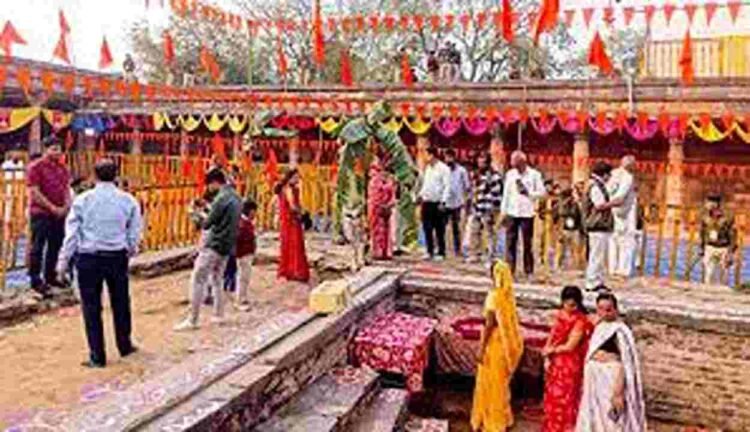
Early Morning Rituals at a Historic Complex
Devotees began assembling at the disputed monument at sunrise, carrying flowers, religious symbols, and traditional offerings. The atmosphere was devotional as the rituals formally began with the installation of an idol of Goddess Saraswati, also revered as Maa Vagdevi. The prayers were conducted according to Vedic traditions, accompanied by chants and ceremonial offerings. A continuous prayer ritual, known as Akhand Puja, was initiated and scheduled to continue throughout the day until sunset.
Supreme Court Formula to Maintain Harmony
The arrangements followed a clear time-sharing formula laid down by the Supreme Court to avoid communal tension. As per the directive, the Hindu community was permitted to perform religious rituals from sunrise to sunset, while members of the Muslim community were allowed to offer namaz between 1 pm and 3 pm. This structured schedule was designed to ensure that both communities could observe their religious practices without conflict.
Massive Security Deployment Across Dhar
To prevent any untoward incident, authorities deployed around 8,000 personnel, including police and paramilitary forces, across the city. The disputed complex itself was divided into multiple security sectors, while the broader city area was organized into zones for effective surveillance. Sensitive locations were identified in advance, and additional forces were stationed accordingly.
Use of Technology for Monitoring
Modern surveillance measures played a key role in the security strategy. Drones and CCTV cameras were used extensively to keep a close watch on movement around the complex and nearby areas. Officials confirmed that social media platforms were also under constant monitoring to prevent the circulation of misleading or inflammatory content that could disrupt peace.
Administrative Coordination and Alternate Arrangements
District officials stated that detailed planning was carried out to ensure smooth conduct of religious activities. Alternative locations were arranged for Friday prayers to avoid overcrowding and overlapping at the disputed site. The administration emphasized that uninterrupted worship for both communities was a top priority, and coordination with community representatives helped in maintaining calm.
Growing Devotee Participation Through the Day
As the day progressed, the number of devotees attending the Basant Panchami rituals steadily increased. Many participants expressed satisfaction over the arrangements and appreciation for the opportunity to perform prayers at the historic site. Families traveled from nearby areas to take part in the celebrations, highlighting the cultural and religious significance of the day.
Longstanding Dispute and Cultural Significance
The Bhojshala complex holds deep historical and religious importance. While the Hindu community regards it as a temple dedicated to Goddess Saraswati, the Muslim community identifies it as the Kamal Maula Mosque. The site is protected by the Archaeological Survey of India, and its usage has been regulated for decades through administrative and legal orders.
Existing Worship Guidelines at the Site
An order issued in April 2003 allows Hindus to offer prayers at the site on Tuesdays, while Muslims are permitted to conduct prayers on Fridays. Special arrangements, such as those seen during Basant Panchami, are made under judicial supervision to accommodate major religious occasions and ensure communal harmony.
Call for a Permanent Resolution
Several devotees and local residents voiced hope for a lasting solution to the Bhojshala matter. They stressed the need for dialogue and legal clarity so that the site’s future can be decided peacefully, respecting the sentiments of all stakeholders.