
Trump’s Tariff : Threat on French Wine Sparks Fresh Diplomatic Debate
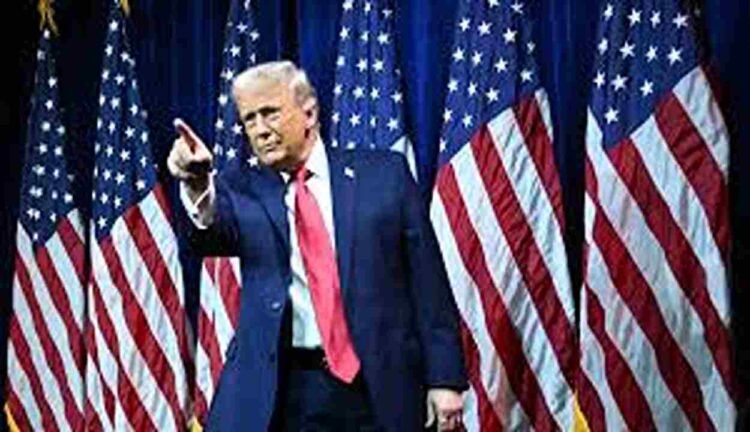
Trump’s Tariff: US President Donald Trump once again found himself at the center of global attention after suggesting a dramatic trade measure against France. Speaking to reporters on Monday local time, Trump floated the idea of imposing a 200 percent tariff on French wine and champagne. The comment came in response to reports that French President Emmanuel Macron declined to participate in Trump’s proposed initiative known as the Board of Peace. According to reporting by EuroNews, the remark has added another layer of complexity to already sensitive transatlantic relations.
Background of the Tariff Statement
The proposed tariff was not announced as part of a formal trade policy but emerged during an informal exchange with journalists. Trump reacted sharply after being told that Macron was unwilling to sit on the Board of Peace. He suggested that economic pressure through tariffs could quickly change France’s position, although he added that Macron was not obligated to join. The statement echoed Trump’s long-standing approach of using tariffs as leverage in diplomatic and economic negotiations.
Understanding the Board of Peace Initiative
The Board of Peace was initially presented by Trump last September. At the time, it was framed as part of a broader plan to help end the war in Gaza, but the scope of the idea appears to have expanded. The initiative is now described as a platform intended to mediate global conflicts and encourage dialogue among major international stakeholders. Trump has positioned the board as an alternative mechanism for diplomacy, emphasizing direct negotiation and strong leadership rather than traditional multilateral institutions.
Macron’s Political Timeline and Legal Limits
One of Trump’s remarks focused on Macron’s political future, suggesting that his time in office was limited. Under French law, Macron’s five-year presidential term ends in May 2027, and he is not eligible to run for a third term. While this timeline is well known, Trump’s public reference to it added a personal edge to the exchange and fueled media discussion about leadership transitions in Europe and their impact on global diplomacy.
Diplomatic Outreach After Davos
Despite the tension implied by Trump’s comments, communication between the two leaders has continued. Macron reportedly invited Trump to attend a G7 meeting after the World Economic Forum. The World Economic Forum, held annually in Davos, often serves as a backdrop for informal diplomatic discussions, and Macron’s invitation suggested an attempt to maintain dialogue despite disagreements.
Messages Shared on Truth Social
Trump later shared a screenshot of messages on Truth Social, offering a rare glimpse into private diplomatic communication. In the message, Macron emphasized that France and the United States shared aligned views on Syria and could cooperate effectively on Iran. However, he also expressed confusion regarding Trump’s stance on Greenland, an issue that has previously attracted international attention due to its geopolitical sensitivity. Trump’s response was not visible in the shared screenshot, leaving observers to speculate about his reaction.
Global Issues Raised in the Exchange
Macron’s message touched on several key international topics, including Syria, Iran, and Greenland, highlighting the breadth of issues facing global leaders. He also proposed expanding discussions to include representatives from Ukraine, Denmark, Syria, and Russia during the margins of a proposed G7-related meeting in Paris. The invitation underscored France’s interest in multilateral engagement, even as Trump has often favored bilateral or unconventional diplomatic frameworks.
Trade, Diplomacy, and Strategic Messaging
The suggestion of a 200 percent tariff on French wine and champagne, while not an official policy move, reflects Trump’s broader strategy of blending trade policy with diplomatic signaling. French wine exports are a significant cultural and economic symbol, and any serious tariff proposal would likely have wide-ranging implications for international trade relations. Analysts note that such statements can influence markets and public perception even without immediate implementation.
Broader Implications for US-France Relations
The episode illustrates the ongoing balancing act in US-France relations, where cooperation on security and global issues coexists with sharp disagreements and rhetorical clashes. While both countries remain key allies, moments like this highlight differing approaches to diplomacy, leadership, and international institutions. Whether the Board of Peace gains traction or remains a symbolic proposal, the exchange has already contributed to a renewed debate about how global conflicts should be managed in an increasingly complex world.