
A Long Shadow of Negligence: Goa Government Moves to Uncover Decades of Regulatory Violations
A Long Shadow of Negligence: The tragic fire incident at the popular nightclub Birch by Romeo Lane in North Goa has triggered an intense political, administrative, and regulatory response across the state. The blaze, which occurred last month in Arpora village and claimed 25 lives, has become a turning point in Goa’s approach toward tourism regulation, safety compliance, and accountability. The state government has now acknowledged that the establishment had a long and complicated operational history, raising serious questions about how regulatory lapses were allowed to persist for decades.
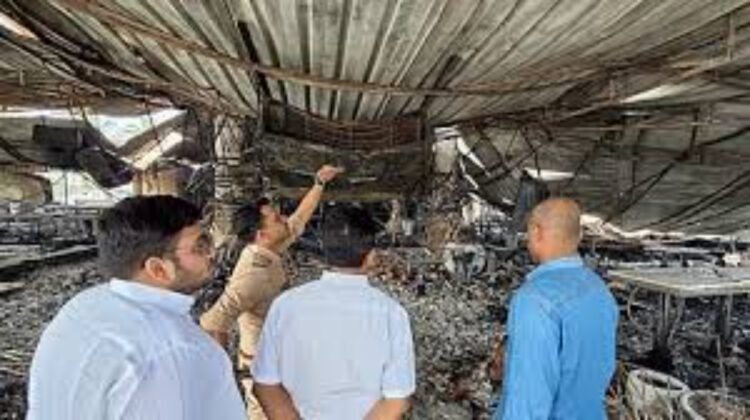
Government Acknowledges Historical Irregularities
Goa Chief Minister Pramod Sawant informed the state legislature that Birch by Romeo Lane had operated under multiple names over the years. According to him, the club’s compliance record is now under scrutiny dating back to 1999, when permission was initially granted to set up a commercial establishment on tenanted land. The government has initiated a comprehensive probe to examine all violations connected with the property since its inception.
Sawant stated that the inquiry would look beyond the recent tragedy and focus on systemic failures that allowed such an establishment to function without adhering to mandatory safety and land-use regulations. He emphasized that this investigation aims to identify not only individual responsibility but also procedural loopholes within the regulatory framework.
Crackdown on Unlicensed Tourism Establishments
As part of the broader response, the Goa government has launched a statewide crackdown on tourism-related businesses operating without valid permits. Addressing the Goa Legislative Assembly, the chief minister made it clear that no special protection would be extended to violators, irrespective of their social or economic status.
Inspections carried out in North Goa revealed that out of 47 tourism establishments checked, 17 were sealed due to non-compliance. In South Goa, authorities inspected 39 premises and sealed five of them. These closures were primarily due to the absence of no-objection certificates from the Fire and Emergency Services Department and a lack of consent to operate from the Goa State Pollution Control Board.
Nightclubs Operating Under Restaurant Licenses
One of the key issues highlighted during the assembly discussion was the misuse of licenses. The chief minister explained that several businesses initially received approval to operate as restaurants. Over time, they applied for extended operating hours to serve liquor and eventually transformed into full-fledged nightclubs without obtaining fresh permissions.
This practice, according to Sawant, created a dangerous situation where establishments hosting large crowds continued to function without adequate fire safety measures or structural approvals. The Arpora incident has brought renewed attention to this pattern, prompting authorities to reassess licensing norms across the tourism sector.
Opposition Demands Transparency on Coastal Violations
Leader of Opposition Yuri Alemao raised concerns regarding violations of Coastal Regulation Zone laws. He demanded that the government provide detailed data on establishments that breached coastal norms and accused the Coastal Zone Management Authority of failing to enforce regulations effectively.
In response, Sawant revealed that between 2021 and 2025, the authority received 534 complaints related to coastal violations and issued 336 demolition orders. He also noted that while the Coastal Zone Management Plan of 2011 has been finalized, the updated 2019 plan is expected to be completed within the next year.
Allegations of VIP Protection and Government Response
During the debate, allegations surfaced that certain high-profile clubs, including those linked to well-known personalities, were being shielded from action. The chief minister categorically denied these claims, asserting that neither VIPs nor VVIPs would be exempt from legal scrutiny.
Sawant stressed that the rule of law would prevail and that all commercial establishments must comply with safety, environmental, and land-use regulations. He reiterated that the recent enforcement drive reflects the government’s commitment to restoring credibility in regulatory governance.
Inquiry Status and Legal Proceedings
The magisterial inquiry into the Arpora nightclub fire has been completed, and actions are being taken based on its findings. However, the chief minister declined to table the inquiry report in the assembly, stating that it would be made public only after the filing of a formal chargesheet.
He also confirmed that a Red Corner notice has been issued against Surinder Khosla, identified as the owner of the club, indicating that the investigation is extending beyond state boundaries. The government is also probing the original permission granted in 1999 for constructing a commercial establishment on a saltpan, where the nightclub later came up.
Concerns Over Systemic Loopholes
AAP legislator Venzy Viegas highlighted another case, alleging that the Bastion Club in Morjim exploited loopholes in the system to continue operations. He joined other opposition members in demanding greater transparency and immediate disclosure of inquiry findings, leading to protests within the assembly.
The unfolding developments suggest that the Arpora tragedy may serve as a catalyst for long-overdue reforms in Goa’s tourism regulation and enforcement mechanisms. With public attention firmly fixed on accountability, the coming months will be crucial in determining whether systemic change follows this devastating incident.