
South Korean: Former President Faces Prison Sentence After Martial Law Crisis
South Korean: A major political and legal chapter in South Korea has reached a decisive moment as a former national leader has been sentenced to prison over actions taken during a controversial period of martial law. The ruling has drawn global attention, not only because of the individual involved, but also because it highlights how constitutional systems respond when democratic norms are challenged. The verdict represents the first outcome among several criminal cases linked to the same political crisis.
Background of the Martial Law Controversy
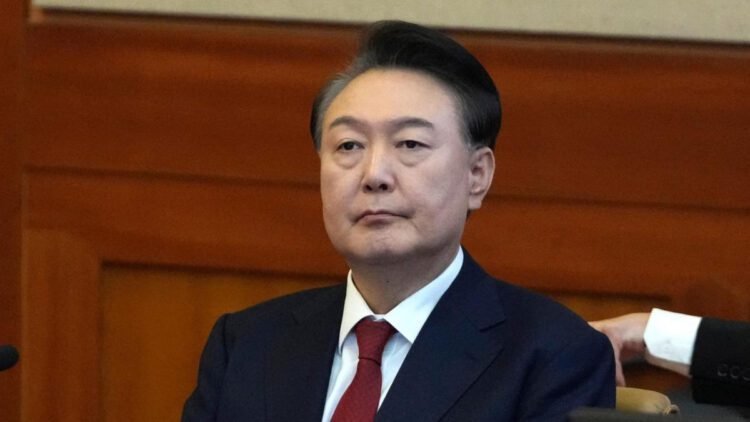
The case centers on former president Yoon Suk Yeol, whose brief declaration of martial law in December 2024 shocked the nation. The announcement triggered widespread demonstrations across major cities, with citizens demanding accountability and removal from office. Protesters argued that the move threatened democratic institutions and undermined constitutional governance.
Following the public backlash, Yoon was impeached by lawmakers, formally arrested, and ultimately removed from the presidency. Investigators later opened multiple criminal cases, examining whether the declaration and its execution violated existing laws and constitutional safeguards.
Details of the Court Ruling
On Friday, the Seoul Central District Court delivered its first verdict among eight ongoing trials. The court sentenced Yoon to five years in prison, citing several serious offenses. These included resisting lawful attempts by authorities to detain him, allegedly fabricating aspects of the martial law proclamation, and bypassing a legally required full Cabinet meeting.
According to the court, these actions demonstrated a disregard for due process and legal procedure. The judge emphasized that the sentence was intended to address the damage done to public trust and institutional order.
Judicial Reasoning and Observations
In a televised ruling, Judge Baek Dae-hyun stated that a severe punishment was unavoidable. He noted that the former president had failed to show remorse and continued to present explanations that were difficult to accept. The judge also stressed the importance of restoring the legal systems and democratic frameworks that were weakened by the martial law declaration.
The ruling suggested that accountability at the highest level of leadership is essential to maintaining the rule of law. The court framed the sentence not merely as punishment, but as a step toward institutional recovery.
Defense Arguments and Response
Throughout the investigation and trial, Yoon has consistently argued that he never intended to impose long-term military rule. He claimed the declaration was meant as a warning to the public about what he described as legislative obstruction by a liberal-controlled parliament. His legal team has echoed this stance, accusing prosecutors and independent counsel of pursuing politically motivated charges.
After prosecutors sought a significantly longer sentence earlier in the case, Yoon’s defense criticized the request as excessive and lacking sufficient legal justification. While he retains the right to appeal the current ruling, there was no immediate public response from him following the verdict.
Rebellion Charges and Future Trials
The most serious allegation against Yoon remains unresolved. Prosecutors argue that the enforcement of martial law amounted to rebellion, a charge that carries the possibility of life imprisonment or even capital punishment. A separate ruling on this matter is expected next month.
Legal experts suggest that the outcome of this major trial will overshadow the smaller cases. Prison terms from these additional trials would become especially relevant if the court decides against imposing the most severe penalties in the rebellion case.
Expert Legal Analysis
Park SungBae, a criminal law specialist, has stated that the likelihood of a death sentence is extremely low. He explained that courts in South Korea have rarely issued such punishments in recent decades. The country has maintained an unofficial halt on executions since 1997.
According to Park, the court is likely to consider mitigating factors, including the short duration of the martial law and the absence of casualties. However, he also noted that the lack of genuine remorse could influence sentencing toward a lengthy prison term, potentially exceeding 30 years or resulting in life imprisonment.
Wider Political and Social Impact
This case has set a powerful precedent in South Korean politics. It reinforces the principle that even the highest officeholders are subject to legal scrutiny. For many citizens, the verdict represents a reaffirmation of democratic resilience and judicial independence.
At the same time, the trials continue to polarize public opinion. Supporters argue that Yoon acted out of political necessity, while critics view his actions as a dangerous overreach of executive power. Regardless of perspective, the legal outcomes will shape the nation’s political discourse for years to come.