
US : senators try to renew quantum research legislation
US: A bipartisan group of US senators sponsored legislation to extend and renew a government initiative aimed at enhancing American leadership in quantum technology
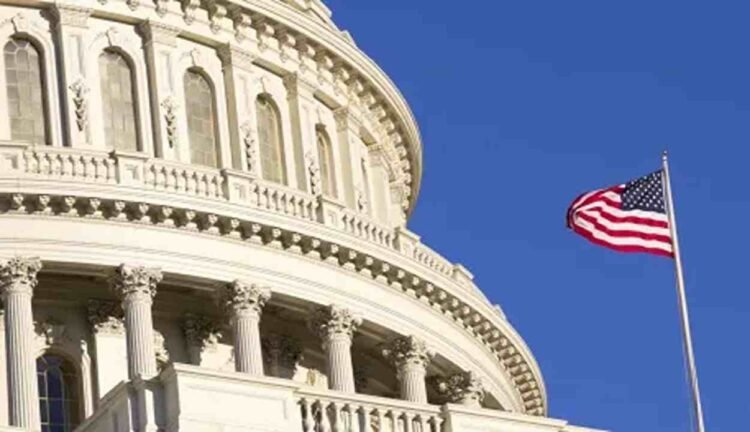
The National Quantum Initiative, a program initially authorized in 2018 to coordinate government research in quantum computing, networking, and sensing, would be reauthorized under the law.
Senators sponsoring the idea said ongoing government investment is required to maintain US national security and economic competitiveness as other nations expand expenditure in the subject.
“Ensuring the US is at the forefront of quantum research and development is crucial for national security and technological advancements,” Senator Ben Ray Lujan said. According to him, the law will encourage creativity throughout the country and assist states that are currently engaged in quantum research.
Among other things, the law places a strong emphasis on working with reliable friends, which is consistent with the US and India’s continued cooperation on important and cutting-edge technology, such as quantum research.
Under the current bilateral technological frameworks, quantum research has been designated as a joint priority between Washington and New Delhi. In order to develop its own computing, networking, and sensing capabilities, India has likewise started a National Quantum Mission.
According to Senator Maria Cantwell, the promise of quantum technology is tremendous. According to her, government support is required to translate laboratory research into real-world applications. According to Cantwell, the program would boost supply chains, foster workforce development, and generate high-skilled employment.
According to Republican Senator Todd Young, the law targets international competition, especially with China. He said, “We need to make sure the United States has the talent and research capabilities required to lead the global tech competition and outcompete China.”
Support was expressed by more politicians from both parties. According to Senator Dick Durbin, funding for quantum research facilities is essential to preserving US dominance. According to Senator Steve Daines, quantum research requires sustained funding and already provides employment in places like Montana.
According to Senator Marsha Blackburn, the US cannot afford to lag behind its enemies. According to Senator Tammy Baldwin, bipartisan collaboration is necessary to maintain the nation’s competitiveness in upcoming sectors. According to Senator Ted Budd, sustained funding for quantum research is crucial for both economic expansion and national defense.
The National Quantum Initiative would be extended by five years, until December 2034, according to the law. It would reauthorize quantum education and research programs at the National Science Foundation and the National Institute of Standards and Technology.
Additionally, the bill would authorize quantum research projects at the National Aeronautics and Space Administration for the first time. These endeavors would include quantum sensors and quantum satellite communications.
Up to three additional quantum centers at NIST would be established under the law. Additionally, it would establish five new transdisciplinary centers for quantum teaching and research at NSF. The centers would provide scientists and engineers training and common infrastructure, according to lawmakers.
According to Senate Democratic Leader Chuck Schumer, quantum technology is essential for both job development and security. According to him, the law would guarantee that quantum technologies be created in the US. According to Senator Mike Rounds, the measure upholds President Donald Trump’s goal of keeping the United States at the forefront of quantum physics.
Technology businesses and trade associations applauded the plan. The Quantum Industry Coalition claimed the law will boost US leadership in quantum computing, sensing and networking. Citing the need for consistent support and public-private collaborations, IBM, Microsoft, and Google urged Congress to act swiftly.
Since 2018, the National Quantum Initiative has contributed to the growth of US quantum research. It has aided workforce development, scholarly research, and businesses. Failure to continue the program, according to the bill’s supporters, may erode US leadership as the world’s rivalry in quantum technology increases.