
Trains Delayed: Winter Fog Paralyzes Transport Network Across North India Ahead of New Year
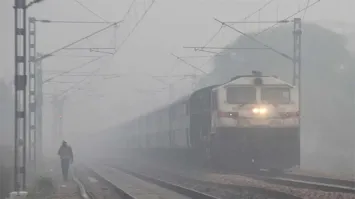
Trains Delayed: Severe winter fog and sharply reduced visibility brought large parts of North India’s transport system to a standstill, causing massive disruptions to train and flight operations. Passengers faced long waits, missed connections, and growing uncertainty as rail and air schedules slipped by several hours. The situation highlighted how extreme winter weather continues to challenge mobility in the region, especially during peak travel periods near the New Year.
Impact on Long-Distance Train Operations
Dense fog during the late night and early morning hours significantly affected rail movement across multiple corridors. Several premium and semi-premium services experienced extraordinary delays, with some trains running more than eleven hours behind schedule. Trains connecting Ayodhya, Lucknow, Varanasi, and Delhi were among the worst hit, forcing passengers to spend extended hours onboard or at stations.
More than eighty trains arriving in the national capital were delayed by anything between two and twelve hours. Routes originating from cities such as Bhubaneswar, Kolkata, Sealdah, Dibrugarh, Mumbai, and Rajendra Nagar were particularly affected. Departures from Delhi were also disrupted, leading to a cascading effect across the railway network.
List of Heavily Delayed Trains
Several important services reported substantial delays, adding to commuter frustration and logistical strain.
The New Delhi to Darbhanga Humsafar Special ran over eight hours late, while the Bihar Sampark Kranti Express on the same route followed with a delay exceeding six hours. The New Delhi to Rani Kamlapati Shatabdi Express was delayed by around four hours, similar to the Mahabodhi Express bound for Gaya. Other affected trains included the Superfast Express to Sogaria, the Mahakoshal Express to Jabalpur, the Durg Humsafar Express, and the Sarbat Da Bhara Express to Lohian Khas.
These delays disrupted onward travel plans, hotel bookings, and local transportation arrangements for thousands of passengers.
Weather Conditions Intensify the Crisis
The disruption was compounded by a sharp drop in temperature across the region. The minimum temperature in Delhi fell by nearly three degrees Celsius within a day, intensifying cold wave conditions. Such temperature drops often increase fog density, reducing visibility on tracks and runways to unsafe levels.
Railway authorities were forced to impose speed restrictions as a safety measure, which further slowed down train movement. Even advanced signaling systems and fog safety devices struggled to offset the severity of the conditions.
Air Traffic Severely Affected at Delhi Airport
Air travel faced similar challenges, especially at Delhi’s Indira Gandhi International Airport. A total of 148 flights were cancelled, including both arrivals and departures, while more than 150 flights operated behind schedule. Low visibility conditions reduced landing and takeoff capacity, creating congestion and long queues.
Major airlines such as IndiGo, Air India, and SpiceJet issued travel advisories, asking passengers to check flight status before heading to the airport. Many travelers reported extended waiting times and last-minute cancellations, adding to holiday travel stress.
Air Quality Remains a Serious Concern
Alongside fog and cold weather, air pollution levels in Delhi remained alarmingly high. According to data from the Central Pollution Control Board via the SAMEER application, the air quality index touched 388 in the morning hours, placing it firmly in the very poor category. High pollution levels can worsen fog formation and further reduce visibility, creating a dangerous combination for transportation.
Weather Alert Issued for New Year Period
In response to the evolving situation, the India Meteorological Department issued a weather alert covering the New Year period. The advisory warned of dense to very dense fog accompanied by severe cold wave conditions during late night and early morning hours. Regions expected to be affected include Punjab, Haryana, East Uttar Pradesh, West Uttar Pradesh, Bihar, Odisha, Delhi, and Chandigarh.
Residents and travelers have been urged to remain cautious, avoid unnecessary early-morning travel, and stay updated through official advisories. Authorities are monitoring the situation closely, but persistent weather patterns suggest that disruptions may continue in the coming days.