
Gold and silver: According to Goldman Sachs, copper will consolidate in 2026 while will shine brightly
Gold and silver: According to Goldman Sachs’ most recent commodities forecast, gold is anticipated to continue to be the commodity with the best performance in 2026, driven by robust central bank demand and growing geopolitical threats.
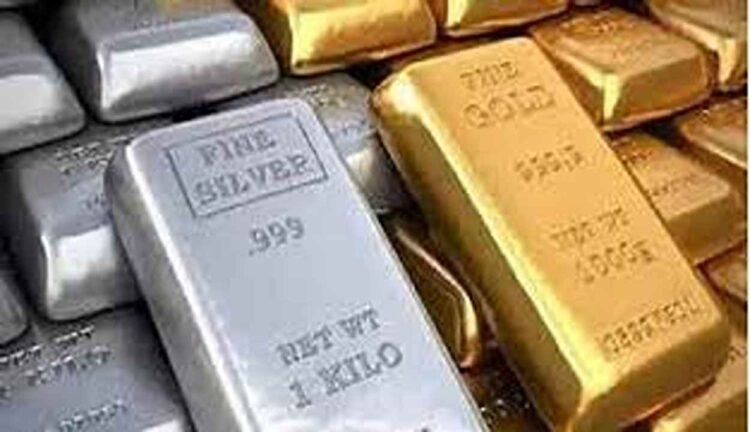
“Central bank gold buying to remain strong in 2026, averaging 70 tonnes per month,” according to the analysis, is “four times above the 17 tonnes pre-2022 monthly average,” according to Goldman Sachs.
By itself, this tendency is anticipated to “contribute about 14pp to our predicted price increase by Dec 26,” the study said, citing elevated global risk perceptions, especially in the wake of “the freezing of Russia’s reserves in 2022.”
Noting that “gold ETFs account for just 0.17 per cent of US private financial portfolios,” Goldman Sachs also draws attention to possible upside risks from private investors, predicting that “every 1bp increase in the gold share of US financial portfolios… raises the gold price by 1.4 per cent.”
In light of these factors, the company predicts that gold prices would climb sharply, saying, “We forecast the gold price to rise to USD 4,900 by Dec 26.”
The wider strength in precious metals is anticipated to help silver, despite the fact that it is not as well publicized as gold.
The research said that “precious metals… tend to benefit from Fed cuts” and emphasized that the 2025 good returns from the precious metals category contributed to the sustained investor interest in 2026. According to the Goldman Sachs research, gold continues to be its “single favourite long commodity,” indicating favorable circumstances for the larger precious metals complex, which includes silver.
Following a robust surge, copper is anticipated to consolidate in the basic metals market. According to Goldman Sachs, “the copper price has rallied from USD 10,600 in November to USD 11,700” due to anticipation around tariffs. “We forecast the copper price to consolidate in 2026 and average USD 11,400/t,” the bank continues, assuming tariff uncertainty lasts until the middle of 2026.
The long-term picture for copper is still positive despite the near-term correction. Copper “remains our ‘favourite’ industrial metal, especially in the long run,” according to the research, which highlights the fact that electrification trends “drive nearly half of copper demand.”
Copper is “so critical for strategic sectors such as AI, the power grid, and defence,” according to Goldman Sachs, which may provide a floor under prices even in a slower economic scenario.
According to the research, the forecast for lead is more muted, which is consistent with more general projections for several industrial metals. Although it does not provide precise price projections for lead, Goldman Sachs predicts “significant return differentiation across commodities” in 2026, with pressure on industrial metals as a whole as supply growth increases.
Strong supply increase in a number of metals is attributed to “Chinese overseas investments to guarantee security of metals critical in the AI and geopolitical race,” according to the research. This might have an impact on the pricing of metals with weaker demand tailwinds.
Overall, the report stated that although returns on commodity indexes may slow down in 2026, geopolitical, energy transition, and supply concentration-related structural forces will continue to influence results, keeping gold at the forefront and copper stable over the long run, even as the outlook for other base metals, such as lead, is more uncertain.