
Bangladesh: Ahead of elections, US lawmakers caution about party bans and a defective tribunal
Bangladesh: A group of U.S. lawmakers have cautioned the country’s interim government that suspending political parties and reviving the “flawed International Crimes Tribunal” could harm the electoral process’ credibility as Bangladesh prepares for general elections in February amid ongoing political unrest. Rather, they demanded a democratic transition that was both credible and inclusive.
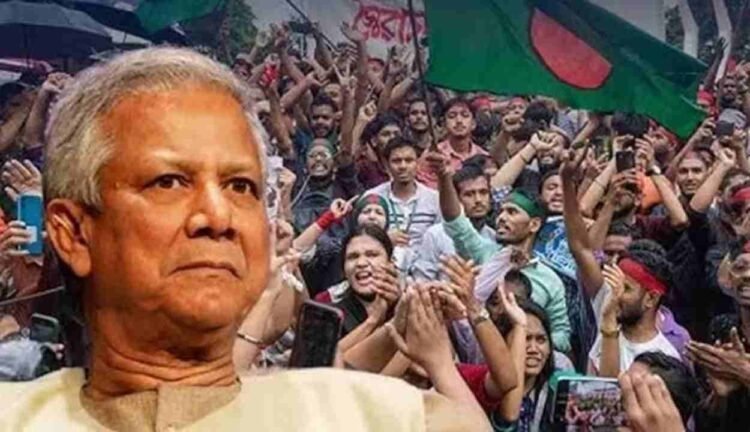
The warning coincides with the announcement of Interim Chief Advisor Muhammad Yunus that national elections would take place on February 12 and that Bangladesh hopes to restore democratic rights that were undermined by an oppressive regime.
In a letter to Chief Adviser Yunus, US Representatives Sydney Kamlager-Dove, Bill Huizenga, and Gregory W. Meeks expressed concern that prohibiting political organizations might disenfranchise large portions of the population and undermine democratic legitimacy at a critical moment.
“We welcome your willingness to step forward at a moment of national crisis in Bangladesh to lead an interim government ahead of elections in February,” the MPs said in a letter.
They emphasized that in order to guarantee free and fair elections that enable people to peacefully express their will via the voting process, the interim administration should work with political parties from all walks of life.
However, the MPs cautioned that if the temporary government went forward with banning political parties or reactivating what they called the faulty International Crimes Tribunal, it would be difficult to accomplish this aim.
They issued a warning that such actions would erode the public’s already shaky trust in government institutions.
The letter cited past elections to put their concerns in a broader historical context, pointing out that the US Department of State and other foreign observers had determined that Bangladesh’s general elections in 2018 and 2024 were not free nor fair.
Additionally, it referenced a February study from the UN Office of the High Commissioner for Human Rights, which estimated that during demonstrations in July and August of 2024, security forces murdered around 1,400 people.
“Genuine accountability for these acts should model the values of Bangladesh’s democracy, rather than continue a cycle of retaliation,” the MPs said.
They emphasized that individual, not collective, criminal culpability and freedom of association are essential human rights.
The MPs went on to say that it is against fundamental ideals to suspend a whole political party.
Concerns were voiced in light of recent political events, including as the Awami League’s May 10, 2025, ban after the interim government’s prohibition of all party operations under the Anti-Terrorism Act.
On May 12, 2025, the Election Commission suspended the party’s registration as a result.
The parliamentarians urged Yunus or any future elected administration to examine policies that restrict political participation and to reassess such actions.
The Bangladeshi people “deserve to be able to choose an elected government in a free and fair election in which all political parties can participate,” according to their statement.
The congressmen referred to Bangladesh as a “critical partner” of the United States and said that Washington is still willing to cooperate with Dhaka in the next months to assist both bilateral relations and Bangladesh’s democratic transition.
Sergio Gor, the US Special Envoy for South and Central Asia, spoke with Muhammad Yunus over the phone earlier and commended his efforts in recent trade talks that led to the US lowering reciprocal duties on Bangladeshi exports to 20%.