
Bangladesh: Journalists and cultural organizations protest the “attack on Liberation War ideals” in the streets
Bangladesh: According to local media, members of Bangladesh Udichi Shilpigoshthi, a well-known cultural organization, protested and denounced the arson assault on its central office in the country’s capital on Saturday by marching through the streets of Dhaka.
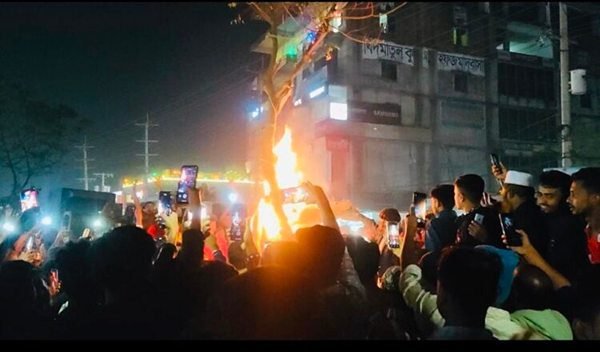
According to the organization, the assault targeted the fundamental foundation of the country’s progressive movement and destroyed 55 years’ worth of cultural archives.
Following the assassination of Sharif Osman Hadi, the spokesman for the extremist organization Inqilab Mancha, there was turmoil across the South Asian country, with many media outlets, cultural establishments, and diplomatic missions being attacked.
According to reports, the march was attended by supporters, journalists, artists, and cultural workers who carried signs and shouted chants that described the assault on Udichi as a component of a larger danger to freedom of speech.
The demonstrators chanted chants that described the fire attack as part of a larger assault on the principles of the nation’s 1971 Liberation War against Pakistan and its traditional cultural resistance, rather than an isolated occurrence.
Amit Ranjan Dey, the general secretary of Udichi, who led the parade, told the audience that the assault followed a disturbing and well-known pattern.
“In the same way that The Daily Star, Prothom Alo, and Chhayanaut were attacked, our office was vandalized, robbed, and set on fire. These actions are not arbitrary. The Daily Star, Bangladesh’s top newspaper, cited Dey as stating, “They represent a deliberate threat to freedom of expression and democratic rights.”
Decades of documentation, including songs, screenplays, photos, and records of resistance, were destroyed overnight, according to Dey, who described the loss of Udichi’s archives as a cultural tragedy.
“This is more than simply a building assault. He remarked, “It’s an attempt to erase memory.”
The group warned that additional silence would give extremist forces more confidence and restated in a statement during the gathering that the arson was a direct attack on the progressive cultural movement.
During the protest, Udichi urged the Bangladeshi government to find, detain, and bring charges against the attackers very now.
Leaders questioned the role of the interim administration headed by Muhammad Yunus, claiming that its inability to safeguard media and cultural institutions runs the danger of undermining Bangladesh’s democratic underpinnings.
Udichi members reaffirmed their commitment to stay on the streets until accountability is guaranteed as the program came to a close.
“This procession is not the end; we will keep protesting until justice is served,” Dey said.
With police officers and Border Guard Bangladesh (BGB) members stationed at strategic points in Dhaka to uphold peace and order during Hadi’s burial on Saturday, Bangladesh remained on edge amid the country’s rising violence.