
Trump: The court is doubting the legal challenge to s H-1B fee
Trump: Even as she questioned a legal challenge to his administration’s proposal to charge businesses seeking new H-1B visas for highly qualified foreign workers $100,000, a federal judge hinted that US President Donald Trump could have broad jurisdiction under immigration law.
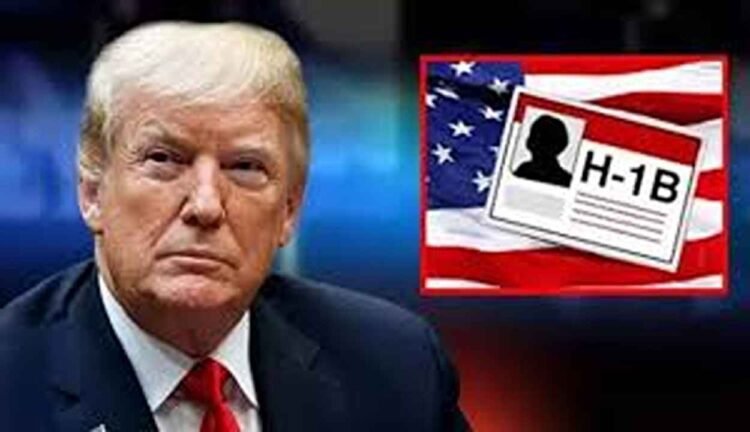
Attorneys for the US Chamber of Commerce and other litigants have been pressured by US District Judge Beryl Howell to either stop the presidential proclamation’s execution or overturn it completely. The regulation, which was announced earlier this year, significantly increases the cost for companies that use the H-1B program to hire foreign workers.
Howell, a former President Barack Obama appointment, has cited the scope of authority Congress has given the president to control foreign nationals’ admission. She questioned whether there were significant restrictions on the executive branch’s ability to deny entrance, citing legislative wording that permitted it.
Howell noted that the legislation allows the president to “impose on the entry of aliens any restrictions to be appropriate,” adding that “Congress has handed (those powers) to the president with a red ribbon on it.”
The judge said that the sections in question were “pretty hard to see limiting principles” and that the Chamber of Commerce could be better off seeking legislative amendments as opposed to legal action. Howell described the corporate organization as a powerful political force, claiming that it understands “how to go to Congress and get Congress to modify statutes.”
According to the decree, businesses must pay a $100,000 charge for every new application for an H-1B visa. According to the government, the increase is required to stop what it refers to as “systemic abuse” of the program that has compromised US national security and commercial interests.
The plaintiffs’ lawyer, Zachary Schauf of Jenner & Block, said that the president’s power has never been used to levy such a charge. He said that the action essentially governs domestic employment, a field that is beyond the president’s unilateral authority.
Tiberius Davis, an attorney for the Justice Department, defended the policy, arguing that exemptions for certain foreign individuals who are currently in the US demonstrate that the proclamation does not supersede the H-1B program. He said that rather than changing immigration law, the charge serves as an entrance limitation that Congress has approved.
Additionally, Howell questioned the Chamber’s ability to file a lawsuit, pointing out that nonprofits and other groups exempt from the H-1B limit could have “more clear standing.” There are other lawsuits contesting the increased charge, including the Chamber’s.
The IT industry makes extensive use of the H-1B program, which permits US firms to hire foreign workers in specialized jobs. In addition to the 65,000 visas it grants each year, 20,000 more are granted to workers who have advanced degrees from US colleges. Prior to the declaration, the average total cost of H-1B-related fees was between $2,000 and $5,000.
Trump has ordered more thorough screening of H-1B applications and claimed that the program has been misused by companies looking for lower-cost labor. He has also suggested modifications that would benefit individuals with greater skill levels and higher salaries.